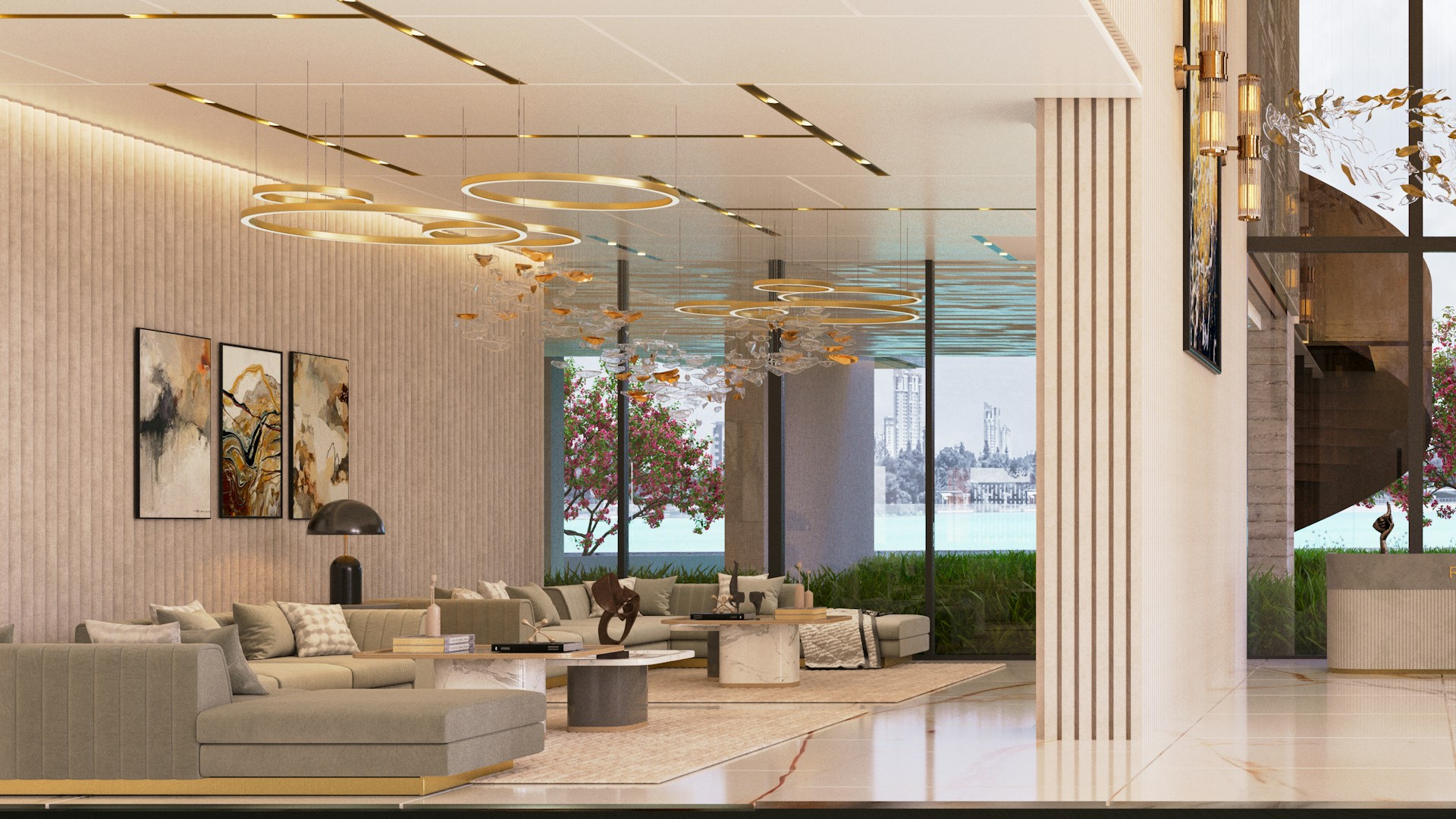
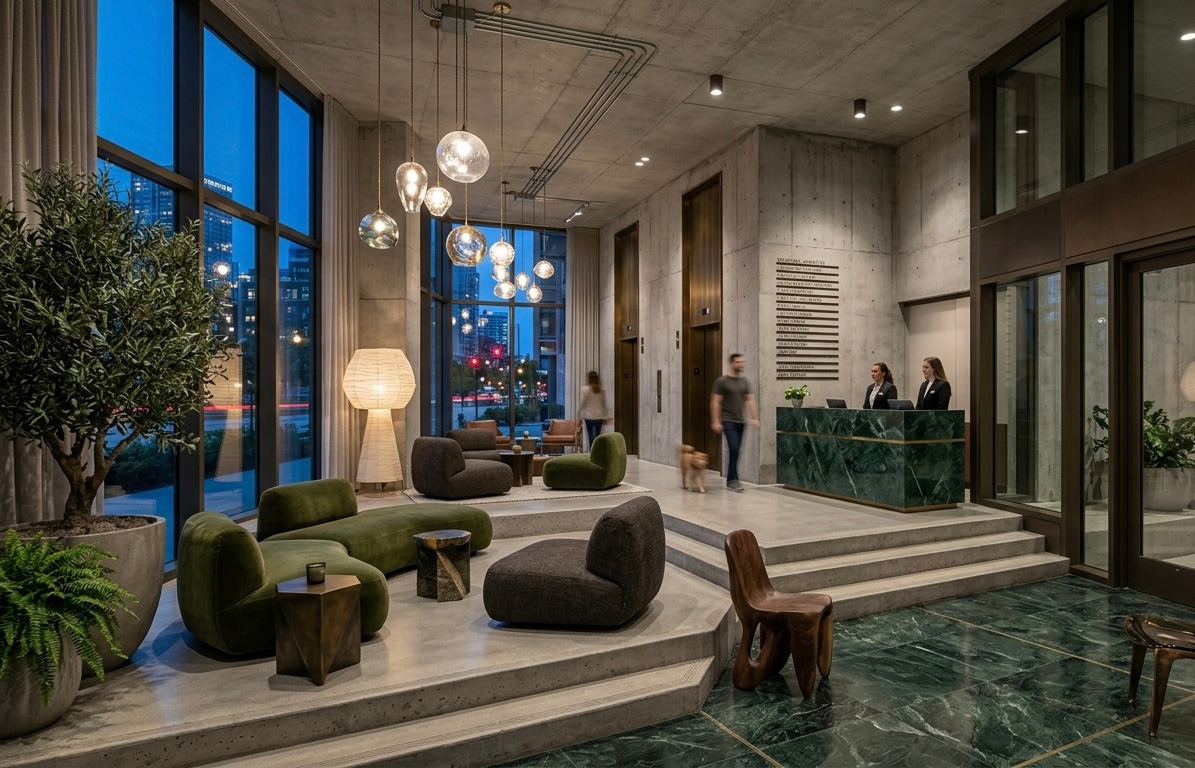
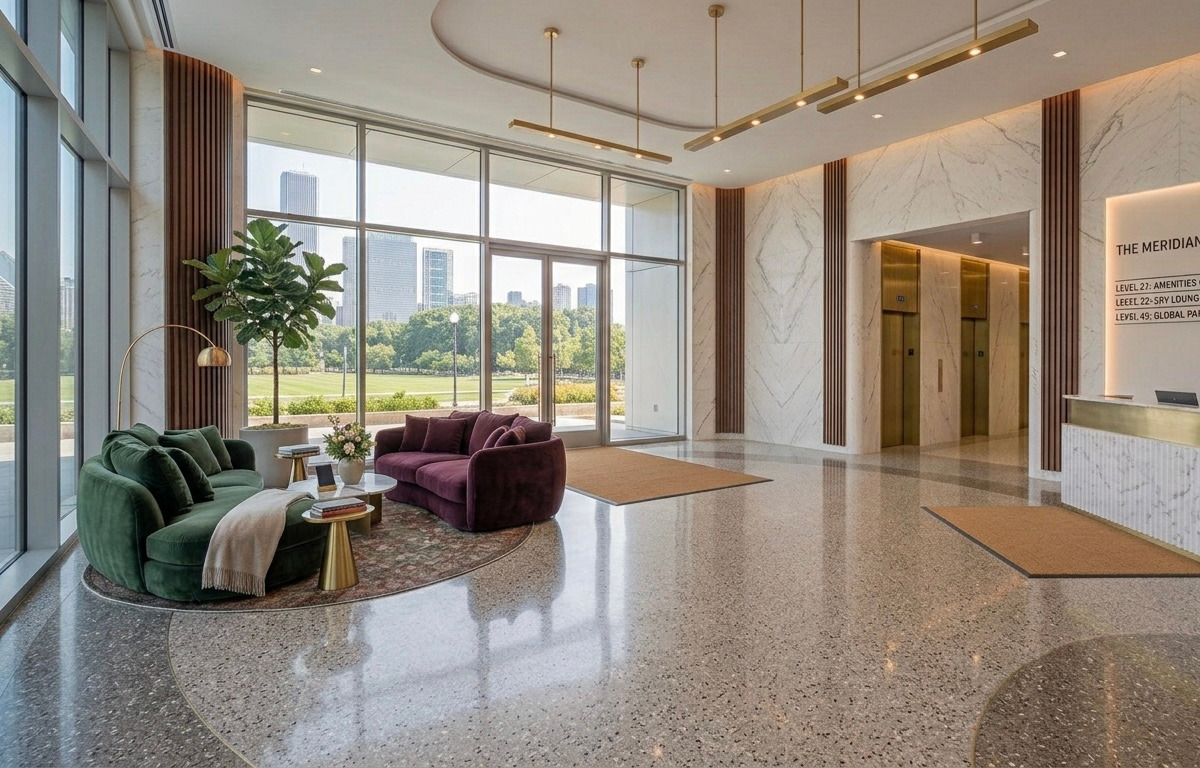
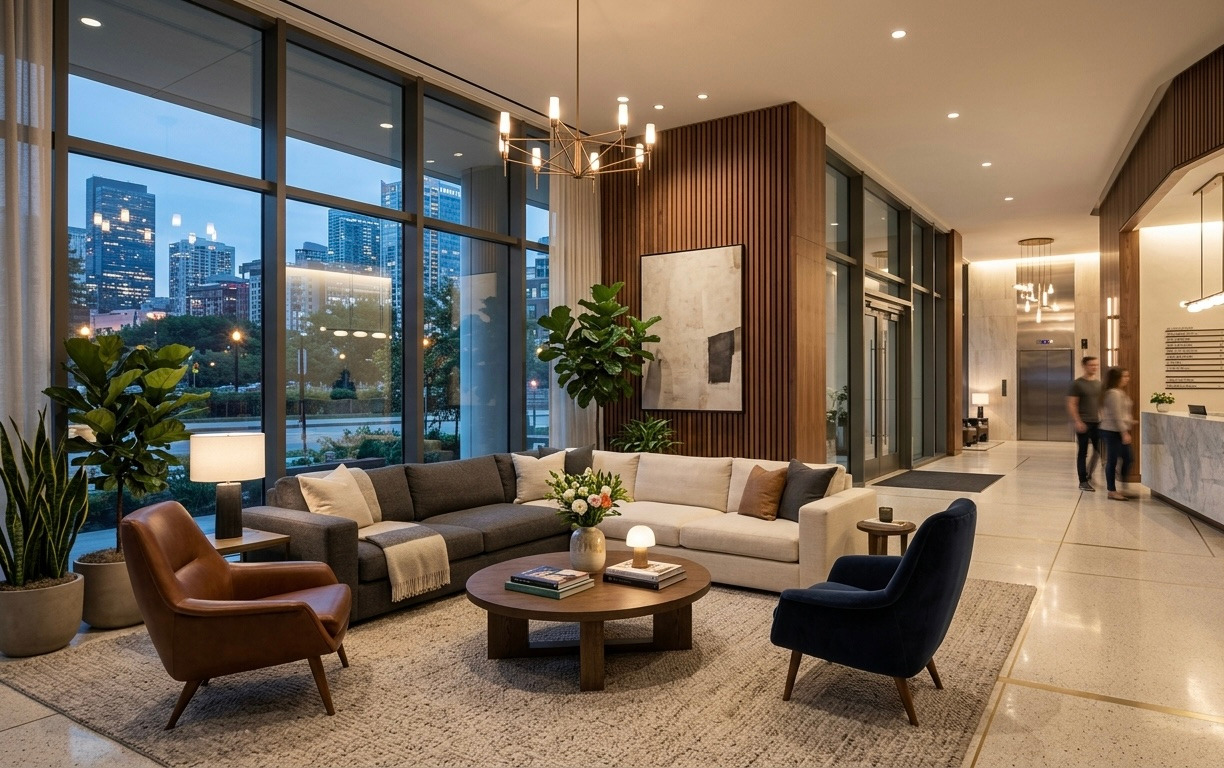
Learn why your condo lobby should be treated as an amenity, and how thoughtful design, comfortable seating, lighting, and flooring create a safer, more welcoming community.
August 12, 2026
·
7 min
People love talking about condo amenities.
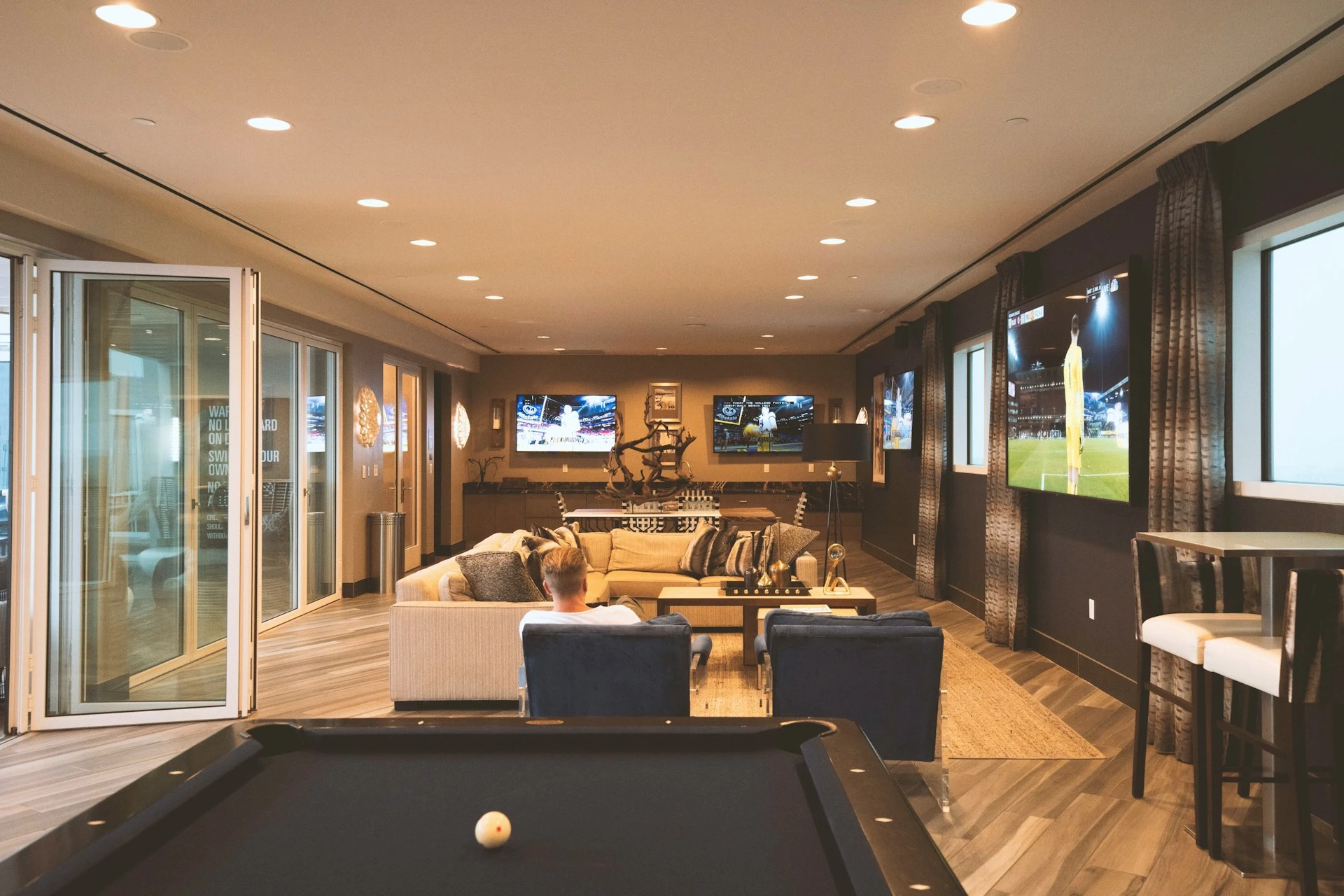
They'll debate whether a building really needs a golf simulator, whether anyone actually uses the theatre room, or if the gym is large enough to justify the monthly strata fees. Rooftop patios get photographed. Party rooms end up on listing sheets. Even dog wash stations have become selling features in newer developments…which I’ll be honest, I kind of love.
Meanwhile, the one space every single resident uses every single day barely gets a second thought. Why is that?
The lobby has somehow been reduced to a place you walk through on your way somewhere else. It's more often than not designed to move people from the sidewalk to the elevator as efficiently as possible, as though spending an extra thirty seconds there would be some kind of failure. That's a shame, because the lobby has the potential to become the most important shared space in the entire building.
Think about it for a moment.
It's where visitors form their first impression. It's where prospective buyers quietly decide whether the building feels well cared for. It's where neighbours bump into one another while collecting food deliveries, where parents wait with excited children before heading to school, where guests arrive before dinner reservations, and where residents return after a long day hoping, whether they realize it or not, that home will feel... well... like home.
In short, it’s where communities are built. If that isn't an amenity, I don't know what is.
We've spent years designing condo buildings around movement instead of experience, and I think we've been asking the wrong question. Instead of wondering how quickly someone can get through the lobby, perhaps we should be asking whether it's a place anyone actually wants to spend a few minutes in.
The answer, in far too many buildings, is no. That needs to change.
The Short Answer: Why Should a Condo Lobby Be Treated Like an Amenity?
A condo lobby can be much more than a place people pass through.
It's the building's front door, waiting room, social space, and first impression all at once. A well-designed lobby makes residents feel welcome, gives visitors somewhere comfortable to wait, supports safety through thoughtful layout and visibility, and encourages the everyday interactions that help transform a building into a community.
When property managers start thinking of the lobby as an amenity instead of a circulation space, better design decisions usually follow.
Your Lobby Is the Building's Living Room
One of the easiest ways to judge a building is to spend five minutes in its lobby.
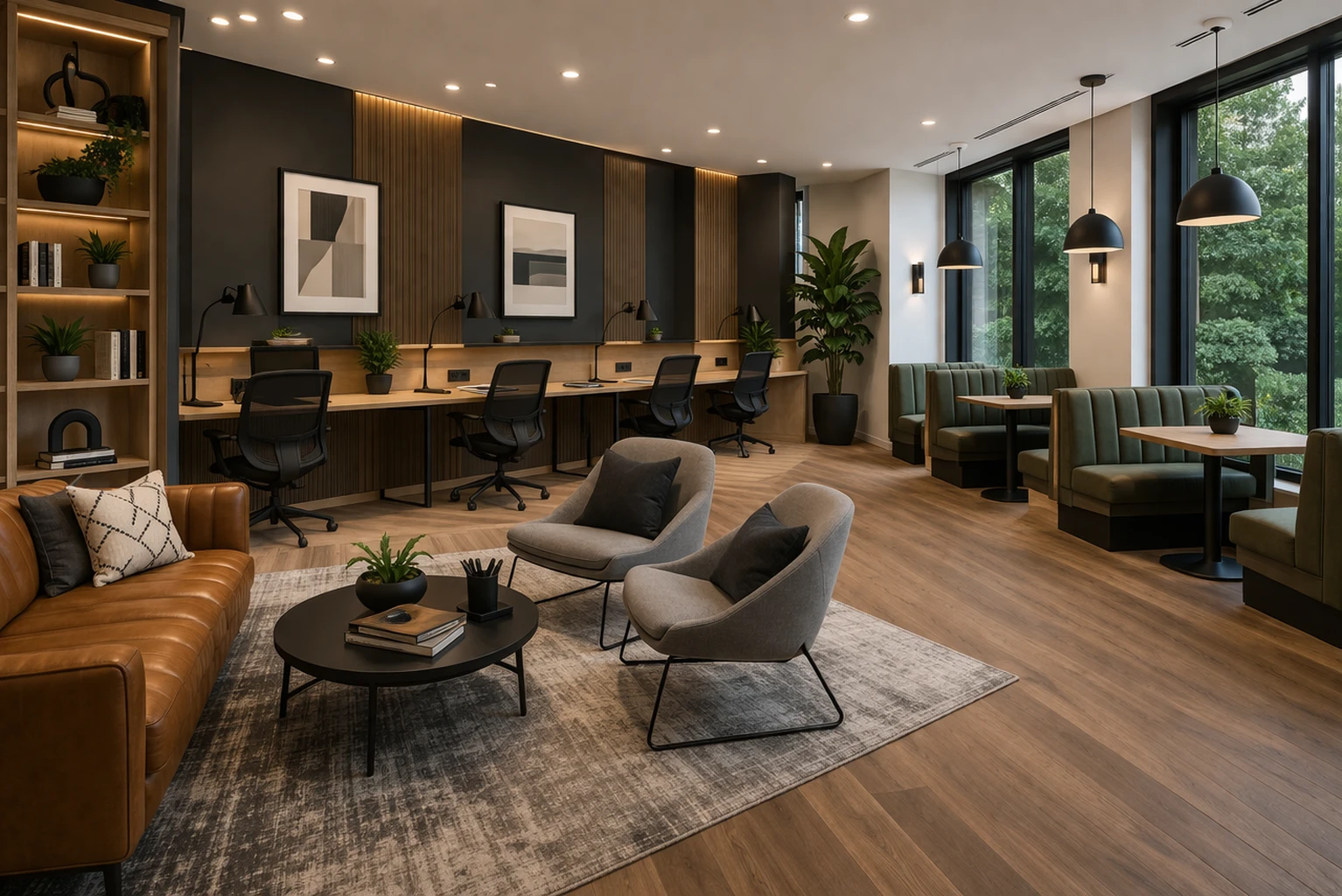
You can usually tell whether the building is well cared for before anyone says a word. The lighting feels warm instead of harsh. The furniture looks like someone actually intended people to use it. The entrance feels obvious, the concierge desk is easy to find, and visitors aren't awkwardly standing in the middle of the room wondering where they're supposed to wait.
Those things aren't accidents.
They're the result of someone understanding that buildings are designed for people, not just floor plans.
Unfortunately, too many newer buildings seem to forget that. The lobby is arranged almost entirely around movement, with the quickest possible route from the front door to the elevators. Seating, if there is any, feels like an afterthought. Guests who arrive early end up pacing near the entrance because there's nowhere comfortable to sit without feeling like they're blocking traffic.
That seems like a missed opportunity.
People naturally gather near entrances because that's where life happens. Friends meet before heading out for dinner. Grandparents arrive to babysit. Contractors check in. Neighbours stop to catch up after work. Those conversations aren't inconveniences. They're one of the few ways people actually get to know the people they live beside.
If we're constantly designing those moments out of our buildings, we shouldn't be surprised when neighbours remain strangers.
Comfortable Spaces Are Usually Safer Spaces
There's a common misconception that creating a welcoming lobby somehow comes at the expense of security.
In reality, the opposite is usually true.
Spaces that are well lit, easy to understand, and comfortably furnished tend to feel safer because they're active. Let me say that more directly: lobbies that feel used, feel safe. Residents don't rush through them. Visitors know where to wait. Concierge staff have clear sightlines, and people naturally notice when something doesn't look quite right.
Good design supports that without feeling heavy-handed.
Clear visibility, thoughtful furniture placement, and enough room for people to gather without obstructing walkways all contribute to a space that feels both comfortable and secure. You don't need to turn the lobby into an airport security checkpoint to make people feel safe. You simply need to acknowledge how people actually use the room.
Hotels understand this remarkably well.
The best hotel lobbies invite people to stay for a few minutes. They're comfortable enough to wait for a colleague or enjoy a coffee before heading upstairs. Condo buildings can borrow that same philosophy. Home should feel at least as welcoming as a hotel.
Don't Overlook What's Under Your Feet
When people renovate a lobby, flooring often becomes one of the last decisions they make.
In my experience, it should probably be one of the first.
Flooring affects almost every part of the resident experience. It influences safety during Vancouver's rainy months, protects the building from dirt and moisture, defines how people move through the space, and quietly reinforces the overall quality of the lobby.
Entrance matting is a perfect example. Most people only notice it when it isn't doing its job. Wet floors, muddy footprints, slippery entrances, and worn finishes are usually signs that the building isn't capturing moisture where it should.
Thoughtfully designed entrance systems solve those problems before they spread throughout the building. They also help organize the lobby by naturally defining where people enter and where they transition into the rest of the space.
If your building is considering a lobby refresh, don't leave flooring until the very end of the conversation. McCrann Flooring is a great resource when you’re looking for commercial flooring or entrance matting solutions.
Sometimes the best improvements are the ones residents barely notice because everything simply works better afterward.
The Best Lobbies Build Better Communities
One thing I wish more strata councils would remember is that the lobby belongs to everyone.
Not everyone uses the gym.
Not everyone books the amenity room.
Not everyone spends time on the rooftop patio.
Everyone walks through the lobby.
That makes it one of the few places where neighbours naturally cross paths. It's where someone welcomes a new resident to the building. It's where children excitedly show off Halloween costumes. It's where a concierge greets people by name, and where visitors leave with an impression of what it's actually like to live there.
Those moments don't increase property values overnight.
But they absolutely improve the experience of living in the building.
For all the attention we give to amenity spaces, perhaps it's time we started treating the one everyone uses like it matters just as much.
Key Takeaways: Why Your Lobby Deserves More Attention
A condo lobby is far more than a pass-through space. It's one of the building's most valuable amenities because it's used by every resident, every visitor, and every prospective buyer. A welcoming lobby encourages neighbours to connect, gives guests a comfortable place to wait, supports safety through thoughtful design, and creates a positive first impression that lasts long after someone leaves.
Comfortable seating, warm lighting, clear sightlines, durable flooring, and effective entrance matting all contribute to a better resident experience without requiring extravagant renovations. When property managers begin treating the lobby as the building's living room rather than simply the route to the elevators, they create a space people genuinely enjoy coming home to.
Frequently Asked Questions
Why is the condo lobby considered an amenity?
Because it's one of the only shared spaces every resident uses every day. It shapes first impressions, supports community interaction, and contributes to the overall comfort and identity of the building.
What makes a lobby feel more welcoming?
Comfortable seating, warm lighting, clear sightlines, intuitive layouts, and thoughtful finishes all help residents and visitors feel more comfortable from the moment they walk through the door.
Does lobby design affect building safety?
Yes. Good visibility, active spaces, and logical layouts make residents feel more secure while helping concierge staff and neighbours notice unusual activity more easily.
Why is entrance matting important?
Entrance matting captures dirt and moisture before it spreads throughout the building, helping reduce slips, protect interior flooring, and maintain a cleaner, more attractive lobby.
What's the best way to improve an older lobby?
Focus on how people actually use the space. Better lighting, comfortable seating, improved flooring, healthier plants, and a layout that accommodates conversation can make a significant difference without requiring a complete renovation.
The best lobbies aren't necessarily the most expensive ones.
They're the ones that make people feel welcome the moment they step inside. They acknowledge that home begins at the front door, not the elevator, and that the space between the sidewalk and your suite deserves just as much attention as any rooftop patio or fitness centre.
If we want stronger communities inside our buildings, perhaps we should start by giving people a better place to say hello.
Making Vancouver buildings just a little bit better... xoxo J.