What Good Amenity Spaces Get Right (That Most Buildings Miss)
What do well-designed condo amenity spaces get right? Let's explore the design decisions, materials, and layouts that make fitness rooms and shared spaces more usable, comfortable, and consistently used.
January 30, 2026
·
12 min
Amenity spaces are where buildings try to impress people. The truth is though, they often fall short.
On paper, they look great. A lounge with modern furniture. A gym with decent equipment. Maybe a co-working room or a party space with a kitchen. In photos, they work.
In real life, I’ve seen far too many that don’t.
They sit empty, or they get used in ways they weren’t designed for. Over time, they drift into storage zones, overflow areas, or spaces people avoid unless they have to be there.
It’s not because the idea is wrong.
It’s because a few key fundamentals get missed.
The Short Answer: What Do Good Amenity Spaces Get Right?
Good amenity spaces work because they align with how people actually use them.
That usually comes down to a handful of things: clear purpose, comfortable acoustics, defined zones, durable materials, and consistent upkeep. When those elements are working together, the space feels easy to use. When one or two are missing, the experience starts to break down.
If you’re looking for a practical starting point, focus on making the space obvious, comfortable, and ready to use at any given moment. Reduce noise, create structure within the layout, choose materials that hold up over time, and maintain it consistently.
That alone solves most problems.
Most Amenity Spaces Are Designed Once—Then Left Alone
This is where things start to drift.
The space is designed, furnished, and opened. It looks sharp and checks all the boxes. Then real life takes over.
Furniture gets moved. People start using the space in ways that weren’t planned. Cleaning becomes periodic instead of consistent. Small issues build up, but none of them feel urgent on their own.
Over time, the space becomes slightly less comfortable, slightly less clear, slightly less inviting. No single change stands out. But together, they change how the space feels—and once that happens, usage drops. And now you have an amenityville horror on your hands.
Why Amenity Spaces Sit Empty
Amenity spaces rarely fail for one obvious reason.
More often, it’s a combination of small friction points that make the space feel just a bit off. Maybe it’s unclear how the room is meant to be used. Maybe the acoustics make conversations feel exposed. Maybe the furniture doesn’t quite support how people want to sit, work, or gather.
Sometimes it’s even simpler than that.
If the space feels slightly unclean or not fully reset, people hesitate. And that hesitation is usually enough for them to choose something else.
It’s rarely a conscious decision. They just stop going.
Noise Is the Silent Problem
People don’t always point to noise directly, but they react to it whether they realize it or not.
A loud amenity space changes how people behave. Conversations feel more exposed, small sounds carry further than they should, and the entire room takes on a slightly tense energy. Once you notice it, it’s hard to ignore.
This usually comes back to materials and layout. Hard surfaces reflect sound, and open spaces give it room to travel. Without anything to absorb or break that noise, it builds quickly.
The fix doesn’t need to be dramatic.
Small changes—like adding upholstered seating, area rugs, or even softening a few key surfaces—can take the edge off enough to make the space feel comfortable again.
How Do You Make an Amenity Space More Comfortable?
Comfort in an amenity space isn’t just about having good furniture.
It’s about how the space feels to exist in, and whether it supports what people are actually trying to do.
That usually means managing sound, softening the environment, and giving people a sense of control over how they use the space. Seating should support different postures. Lighting should feel even and intentional, not harsh or overly dim.
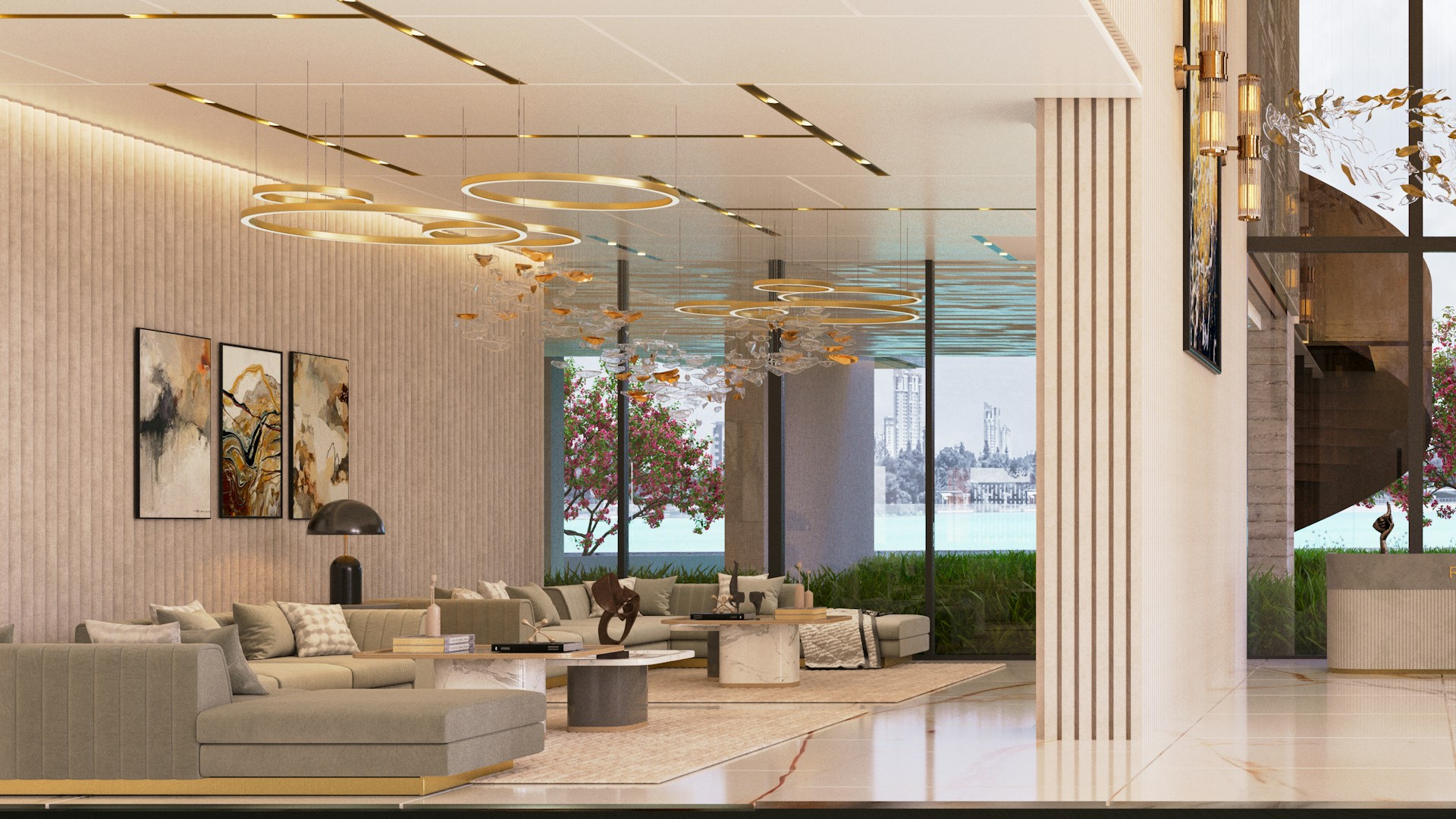
In a lounge, that might mean reorienting seating so people can face each other instead of the walls, adding an area rug to reduce echo, or swapping rigid chairs for something upholstered that people can actually settle into.
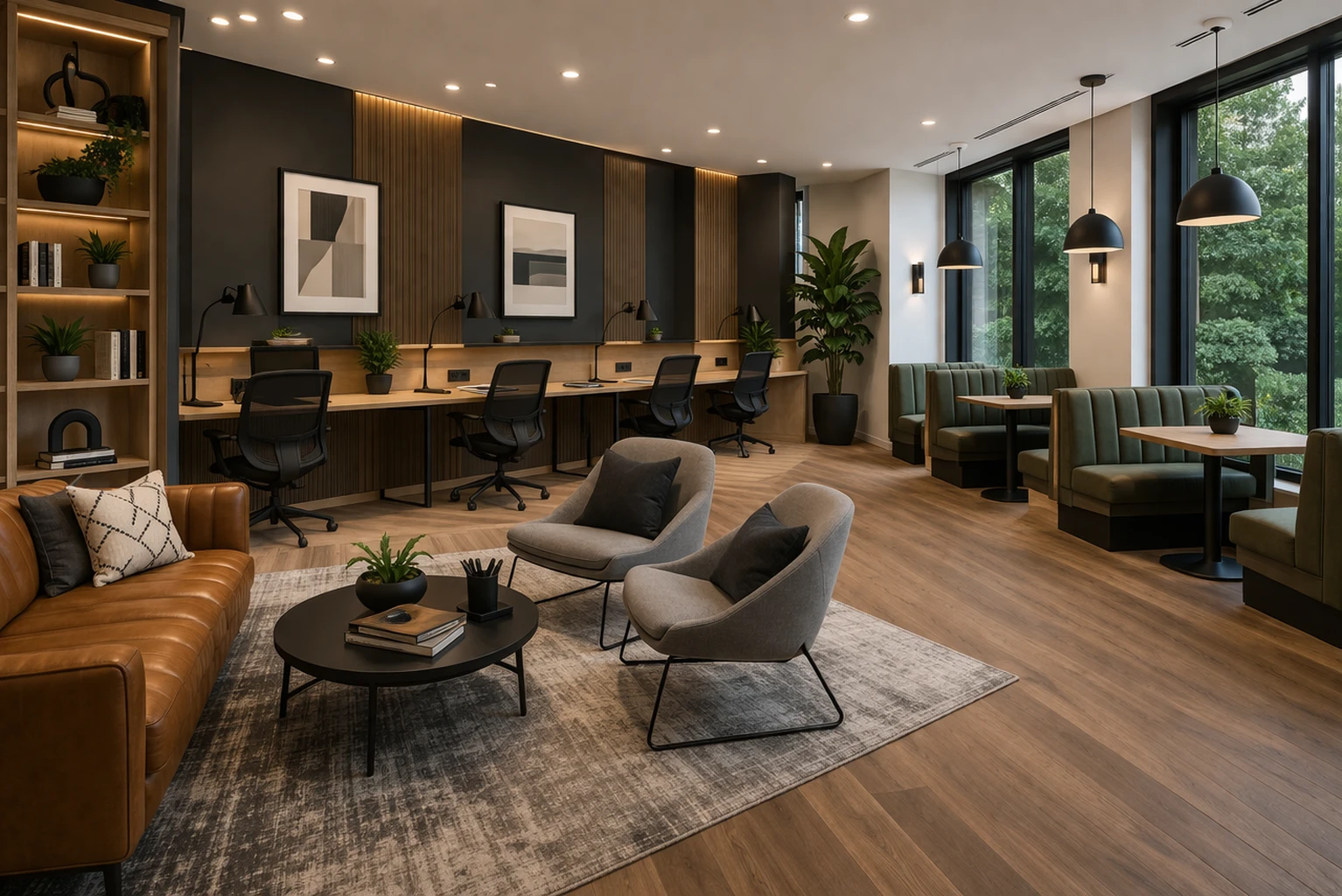
In a workspace, comfort looks different. People need surfaces at the right height, chairs that support longer periods of sitting, and lighting that feels focused without being harsh. Even small additions like task lighting or a bit of separation between seats can make the space feel more usable.
In a party room, it often comes down to flexibility. Furniture that can be moved easily, open space for gathering, and enough separation between prep areas and seating so people aren’t crowding each other. If everything feels fixed or cramped, the space gets used less.
And across all of them, people need to feel like they have a bit of space around them, even in a shared environment.
When that’s missing, people don’t stay long.
Purpose Needs to Be Obvious
A surprising number of amenity spaces fail this test.
You walk in, and you’re not quite sure what to do or where you are exactly.
Is it a lounge? A workspace? A waiting area? A party room? Party rooms and lounges are two that particularly get confused.
That moment of hesitation matters more than it seems. If people have to think about how to use a space, they often won’t use it at all. Good spaces remove that friction.
They signal their purpose clearly through layout, furniture, and how everything is arranged. You don’t need signage. You need clarity (and a plan).
Zones Make Everything Easier
Most amenity spaces try to do too much in one open area, and that’s where things start to break down.
People want different things from the same space. Some want to relax. Some want to work. Others want to gather or socialize. Without structure, those uses compete.
With clear zones, they coexist.
Even small adjustments—like anchoring seating areas with custom sized rugs, orienting furniture intentionally, or creating subtle separation between uses—can bring order to the space without adding walls or complexity.
It doesn’t have to be overdesigned. It just has to make sense.
What Should an Amenity Space Include?
It depends on the space and the intention behind it.
A good amenity space starts by having one main purpose.
Take a party room as an example.
At its core, it needs to handle groups comfortably without friction. That means enough usable surface area for food and drinks, clear circulation so people aren’t constantly navigating around each other, and a layout that supports both standing and seated interactions.
Where these spaces often fall short is in what they include by default.
Fixed furniture can limit how the room adapts to different group sizes. Oversized tables can dominate the space and reduce flexibility. Finishes that look good but stain easily or show wear quickly can make the room feel tired faster than expected.
You’ll also see layouts where everything happens in one zone—food, drinks, seating, and conversation all competing for the same footprint. That’s where the space starts to feel crowded, even when it isn’t.
What tends to work better is a bit of separation within the room. Not walls, but structure. A place for prep. A place for gathering. A place where people can step slightly away from the centre of activity without leaving the room entirely.
When that balance is right, the space feels easy to use. When it isn’t, people notice immediately, even if they don’t know exactly why.
Materials Determine How the Space Ages
This is where a lot of spaces quietly fall apart.
They look great at the beginning, but they aren’t built for daily use. Light fabrics stain easily. Hard surfaces show wear. Finishes degrade faster than expected, and cleaning becomes more difficult over time.
Once that happens, the space starts to feel worn, even if it’s still technically functional.
And when a space feels worn, people treat it differently.
Choosing durable, cleanable materials doesn’t just extend the life of the space. It helps preserve how it feels to use, day after day.
The Real Issue
Amenity spaces are often treated like features or something to showcase and check off a list.
In practice, they behave more like systems. They need to support how people move, how they gather, and how they spend time. They need to absorb wear, manage noise, and stay consistent from day to day.
When all of that is working together, the space feels effortless. People use it without thinking about why. When it isn’t, usage drops off. Behaviour becomes less predictable. And the space slowly shifts into something else, usually less useful than intended.
Key Takeaways: How Do You Improve an Amenity Space?
If you want your amenity space to actually get used, focus on the fundamentals and execute them consistently.
Make the purpose obvious: Arrange the space so people immediately understand how to use it without needing to think.
Improve comfort by managing sound and layout: Add softness where needed and create an environment people want to spend time in.
Create clear zones for different activities: Let lounging, working, and socializing happen without competing for the same space.
Choose materials that hold up over time: Prioritize durability and cleanability so the space continues to feel maintained.
Keep the space consistently ready to use: Reset furniture, maintain cleanliness, and prevent slow drift into clutter or misuse.
When these are in place, the space works.
When they’re not, people stop showing up.
FAQ: Condo Amenity Spaces
Why don’t residents use amenity spaces?
Because they feel unclear, uncomfortable, or not worth the effort compared to other options.
What makes an amenity space feel welcoming?
Clear purpose, comfortable acoustics, and a layout that supports real use.
How do you reduce noise in an amenity room?
By introducing soft materials like rugs and upholstered seating to absorb sound.
Should amenity spaces be multi-purpose?
The short answer is sometimes—but only when different uses are clearly defined and supported.
How often should amenity spaces be cleaned?
Often enough that they always feel ready to use, not just periodically reset.
At the end of the day, people don’t think about amenity spaces in terms of design or features. They just decide, often without realizing it, whether the space feels worth using. When it does, they come back. When it doesn’t, they move on.
Making Vancouver buildings just a little bit better... xoxo J.