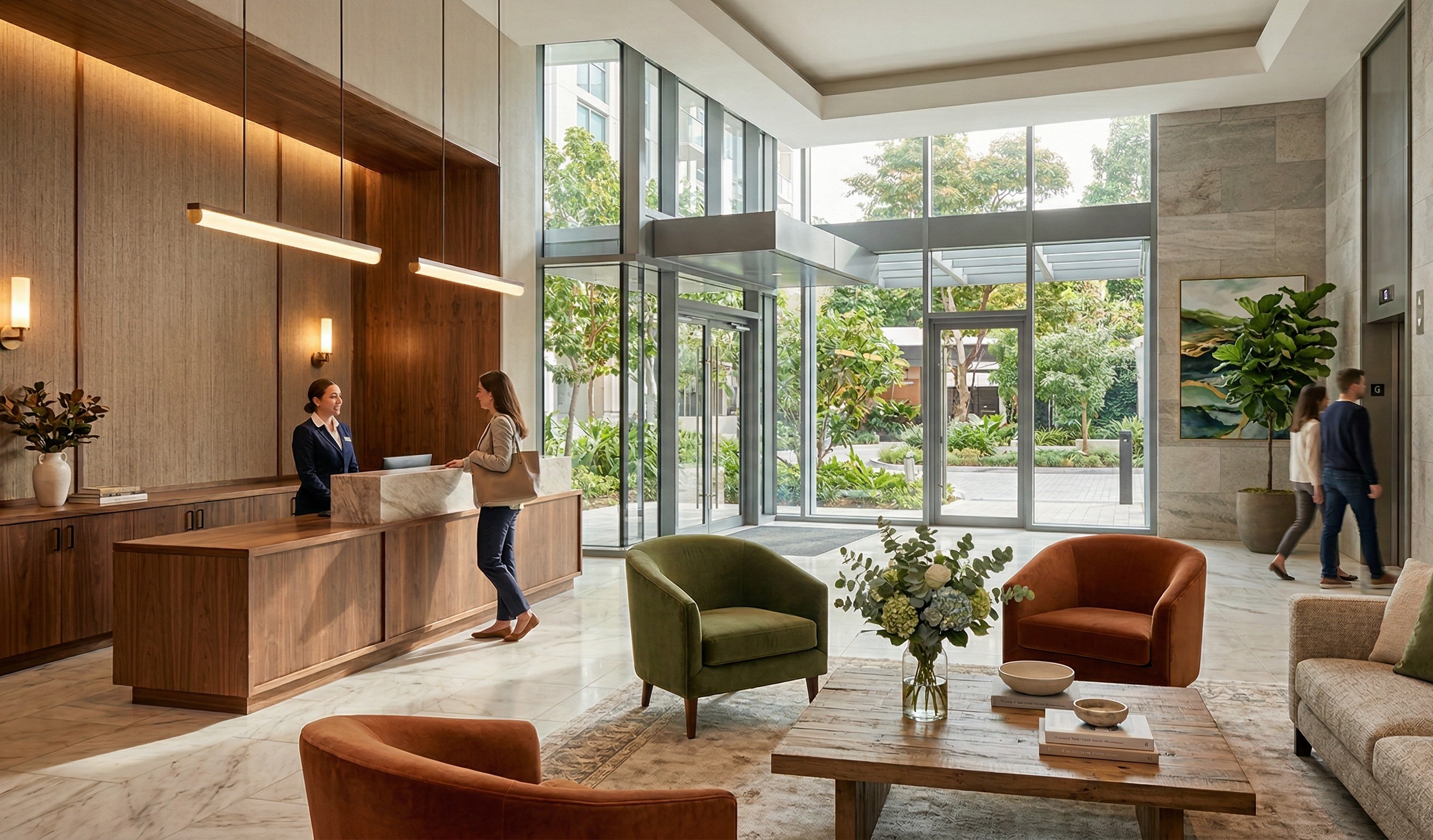
What makes a condo lobby feel safe for residents and visitors? Let's break down lighting, visibility, layout, access control, and flooring choices that contribute to both perceived and actual safety.
April 24, 2026
·
10 min
You can usually tell within a few seconds of walking into a condo lobby whether it feels safe.
It’s not something most people consciously analyze, but the reaction is immediate. You step inside, take in the space, and your body makes a quick decision—this feels comfortable, or it doesn’t.
That response matters more than it seems.
The lobby isn’t just an entrance. It’s the point where a building shifts from public to private space. It’s where residents arrive at the end of the day, where guests form their first impression, and where small, everyday interactions happen without much thought.
When that space feels safe, people move through it naturally. They don’t hesitate. They don’t second-guess who’s around them or where they’re going. They feel at ease coming home late, waiting for the elevator, or passing through without paying much attention.
When it doesn’t feel safe, even slightly, the experience changes. People become more aware, more cautious. They move faster. They notice what’s off, even if they can’t fully explain it.
And over time, that feeling starts to define how the building is experienced as a whole.
Because it’s not just about safety as a feature.
It’s about how the space makes people feel every single day.
The Short Answer: What Makes a Condo Lobby Feel Safe?
A condo lobby feels safe when it combines clear visibility, controlled access, thoughtful layout, and consistent activity.
The strongest lobbies tend to share a few qualities:
You can see and understand the space immediately
Entry points feel controlled without being restrictive
Movement through the space feels natural and unobstructed
There’s a sense that people are present and aware
The space feels maintained and intentional
It’s not about adding more features.
It’s about how the space works as a whole.
Visibility Comes First
The safest lobbies are easy to read.
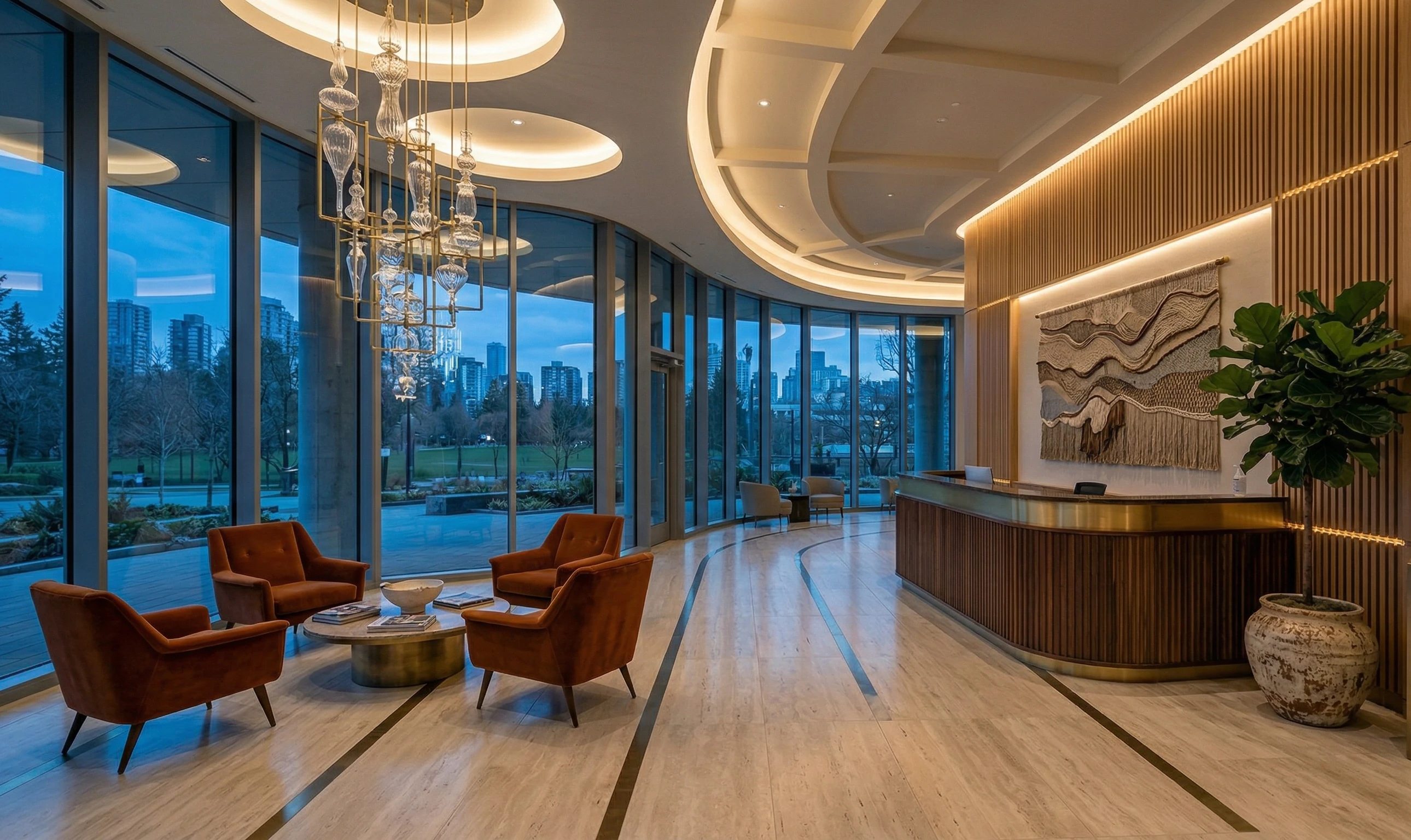
When you walk in, you can see where to go. You can see who’s around. There are no hidden corners or confusing layouts.
Sightlines are clear from the entrance to key areas like elevators, hallways, and exits.
Lighting plays a big role here.
Even, consistent lighting removes shadows and uncertainty. It helps people feel oriented. It makes movement easier to follow. And it reduces the number of places where someone can linger unnoticed.
When visibility is strong, the space feels more predictable.
And predictability builds comfort.
How Flooring Supports Visibility and Safety
Flooring is easy to overlook, but it plays a quiet role in how a lobby feels and functions.
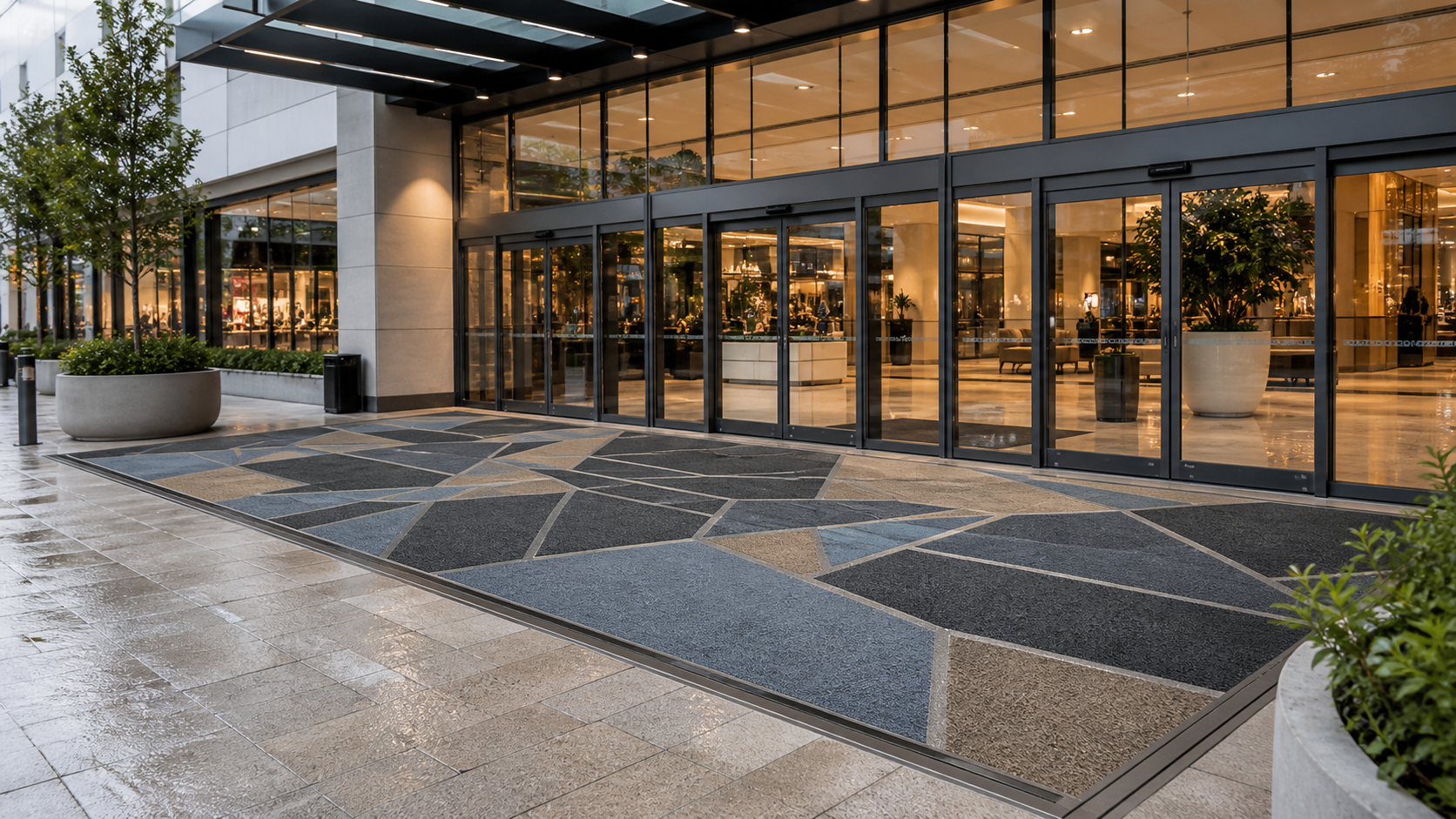
The right surface helps define pathways, guides movement, and makes transitions between areas easier to understand. When materials are consistent and well-installed, the space feels more intentional and easier to navigate.
On the other hand, worn, uneven, or overly reflective flooring can introduce subtle friction. Glare from lighting can make it harder to see clearly. Changes in material can feel abrupt. Entrances can become uncertain, especially in wet conditions.
It works with lighting instead of against it, supports clear movement through the space, and holds up over time without becoming a distraction. In high-traffic areas like condo lobbies, that consistency matters more than most people expect.
How Do You Improve Visibility in a Lobby?
You don’t need a major redesign to make a lobby feel clearer.
Small adjustments go a long way.
Open up sightlines where possible Avoid tall partitions, bulky furniture, or decorative elements that block views across the space.
Use consistent, layered lighting Combine overhead lighting with softer accent lighting to eliminate dark spots.
Keep entrances and pathways unobstructed The path from the door to the elevators should feel direct and easy to follow.
Position mirrors or glass intentionally Reflective surfaces can help expand visibility and reduce blind spots when used well.
Avoid visual clutter Too many elements competing for attention can make a space harder to read.
Access Should Feel Controlled, Not Complicated
A safe lobby doesn’t feel locked down. It feels managed, and there’s a noticeable difference between the two.
In a well-functioning space, everything works the way you expect it to. Doors open when they’re supposed to, access systems are consistent, and it’s immediately clear where residents go and where visitors should pause. You don’t have to think about it. The layout and flow do the work for you.
That clarity matters more than it seems. When someone enters the lobby, they should be able to understand how the space operates within a few seconds. Where to stand, where to wait, and what happens next. When that’s obvious, people move naturally and the space feels more settled.
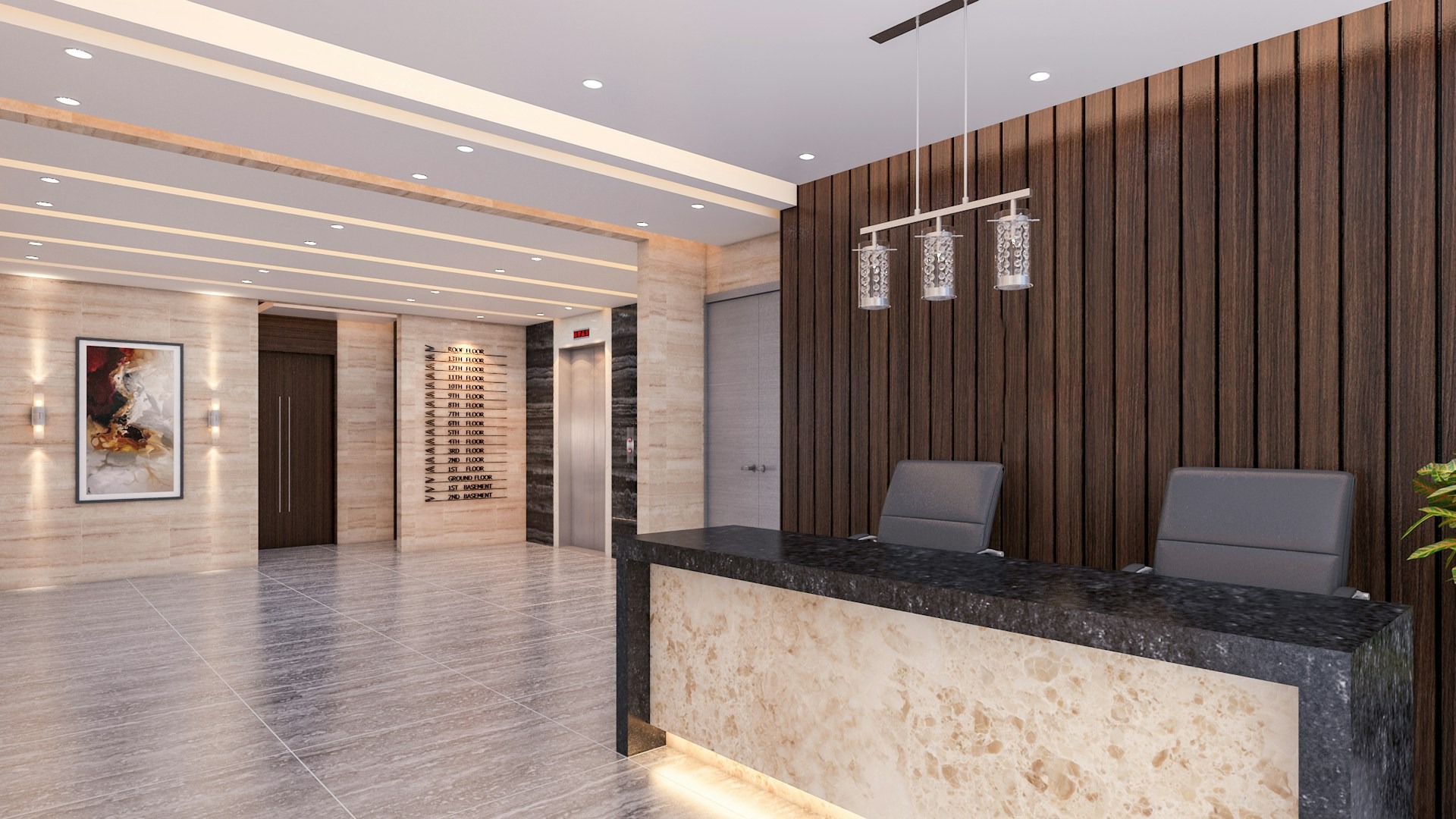
This is where a visible point of presence, like a concierge or front desk, can make a big difference.
How Important Is a Staffed Condo Lobby for Safety?
A staffed lobby isn’t required for a space to feel safe—but it does raise the baseline.
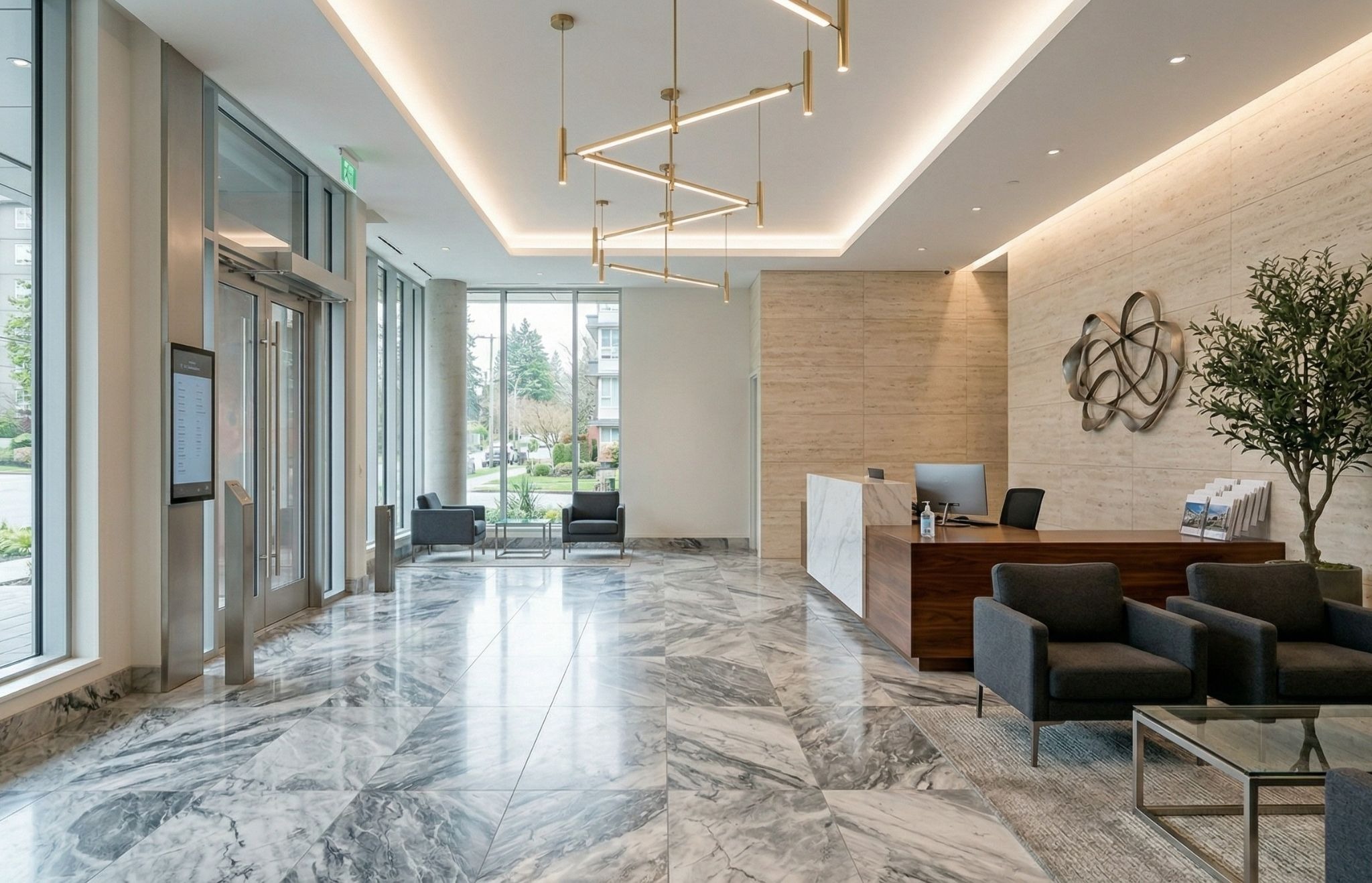
The presence of a concierge or front desk adds a layer of awareness that’s hard to replicate through design alone. It creates a natural checkpoint, gives visitors a clear place to go, and signals that the space is being observed throughout the day.
Even when there’s no direct interaction, behaviour changes. People are more aware of where they are and how they move through the space.
That said, staffing isn’t a substitute for good design.
If sightlines are poor, access points are unclear, or the layout creates confusion, a concierge can only do so much. The strongest lobbies combine both—clear, intuitive design and a visible human presence.
And in buildings without a concierge, many of the same outcomes can still be achieved. Thoughtful layout, consistent access control, and strong visibility can guide behaviour in a similar way, even without someone physically stationed in the space.
Why Layout Affects Safety
Layout shapes how people move through a lobby.
If the flow is awkward, people hesitate. They stop in the wrong places. They cluster near entrances or block pathways without realizing it.
If the flow is clear, movement feels natural. People enter, orient themselves, and continue through the space without friction. That kind of movement creates a subtle form of awareness.
You notice who’s coming and going. You can read the space without thinking about it. And that contributes to the overall feeling of safety.
The Role of Activity and Presence
A lobby feels safer when it feels active. Not crowded. Not busy in an overwhelming way. Just… lived in.
People passing through. Brief interactions. A sense that the space is used regularly and comfortably. Even small details contribute to this. And it begs the question:
What Contributes to an Active Lobby?
A lobby doesn’t need to be busy to feel safe. It just needs to feel used.
A few details that make a difference:
A concierge desk that’s visible and part of the space
Seating that residents actually use, not just decorative furniture
People moving through at different times of day
Clear lines of sight between entrances, elevators, and common areas
Spaces that encourage brief, natural interaction without blocking flow
When these elements are in place, the lobby feels lived in. And that sense of presence goes a long way.
When a space feels empty or underused, the opposite happens. It becomes harder to read. Less predictable. Slightly more uncomfortable.
Safety isn’t just about systems.
It’s also about presence.
Maintenance Sends a Signal
Condition matters more than most people think.
A well-maintained lobby feels intentional. Lights work. Doors close properly. Surfaces are clean. Nothing feels overlooked. That consistency sends a signal that the building is being cared for—and that issues are noticed and addressed.
When maintenance slips, the signal changes. Small things stand out. A flickering light. A scuffed wall. A door that doesn’t quite latch. Individually, they’re minor.
Together, they change how the space feels.
Key Takeaways: What Makes a Condo Lobby Feel Safe?
A condo lobby feels safe when the space is clear, controlled, and easy to move through.
The key factors are:
Strong visibility: Clear sightlines and consistent lighting make the space easy to understand.
Controlled access: Entry points feel managed without being frustrating or overly restrictive.
Thoughtful layout: Movement through the space feels natural, without confusion or congestion.
Regular activity and presence: The space feels used and observed throughout the day.
Consistent maintenance: Small details are handled, reinforcing that the space is cared for.
When these elements come together, the result isn’t dramatic.
It’s subtle.
But it’s immediate.
FAQ: Condo Lobby Safety
What makes a lobby feel unsafe?
Poor lighting, blocked sightlines, unclear entry points, and a lack of activity can all contribute to discomfort.
Do security systems guarantee safety?
They help, but the overall layout, visibility, and maintenance of the space matter just as much.
Does lighting really make a difference?
Yes. Even, consistent lighting improves visibility and reduces uncertainty.
Should lobbies restrict access more?
Access should feel controlled and clear, but still easy for residents and expected visitors to use.
Why does maintenance matter for safety?
Well-maintained spaces signal that the building is monitored and cared for, which influences behaviour.
A safe lobby doesn’t rely on one feature. It works because everything feels considered. And when that happens, people notice—without needing to think about why.
Making Vancouver buildings just a little bit better... xoxo J.