Amenityville Horrors
The Fitness Room That No One Uses (and Why)
An empty condo gym deserves a closer look. Explore how layout, flooring, maintenance, noise, and access affect whether residents actually use the space.
October 15, 2026
·
7 min
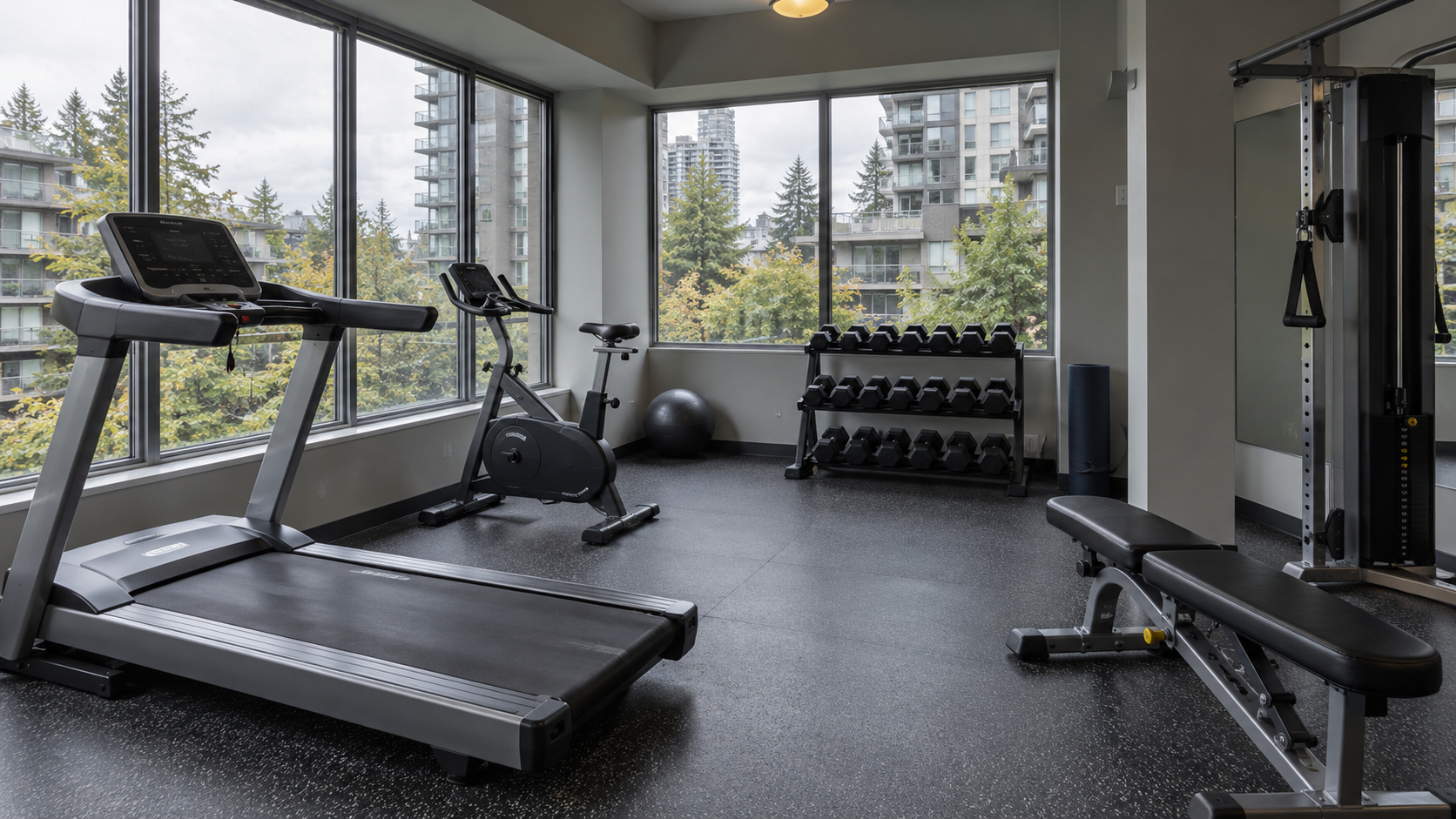
An empty condo gym deserves a closer look. Explore how layout, flooring, maintenance, noise, and access affect whether residents actually use the space.
The listing calls it a fitness centre.
There’s a treadmill, a bike, a rack of weights, and a television with a remote nobody has seen since the previous strata council.
Technically, the ingredients are there.
But the room is empty. Again.
It’s tempting to blame residents. People say they want a gym, the building provides one, and apparently everyone prefers paying for a membership somewhere else.
I’d take a closer look at the room before deciding the residents are the problem.
A fitness amenity can tick every box on a sales brochure and still be a place nobody particularly wants to spend half an hour.
There isn’t a single explanation. Low use can reflect inconvenient hours, poorly maintained equipment, an uncomfortable environment, or a layout that doesn’t suit the workouts residents actually want to do.
Sometimes the problem is simpler: people don’t know how to access the room, what works, or whether there’s anywhere to stretch without being in somebody else’s way.
Before buying another machine, ask residents what keeps them out. Include the people who never use the room. Your regular treadmill enthusiast can tell you plenty, but she can’t explain everyone else’s absence.
The question I’d start with is: what would make this space useful to you?
Floor space has a habit of disappearing one purchase at a time.
A bike goes here. Someone suggests a rowing machine. A weight bench arrives. Eventually, the only place to unroll an exercise mat is directly in front of the door.
Excellent. We’ve created an obstacle course, accidentally.
A useful fitness room leaves space for people as well as equipment. Residents need to move between stations, get on and off machines, reach storage, and exercise without occupying a circulation route.
That includes people who want to stretch, use resistance bands, or do a short bodyweight routine. Those are perfectly reasonable uses of a condo gym, even if they don’t come with an impressive machine.
Look at the room with two or three people in it. Can they use different areas comfortably? Can someone reach the exit without stepping over another person’s workout?
Follow equipment manufacturers’ clearance requirements when reviewing the layout. If everything only fits while nobody is moving, it doesn’t really fit.
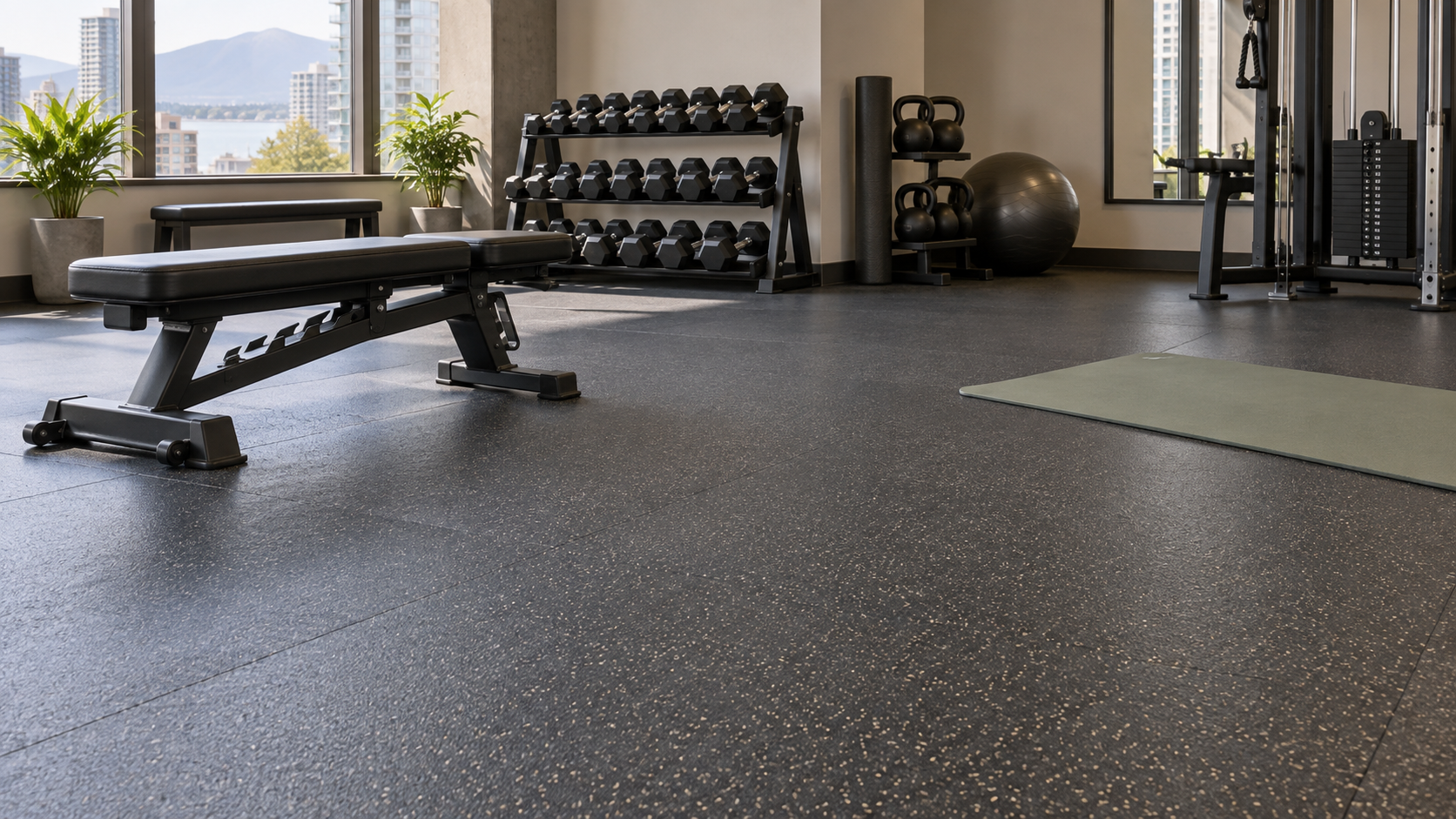
Flooring is easy to overlook when you’re comparing treadmills. It becomes rather more noticeable when you’re trying to stretch beside one.
Does the surface suit the activity? Is it maintained properly? Are seams, edges, or transitions getting in the way? Can staff clean it effectively?
The equipment area, an open exercise zone, and the entrance may have different demands. Treating them as one undifferentiated rectangle can leave the room doing several things badly.
For equipment and exercise zones, ask a flooring professional about a system intended for the activities and loads involved. That may include purpose-made rubber fitness flooring, depending on the room and equipment. The choice should account for the substrate, installation, cleaning, and the manufacturer’s intended use.
A loose decorative rug is not a substitute for a properly specified exercise surface. Neither is an entrance mat. They have different jobs.
I’d also pay attention to the edge of any designated exercise area. People should be able to enter it comfortably, including with a mobility aid, without negotiating a ridge or a shifting corner.
The point is to make ordinary movement easier. The workout can provide its own challenges.
It helps to describe what the room needs before asking for flooring prices.
Burritt Bros., Donald Floors, and McCrann Custom Flooring are local businesses worth including in a flooring conversation, with the scope of work guiding whom you approach. McCrann’s custom matting is relevant where an entrance or adjoining route needs fitted coverage; any proposed fitness surface needs separate confirmation that it suits the exercise area.
Ask who will assess the room, what their proposed material is designed to handle, and how it will be maintained. If the work includes several surfaces, establish how those surfaces meet.
This is where a proper discussion earns its keep. “Something durable” isn’t much of a brief when one part of the room holds a treadmill and another is where residents put their hands on the floor.
A fitness room can be unpleasantly loud inside and troublesome for the neighbours outside it.
Those are related concerns, but they aren’t necessarily the same problem.
Music, conversation, and hard surfaces can make the room sound harsh. Footfalls, moving equipment, or dropped weights can create vibration and impact noise that travels through the building.
Adding a soft surface doesn’t automatically solve both.
If there are recurring complaints, identify what is making the noise and where it is being heard. Equipment placement, operating condition, usage rules, and the floor assembly may all need attention. Persistent transmission problems deserve an acoustic assessment rather than another hopeful layer of material.
Residents shouldn’t feel as though using the amenity will start a dispute with the unit below. Equally, the neighbours shouldn’t have to build their evening around someone else’s treadmill.
Be honest.
Is the room stuffy? Is the lighting gloomy or glaring? Are the surfaces clean? Does the bin suggest that somebody last checked it during a different season?
You can’t motivate people into enjoying a space that feels neglected.
Have building staff review ventilation concerns, keep cleaning supplies available, and make reporting broken equipment straightforward. An out-of-order sign needs a plan behind it. After a while, it stops looking temporary and starts looking like part of the equipment.
Think about the smaller practical details too. Somewhere to put a water bottle or hang a jacket can make the room easier to use. Clear, concise instructions can help a newcomer understand the equipment without feeling foolish.
Mirrors deserve a little thought. They may be useful during exercise, but an open stretching area directly in full view of the corridor can feel exposed. Consider sightlines as well as equipment placement.
A resident who wants a quiet twenty-minute workout shouldn’t have to feel like the evening’s entertainment.
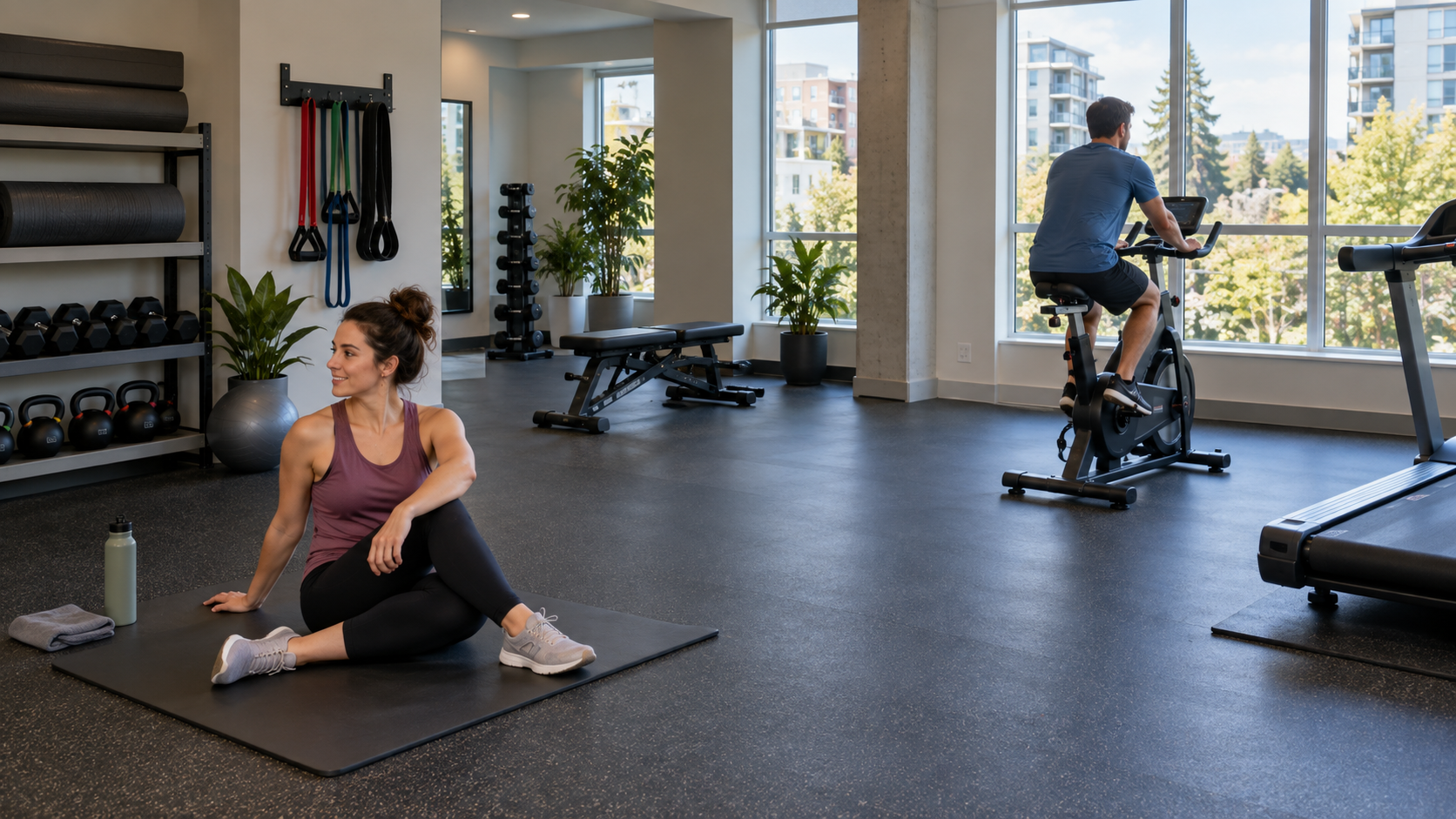
Sometimes the room is physically fine and practically unavailable.
Do its hours work for residents who commute or work shifts? Is access straightforward? Are the rules easy to find and understand?
A long list of prohibitions at the door can make an amenity feel as though the building would prefer you didn’t use it.
Rules still matter, especially where noise and shared equipment are concerned. Explain the important ones clearly and review whether the access arrangements match residents’ routines.
Then try a manageable round of improvements: repair the broken equipment, clear a useful exercise area, address cleaning concerns, and let residents know what has changed. Ask for feedback after they’ve had a chance to use it.
Buying more equipment can wait until you know what people are missing.
Ask residents about their routines and reasons for not using the room. Review existing equipment, available floor space, maintenance, hours, and access before deciding what to purchase.
Choose flooring intended for the activities and equipment in each zone. A qualified supplier or installer should assess the loads, substrate, cleaning requirements, transitions, and relevant product specifications.
It is not a guaranteed solution. Performance depends on the product, equipment, activities, installation, and building assembly. Recurring impact-noise complaints may require an acoustic assessment.
Absolutely. Reliable equipment, an uncluttered exercise area, clear access, and a comfortable environment can serve residents better than a crowded room with more machines.
An empty fitness room is an opportunity to ask a better question than “Why won’t people use it?”
Try “What are we asking them to put up with?”
Then start there.
Making Vancouver buildings just a little bit better... xoxo J.