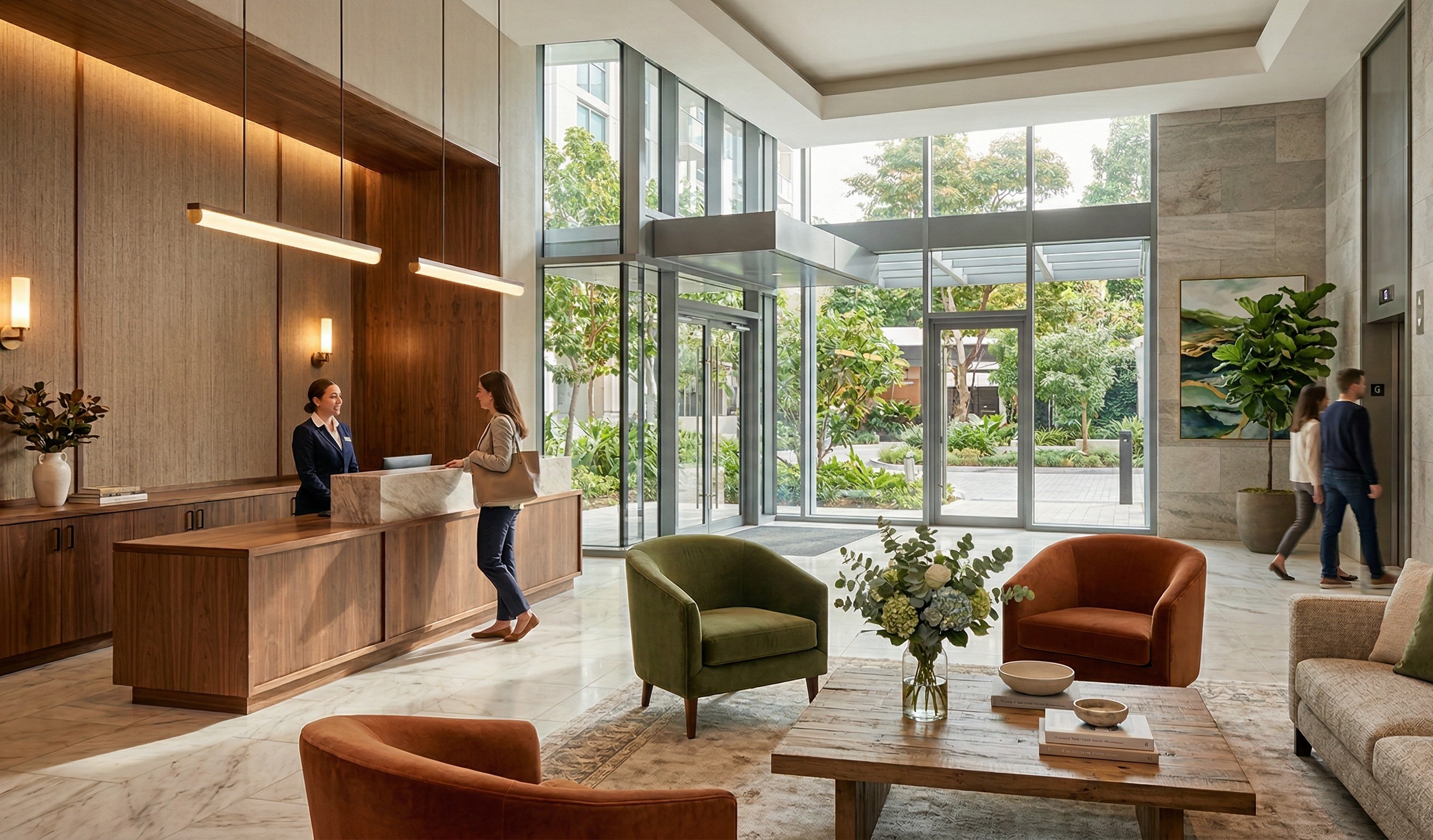
What makes a condo lobby feel welcoming and safe? Let's break down the key elements of lobby design, including flooring, lighting, acoustics, and layout, and how they shape first impressions in residential buildings.
March 25, 2026
·
8 min
You can usually tell within a few steps.
Not after a full tour. Not after sitting down. Just walking through the front doors.
Some lobbies make you slow down without realizing it. You adjust your pace, take a breath, maybe glance around. Others push you straight through. You swipe your fob, avoid the puddle, and head for the elevator.
I spend a lot of time in buildings across Metro Vancouver, and this is one of the first things I notice. It doesn’t always line up with how new the building is, or how much money was spent on it. Some older buildings feel incredibly put together. Some newer ones feel like they missed the memo.
A welcoming lobby isn’t about finishes alone. It’s about how the space handles real life.
The entrance is doing more work than you think
In this city, everything starts with the weather.
If you manage buildings in Vancouver, you already know what I’m going to say. Nine months of the year, people are coming in with wet shoes. Water gets tracked in, along with dirt, leaves, and whatever else came off the sidewalk that day. You might even see a cherry blossom or two in the springtime.
And yet, despite these constant reminders from mother nature, I still walk into buildings where the entry setup feels like an afterthought.
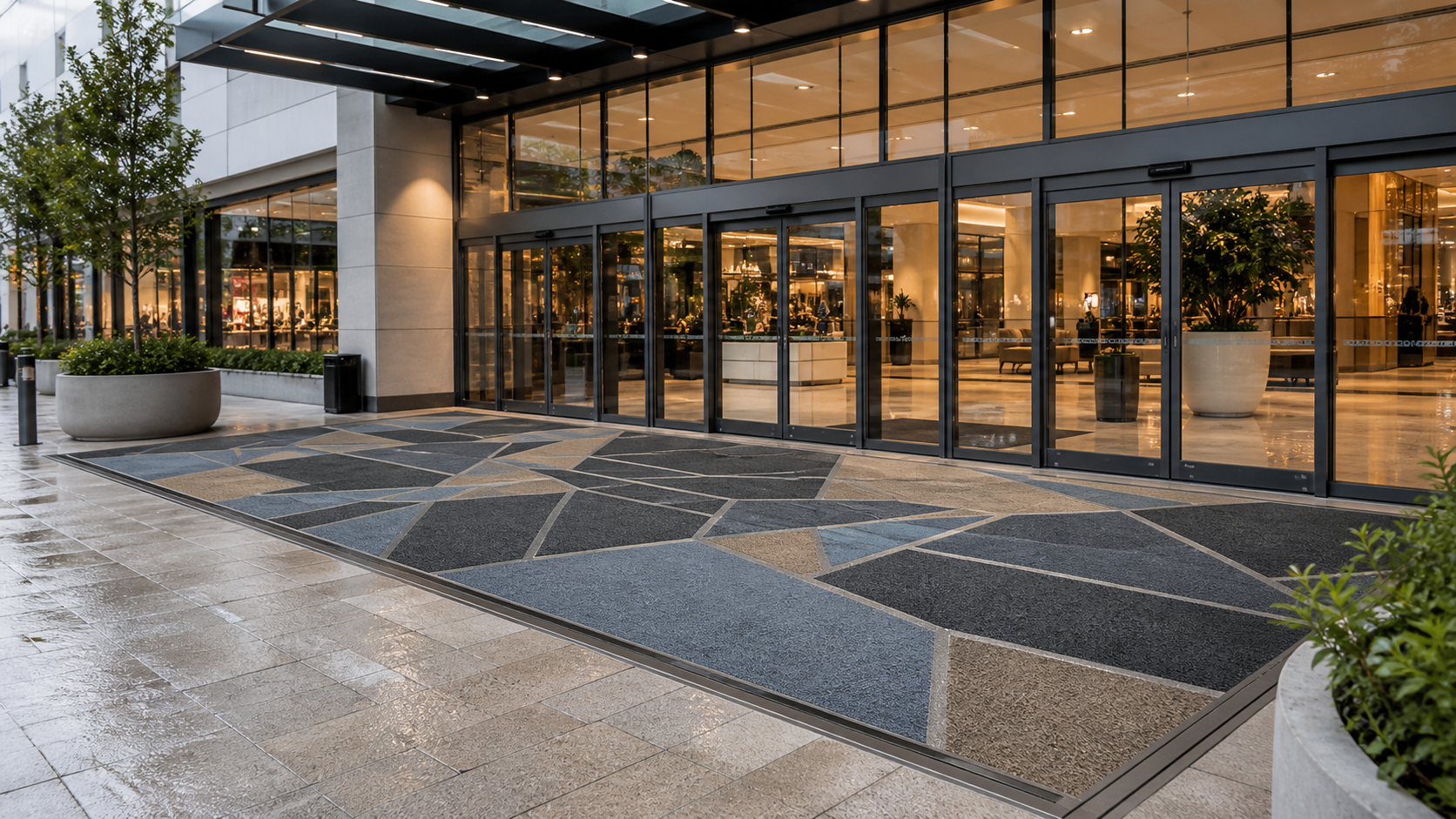
You’ll see a small, cheap mat that doesn’t quite cover the door swing. Or tile right at the threshold that gets slick the moment it rains (seriously, how is this still a problem in a city like Vancouver?). Within a few hours, you’ve got a trail of moisture running straight into the lobby.
At that point, the building is already on its back foot.
The best entrances I see are designed for this reality, not against it. They’re designed to work with the elements.
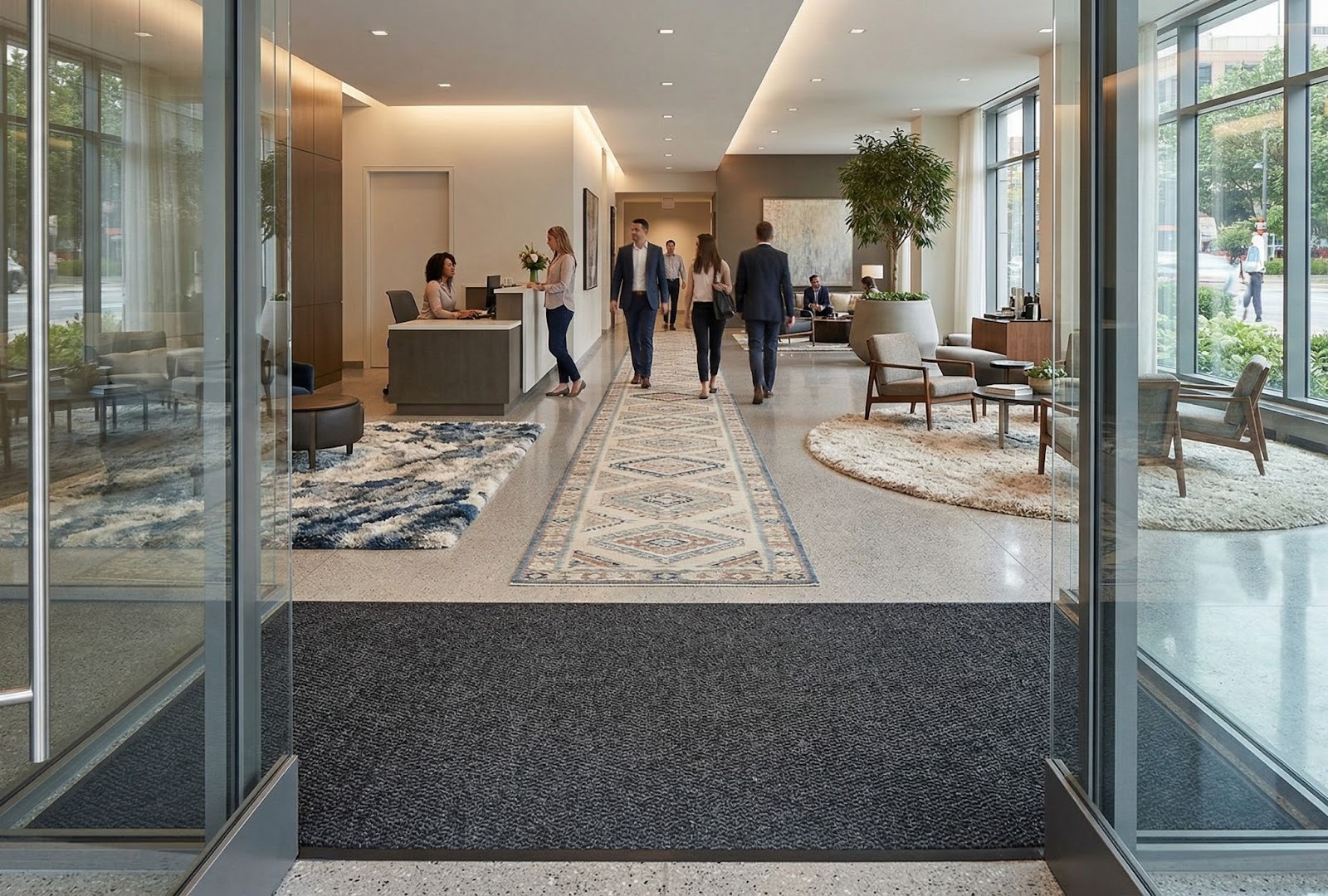
There’s enough depth for people to actually take a couple of steps and dry their shoes. The matting runs wall to wall. The transition into the lobby feels intentional, not like something that was added later to fix a problem. Read that last sentence again, it’s important!
When handled properly, everything else becomes easier. The floors stay cleaner. The space feels safer. And no one’s thinking about where they’re stepping, which is exactly how it should be.
Flooring sets the tone, whether you notice it or not
People tend to think of flooring as a visual choice. Light or dark, tile or wood, polished or matte. And don’t get me wrong, that’s important. In practice, it’s one of the biggest drivers of how a lobby feels.
I’ve walked into buildings where every surface is hard. Stone floors, high ceilings, glass everywhere. It looks sharp in photos. In real life, it can feel cold and loud. Every footstep echoes. Conversations carry. You don’t feel like staying there any longer than you have to.
Then you walk into a building that’s made a few different decisions, where it’s clear they asked the important questions.
What flooring works best in a condo lobby?
In most buildings, it’s not about choosing one material. It’s about combining a few that work together:
Durable hard flooring at the entry to handle heavy traffic
Full-width matting systems to manage water and debris
Runners or area carpets to guide movement and reduce noise
Softer zones near seating or concierge areas to make the space feel more comfortable
The goal isn’t to make the lobby feel soft everywhere. It’s to put softness where people feel it most.
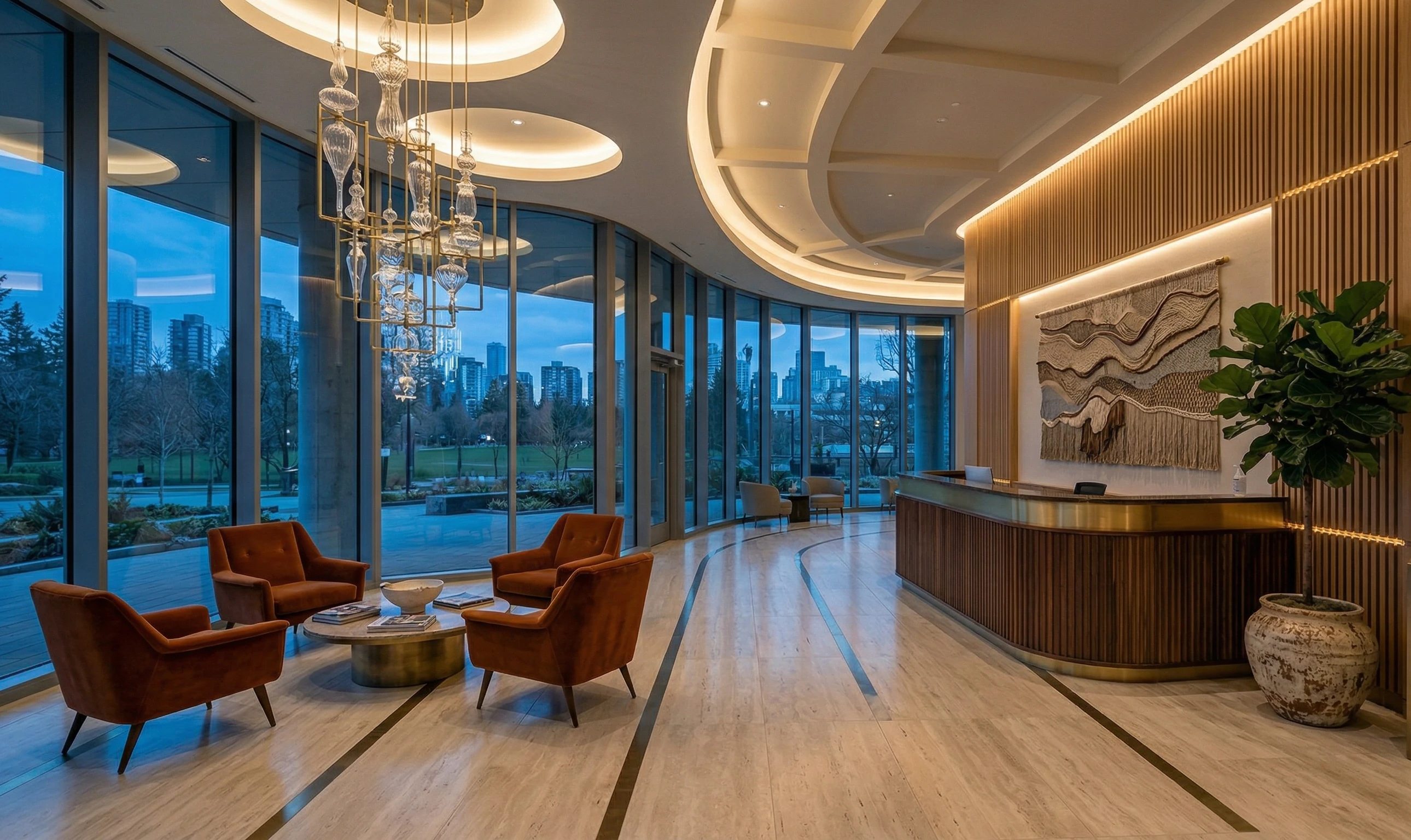
Maybe there’s a runner guiding you from the entrance toward the elevators. Maybe there’s an area carpet grounding a small seating zone. The sound changes immediately. The pace changes too. It doesn’t have to be overdone. You just need enough softness to take the edge off.
In buildings with concierge desks or parcel rooms, I find this matters even more. People are stopping, waiting, interacting with staff. Without something underfoot to absorb sound and define the space, those areas can feel surprisingly chaotic.
Scale is where a lot of lobbies lose their footing
This is something I notice all the time.
A lobby might have good materials and decent lighting, but the proportions feel off. The space is large, but nothing anchors it. Furniture is pushed to the edges or placed in a way that doesn’t quite make sense. The entry area feels disconnected from the rest of the room.
It ends up feeling unfinished.
One of the easiest ways to fix that is by thinking in zones.
Where do people arrive?
Where do they pause?
Where do they move through?
I’ve seen relatively simple lobbies feel much more resolved just by introducing a properly sized runner or carpet that defines the path from the entrance to the elevators. It gives people a visual cue. You don’t have to think about where to go—you just follow the space.
Without that, people drift. And drifting doesn’t feel welcoming. It feels uncertain.
Lighting can make or break the entire space
You can have great finishes and still end up with a lobby that feels off.
More often than not, it comes down to lighting.
I’ve walked into buildings where everything is evenly lit, bright from wall to wall. It’s technically well-lit, but it feels flat. Almost like a retail environment. There’s no sense of hierarchy or warmth.
On the other end, you get lobbies with dim corners and inconsistent lighting, where parts of the space feel neglected or forgotten.
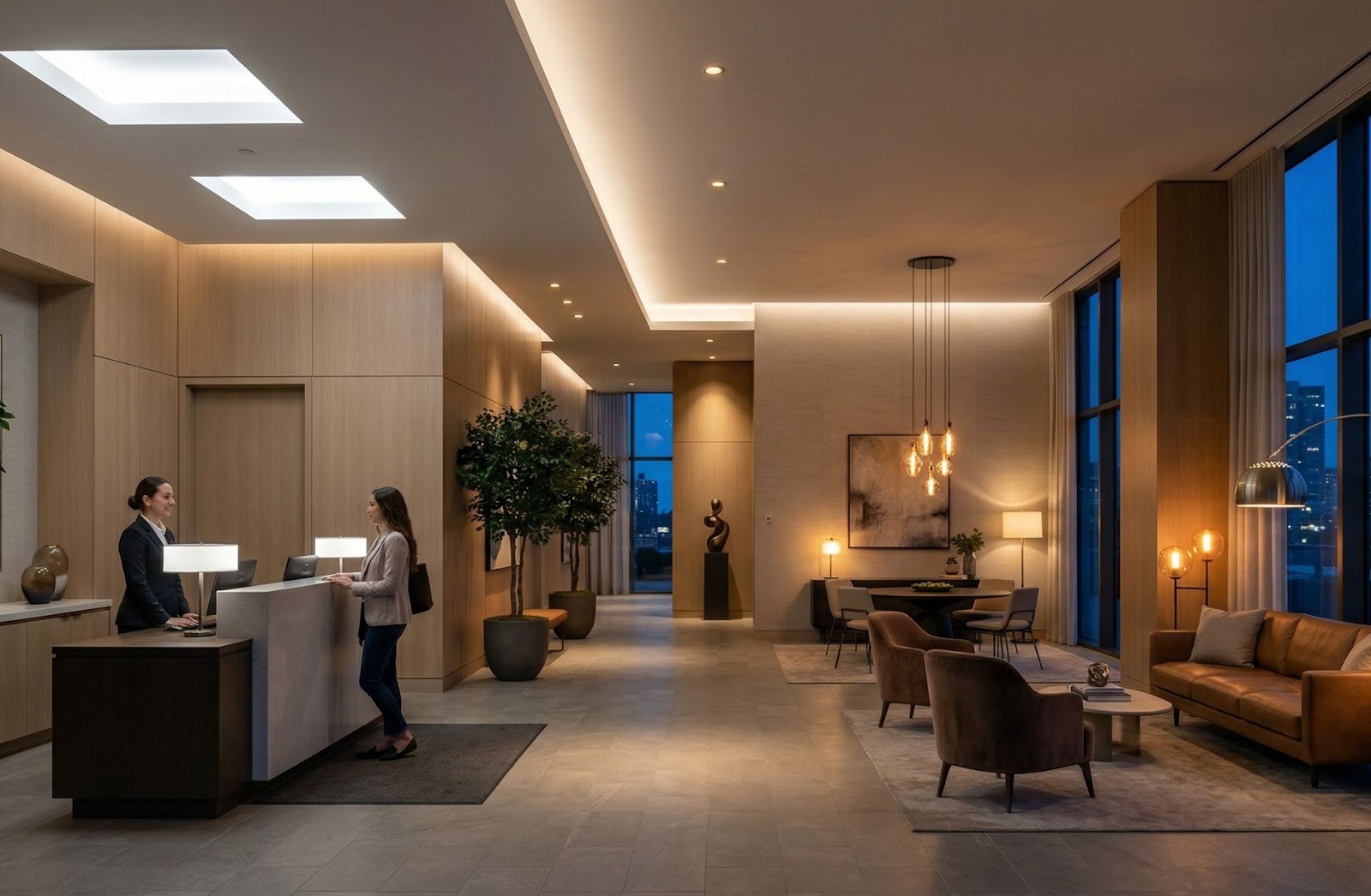
The lobbies that feel welcoming tend to use lighting a bit more intentionally. Warmer tones near seating areas. Slightly brighter zones at the entrance or concierge desk. Enough variation to make the space feel layered instead of uniform.
In the winter months, when it’s dark by late afternoon in Vancouver, this becomes even more noticeable. A well-lit lobby can feel like a bit of relief at the end of the day. A poorly lit one just blends into the grey.
If it’s hard to keep clean, it won’t feel welcoming
This is where design and operations intersect.
As a property manager, I’m always thinking about how a space holds up over time. Not just how it looks on day one.
If a lobby is difficult to maintain, it shows quickly. You start to see streaks on the floor, worn entry points, mats that always look saturated. Staff are constantly trying to stay ahead of it, and it never quite feels clean.
In many cases, that’s not a maintenance issue. It’s a setup issue.
The buildings that perform well have already accounted for the volume of traffic and the conditions outside. They’ve put the right materials in the right places, especially at the entry points where most of the mess comes in.
That might mean custom-fit matting that actually covers the full width of the entrance, or flooring choices that don’t highlight every footprint the moment someone walks in.
There are local companies I’ve worked with like McCrann Flooring and Ames Tile and Stone that focus specifically on this side of things—designing entry systems and lobby flooring that works with how people actually use the building. It’s not about adding more. It’s about getting the fundamentals right so the space can function day to day without constant intervention.
When that’s in place, the lobby takes care of itself a lot more than people expect.
Noise is often the silent problem
People don’t always point to noise directly, but they react to it whether they know it or not.
A loud lobby changes how people behave. Conversations feel more exposed. Footsteps feel sharper. The whole space takes on a slightly tense energy. Once you start listening for it, it’s hard to miss.
This usually comes back to materials. Hard surfaces reflect sound. High ceilings amplify it. Without anything to absorb or break up that noise, it just builds.
I’ve noticed that even small changes can make a difference.
How do you reduce noise in a condo lobby?
As a property manager with lots of on the ground experience, here are a few practical things I’ve seen work well:
Introduce soft surfaces where people pause or gather. Area carpets and runners help absorb foot traffic and reduce echo right away.
Add upholstered seating instead of all hard finishes. Even a small amount changes how sound moves through the space.
Break up large open areas. Defined zones—through furniture or flooring—help stop sound from travelling unchecked.
Avoid fully reflective materials across every surface. You don’t need to eliminate them, just balance them.
You don’t need to turn the lobby into a living room. It just needs to feel comfortable to hang out in.
A welcoming lobby gives people a reason to pause
Not for long. Just enough.
A lot of buildings treat the lobby as a space you move through as quickly as possible. There’s no real place to stop unless you’re forced to.
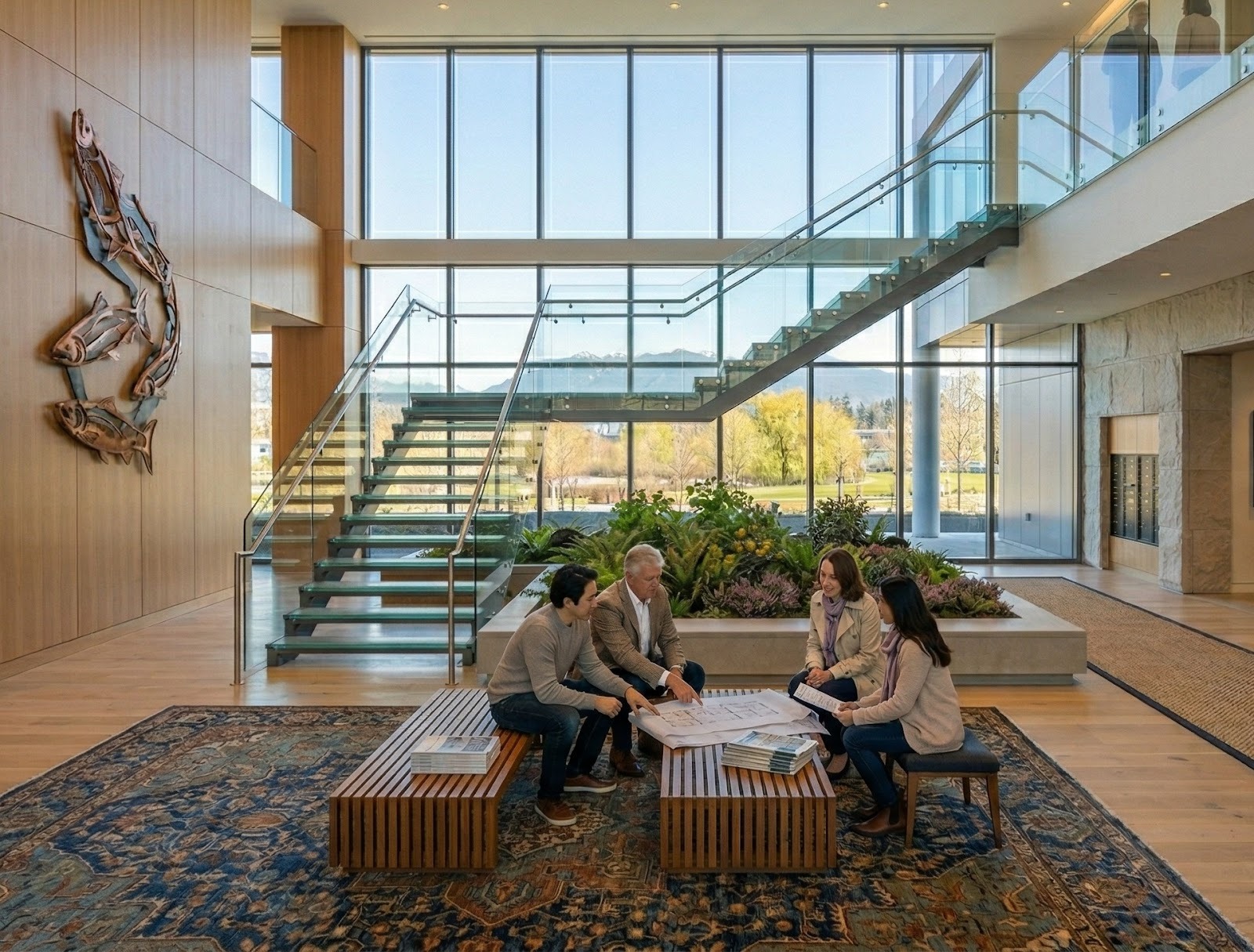
The better ones allow for a moment of pause. A bench near the entrance. A small seating area that doesn’t feel like you’re on display. Somewhere you can wait, check your phone, or have a quick conversation without feeling like you’re in the way.
It changes the rhythm of the space, and it makes the building feel more welcoming.
Key Takeaways: What Makes a Condo Lobby Feel Welcoming?
If you strip it down, a welcoming lobby comes from getting a few fundamentals right:
A well-designed entrance that handles Vancouver weather and stops water at the door
Flooring that softens the space, reduces noise, and guides movement
Clear layout and proportions so people know where to go without thinking
Lighting that feels warm and intentional, not flat or overly bright
Materials that are easy to maintain, so the space stays clean throughout the day
A bit of acoustic control, so the lobby feels calm instead of echoey
A place to pause, even briefly, without feeling in the way
Most buildings don’t miss all of these. They miss two or three. And that’s usually enough to change how the space feels.
It’s rarely about doing more
Most of the time, when a lobby doesn’t feel welcoming, it’s not because something big is missing.
It’s because a few small things weren’t thought through.
No individual issue is dramatic on its own. But together, they shape the entire experience.
The lobbies I like aren’t necessarily the most expensive ones. They’re the ones where someone took the time to think about how the space actually works.
You walk in, and everything feels easy.
You don’t have to think about where to step, where to go, or how quickly to move.
Simply put, you walk in, and it feels easy to be there.
Making Vancouver buildings just a little bit better... xoxo J.