Fountains and other water features aren't just decorative. Learn why water features create better condo communities, improve shared spaces, and deserve better than being quietly switched off.
July 9, 2026
·
6 min
If there's one thing property managers and condo residents almost always disagree on, it's water features.
Residents tend to see them as one of the nicest parts of a building. They soften a courtyard, make an entrance feel welcoming, and give people a reason to pause for a minute instead of walking straight through with their eyes glued to their phones.
Property managers, on the other hand, see pumps that need servicing, drains that clog with leaves, algae that somehow appears overnight, and another maintenance item competing for attention on an already long list.
It's not difficult to understand how those two perspectives eventually collide.
I've lost count of the number of fountains I've seen quietly switched off over the years. Sometimes the explanation is budget. Sometimes it's maintenance. Sometimes the equipment reaches the end of its life and replacing it simply falls further and further down the priority list until someone finally decides it's easier to leave the water out altogether.
From an operations perspective, I understand the decision.
I just think it's usually the wrong one.
Good buildings aren't memorable because they're the easiest buildings to maintain. They're memorable because they create spaces people genuinely enjoy spending time in. Water features happen to be one of the simplest ways to accomplish that, yet they're often treated like an unnecessary luxury instead of the amenity they were originally designed to be.
The Short Answer: Are Water Features Worth Maintaining?
In my opinion, yes.
Well-designed fountains, reflecting pools, and other outdoor water features make shared spaces more inviting, create opportunities for residents to gather, reduce surrounding noise, and strengthen people's connection to the outdoors. While they require regular maintenance, removing them altogether often solves the wrong problem.
The better solution is to maintain the feature properly while designing the surrounding spaces to handle the realities that come with it.
We Underestimate How Much Water Changes a Space
Most people don't walk into a courtyard because there's a fountain.
They stay because of how the space feels.
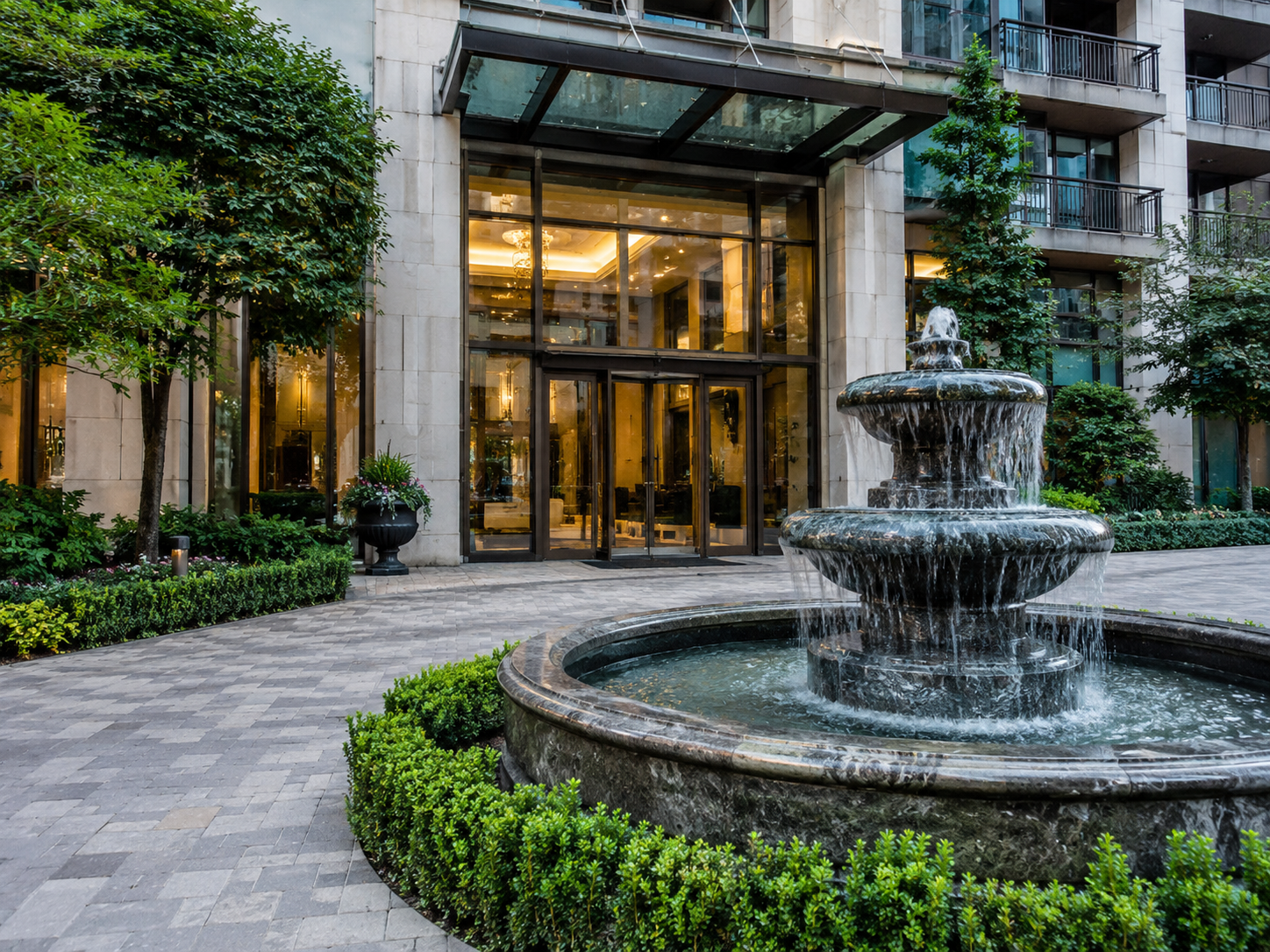
Running water has a remarkable ability to soften an environment in ways that are difficult to replicate with landscaping alone. It masks traffic noise, creates movement in an otherwise static courtyard, and naturally encourages people to slow down. Even if residents aren't consciously paying attention to the fountain itself, they're almost certainly experiencing the atmosphere it creates.
That's something we've understood for centuries.
Public squares, hotel courtyards, botanical gardens, and civic parks all use water for exactly the same reason. It makes spaces feel calmer, more welcoming, and more connected to nature, even in the middle of a busy city.
Condo buildings are no different.
When outdoor amenities are designed well, they become places where neighbours read a book on a sunny afternoon, enjoy a morning coffee, or have an impromptu conversation while walking the dog. None of those moments require people to interact with the fountain directly. The water simply creates an environment people enjoy being in.
Ironically, that's also why people notice when it's gone.
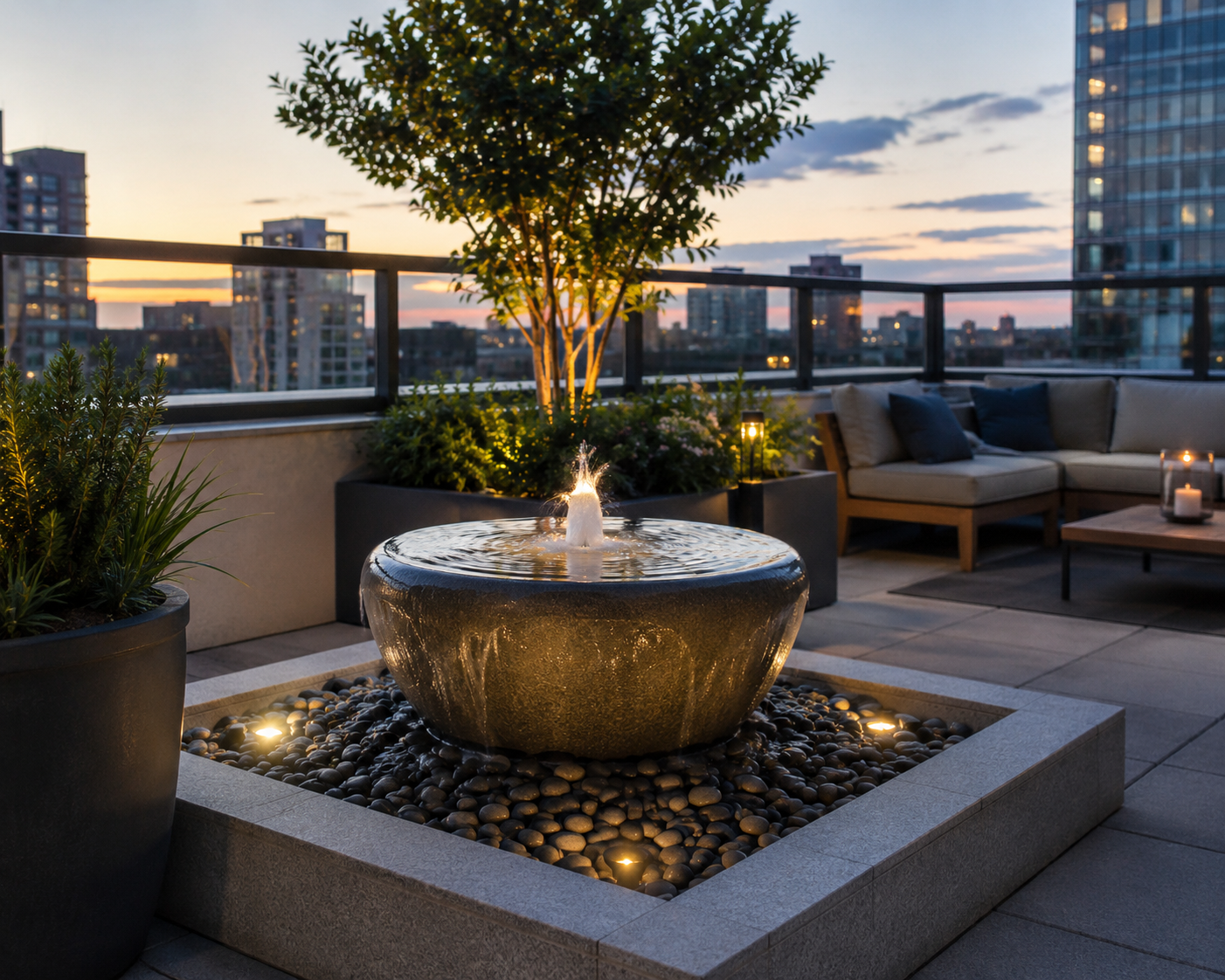
A drained fountain changes the entire character of a courtyard or a rooftop patio. The space still functions, but it no longer feels alive in quite the same way.
The Problem Usually Isn't the Fountain
This is where I think many buildings misdiagnose the issue.
Water features don't create operational headaches on their own. Poor planning around them does.
One of the most common objections I hear is that fountains lead to wet lobbies. People walk close to the water, children inevitably get a little closer than they should, and moisture eventually makes its way through the front entrance.
If a building chooses to include water as one of its signature outdoor amenities, then the entrance should be designed with that reality in mind rather than pretending everyone will arrive at the front door perfectly dry.
That's where seemingly ordinary details become surprisingly important.
High-performance entrance matting, for example, quietly removes an enormous amount of water before it ever reaches the lobby flooring. Most residents never think about it because, when it's doing its job properly, there's nothing to notice.
The difference between an average entrance system and a great one can be significant. For example, some of the entrance systems supplied by McCrann Flooring are capable of holding up to seven litres of water per square metre before becoming saturated. Many standard commercial entrance mats reach capacity well before that.
That's not a particularly glamorous statistic.
It is, however, exactly the kind of behind-the-scenes decision that allows buildings to enjoy features like fountains without constantly worrying about wet floors inside.
To me, that's the real lesson.
Instead of removing the amenity, solve the operational problem properly.
That's what good building management looks like.
Why the Best Buildings Give People a Reason to Stay
One thing I've always found interesting is how much effort we put into creating outdoor amenity spaces, only to remove one of the features that makes people want to use them.
Think about the best courtyards you've visited. They usually have comfortable seating, mature landscaping, and somewhere nearby, you'll often find water. It might be a fountain, a reflecting pool, or a small stream running through the space, but it's there because someone understood that good outdoor design isn't just about filling space. It's about creating an atmosphere.
Water has a way of slowing people down.
Someone who was planning to walk straight through suddenly sits down with a coffee. A neighbour stops to chat instead of rushing back upstairs. Someone working from home decides to spend twenty minutes outside because the courtyard actually feels like somewhere worth being.
Those moments might seem small, but they're exactly what separates a building that simply houses people from one that feels like a community.
As cities become denser, those shared outdoor spaces become even more valuable. Not everyone has a backyard, a quiet patio, or easy access to nature. For many residents, the building courtyard is their outdoor space, and water features help transform it from somewhere people pass through into somewhere they genuinely want to spend time.
That's a difficult thing to measure on a maintenance budget, but it's incredibly easy to notice once it's gone.
Maintenance Is Part of the Amenity
There's a tendency in building operations to judge amenities by how much work they require instead of how much value they create.
By that logic, we'd remove the landscaping because it needs pruning. We'd eliminate fitness rooms because equipment eventually wears out. We'd close rooftop patios and other good amenity spaces because furniture has to be cleaned.
Of course we don't.
We maintain those spaces because we recognize they're part of what residents expect from the building they've chosen to live in.
Water features deserve the same mindset.
Yes, they require seasonal maintenance. Pumps need servicing, water quality needs monitoring, and occasional repairs are simply part of owning the feature. None of that is unique. It's the cost of preserving an amenity that contributes to the resident experience every single day, even for people who never consciously stop to think about it.
Sometimes I think we become so focused on reducing maintenance that we accidentally remove the very things that make a property enjoyable in the first place.
That's not efficiency.
It's simply lowering the standard.
Key Takeaways: Are Water Features Worth the Maintenance?
In almost every case, I believe they are.
Outdoor fountains, reflecting pools, and decorative water features do far more than improve a building's appearance. They create calmer outdoor spaces, encourage residents to spend time outside, reduce surrounding noise, and strengthen the connection between people and nature.
The maintenance they require shouldn't be viewed as a reason to remove them. Instead, buildings should focus on supporting these amenities through thoughtful operations, whether that's maintaining pumps properly, planning for seasonal upkeep, or installing entrance systems that manage the extra moisture before it reaches interior flooring.
They're about maintaining the features that make people happy to call the building home.
FAQ: Outdoor Water Features in Condo Buildings
Are outdoor fountains worth maintaining in condo buildings?
Yes. While they require regular maintenance, outdoor water features improve resident experience, soften surrounding noise, encourage the use of shared outdoor spaces, and contribute to a more welcoming property.
Why do so many condo buildings shut their fountains off?
The most common reasons are maintenance costs, aging equipment, and ongoing servicing requirements. Unfortunately, many buildings solve those operational challenges by removing the amenity instead of maintaining it.
Do water features create safety concerns?
They can increase the amount of moisture entering a building, but that's largely a design and operations issue. Proper entrance matting, drainage, and routine maintenance significantly reduce those risks.
Do residents actually use outdoor water features?
Not directly, and that's the point. Most people aren't interacting with the fountain itself. They're enjoying the quieter, more relaxing outdoor environment it helps create.
How can buildings reduce water tracked into the lobby?
High-quality entrance matting, regular maintenance, and thoughtful landscaping around entrances help capture moisture before it reaches interior flooring.
At the end of the day, I think we sometimes become a little too eager to remove the things that require attention instead of asking why they were installed in the first place.
A well-designed water feature isn't just decoration. It's part of the building's identity. It makes an entrance more welcoming, a courtyard more inviting, and an ordinary afternoon outside just a little more enjoyable.
To me, that's worth maintaining.
Because good buildings aren't remembered for the amenities they removed. They're remembered for the spaces people actually wanted to spend time in.
Making Vancouver buildings just a little bit better... xoxo J.