Why are condo parkades common targets for theft? Let's investigate the design and security gaps that make parkades vulnerable and outlines practical ways to improve visibility, access control, and safety.
January 14, 2026
·
8 min
If you want to understand how secure a building really is, don’t start at the front entrance.
Start in the parkade.
That’s where most of the vulnerabilities show up first.
It’s a space that’s out of sight, often lightly monitored, and used constantly. Residents move through it without thinking much about it. Doors open and close throughout the day. Vehicles come and go. People pass through without much interaction.
And that combination—access, anonymity, and routine—is exactly what makes it attractive to criminals.
Not because parkades are inherently unsafe. But because they’re often easier to access than people assume.
The Short Answer: Why Are Condo Parkades Easy Targets for Theft?
Condo parkades are easy targets because they combine easy access, limited visibility, and predictable patterns.
Most issues come down to a few things:
Access points that aren’t as controlled as they appear
Limited visibility in key areas
Valuable items stored in plain sight
Behaviour that unintentionally allows entry
Inconsistent monitoring and maintenance
When these overlap, the space becomes easier to enter and easier to move through unnoticed.
Why Access Is Easier Than It Looks
From the outside, most parkades feel secure.
There’s a gate. There’s a fob system. Maybe even a camera.
But in practice, access is often more fluid than intended.
Gates stay open longer than expected. Vehicles follow each other in. People walk in behind residents without being questioned. Doors connecting the parkade to the building don’t always close properly.
Over time, these small gaps become normal.
And once they’re predictable, they’re easy to take advantage of.
Do Parkade Gates Actually Prevent Theft?
They help—but they’re not a complete solution.
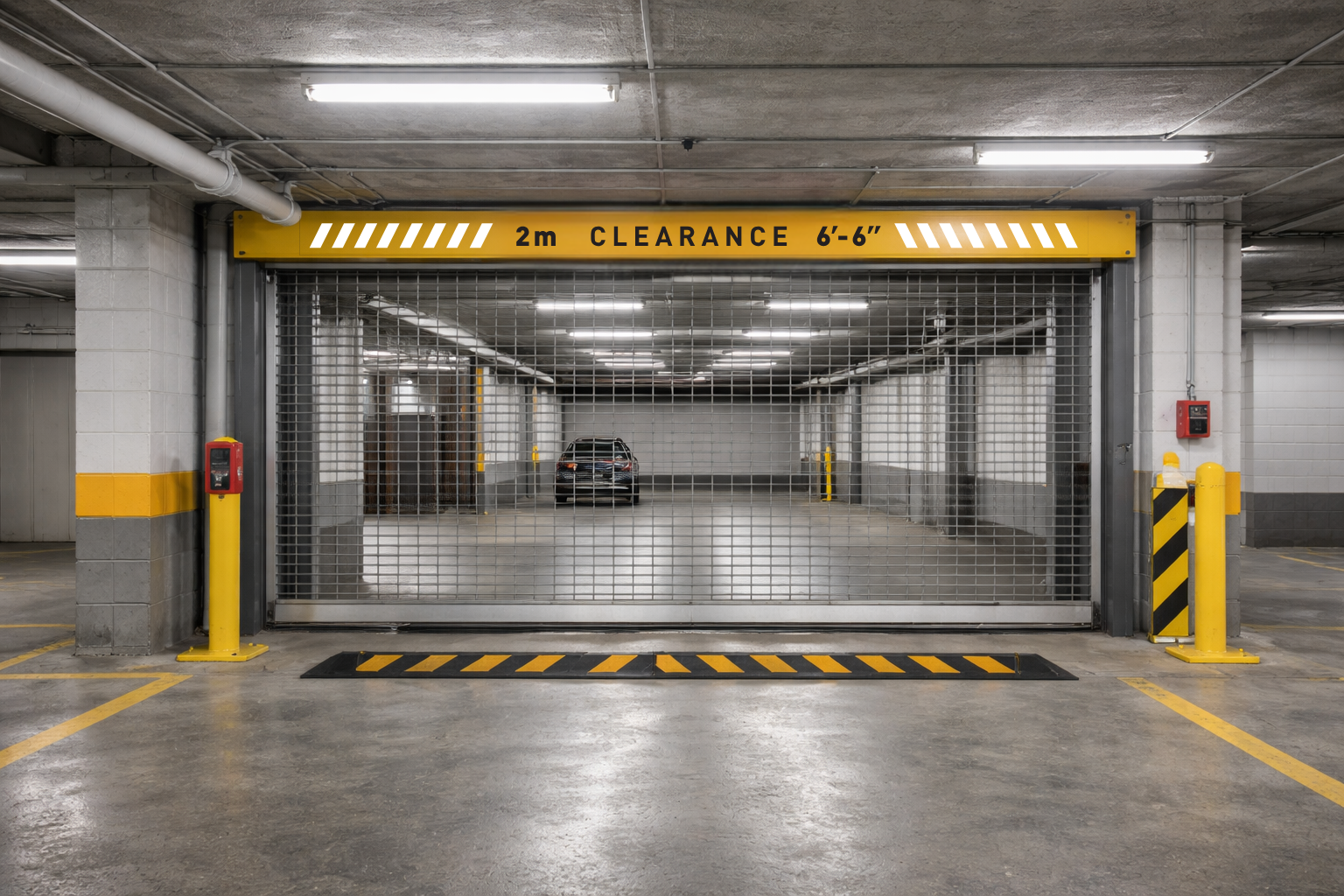
Security experts have pointed out that metal parkade gates, while useful, are not strong deterrents on their own. In Metro Vancouver, thefts in parkades have become more frequent in recent years, and many buildings are targeted simply because access isn’t as secure as it appears.
What stands out is how persistent these attempts can be.
Once a building is seen as accessible and worth the effort, it tends to stay on the radar. And a gate alone doesn’t change that if the surrounding conditions make entry easy.
Security works best when it’s layered.
A gate is just one piece.
Visibility Changes Everything
Lighting and sightlines play a bigger role than most people realize.
When a parkade is well-lit and easy to read, people move differently. Residents feel more aware of their surroundings. Movement is easier to track. Unusual behaviour stands out.
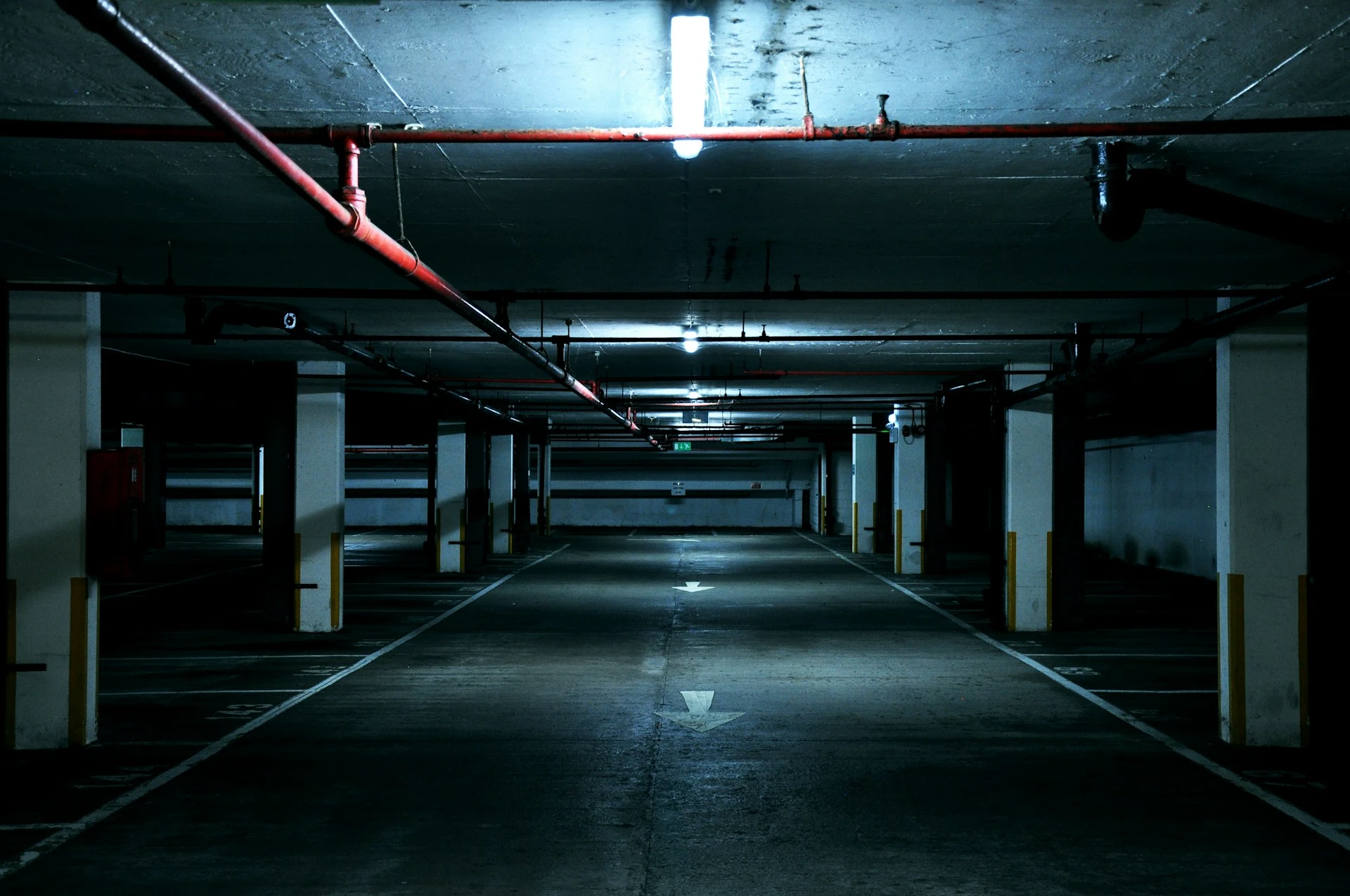
When lighting is uneven or sightlines are blocked, the opposite happens.
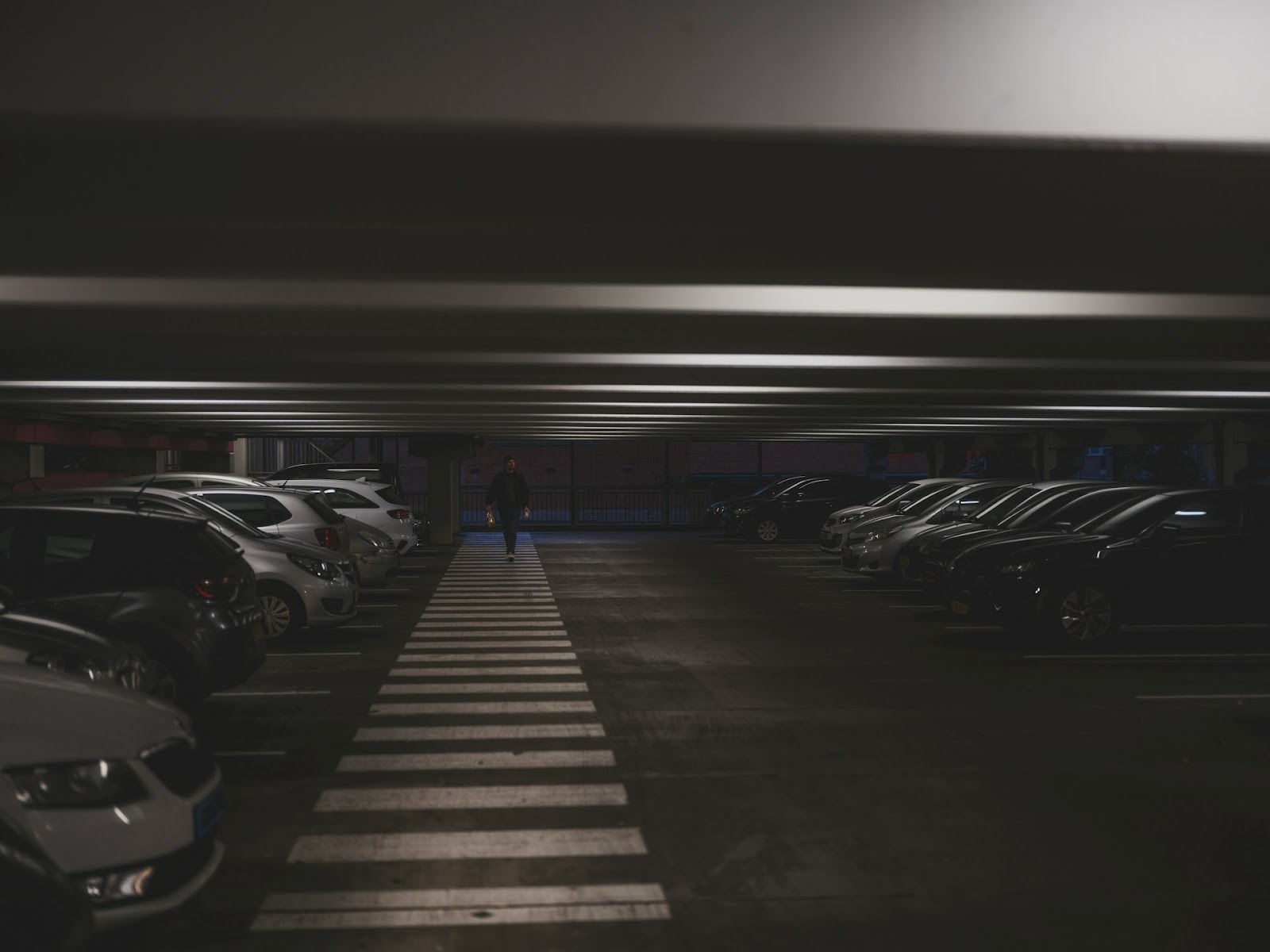
Corners feel uncertain. Columns create blind spots. It becomes easier for someone to move through the space without being noticed.
This doesn’t just affect perception.
It affects behaviour. And it begs the question: How do you improve lighting in a condo parkade?
Improving lighting doesn’t require a full redesign. It starts with consistency.
Most parkades don’t have a lighting problem everywhere. They have lighting gaps: areas where brightness drops off, or where fixtures don’t fully cover the space. Those are the areas to focus on first.
A few practical steps:
Replace inconsistent or aging fixtures Older lights often dim over time. Even if they’re still working, they may not be providing enough coverage.
Eliminate dark zones between fixtures Walk the parkade and notice where visibility drops. Transitions between rows, corners, and entrances are common problem areas.
Use brighter, more even lighting The goal isn’t harsh brightness. It’s even distribution so there are fewer shadows and fewer places to disappear.
Keep fixtures clean and maintained Dust and grime reduce output more than people expect. Regular cleaning makes a noticeable difference.
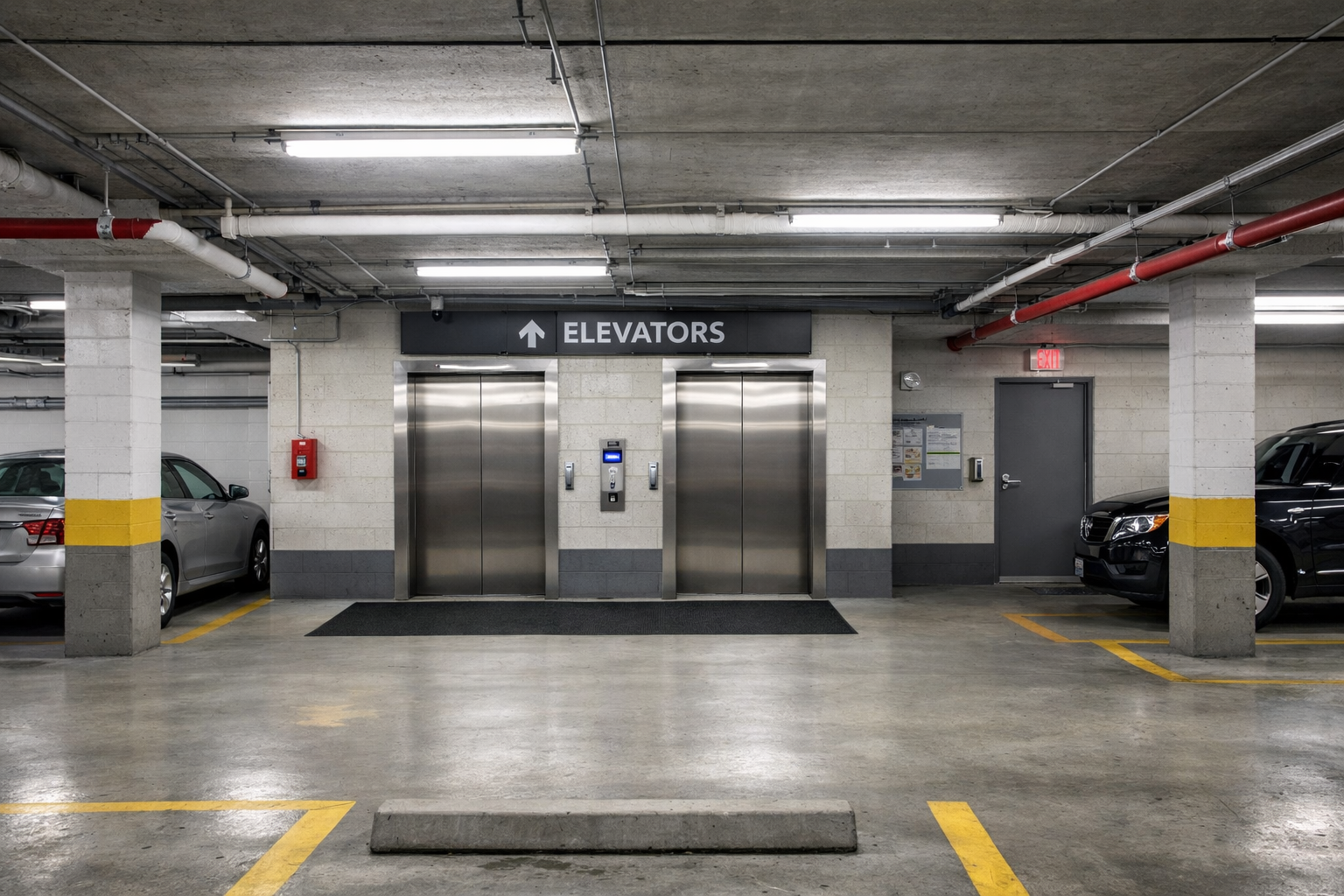
Check lighting near key areas Entry points, elevators, stairwells, bike storage, and locker areas should feel especially clear and visible.
Lighting matters more than it seems. A well-lit parkade feels active, monitored, and maintained. Even without direct supervision, it gives the impression that the space is being looked after.
Why Behaviour Matters More Than Systems
Most parkade breaches don’t happen because of a technical failure. They happen because of everyday behaviour.
Someone holds the gate open. Someone lets another person in without thinking. Someone assumes that because it’s daytime, everything is fine.
In reality, a lot of incidents happen during the day. Most people aren’t aware of that. Having been a property manager for decades, I can attest to it first hand.
Daytime is when buildings are most active, and when unusual activity blends in more easily. Strangely enough, it can be harder to spot nefarious activities when the sun is shining.
One of the simplest recommendations from security professionals is also one of the most overlooked: know your neighbours, and don’t let people into the building if you don’t recognize them.
It’s not about being confrontational. It’s about being aware, and reporting what seems out of place.
Where High-Value Items Become Easy Targets
Parkades aren’t just storage for vehicles anymore. They’re full of high-value items.
Bikes, e-bikes, tools, seasonal equipment, and personal storage lockers are all concentrated in one place. Often, they’re visible. Sometimes, they’re poorly secured.
From a theft perspective, it’s efficient, and a high-value opportunity.
Everything is in one location, and once access is gained, there’s time to move through the space.
That’s why certain areas tend to be hit more often:
Bike storage zones
Storage lockers
Corners with limited visibility
Areas further from main entry points
Break-ins in these spaces aren’t random. They’re predictable.
How Do You Make a Parkade More Secure?
Security improves when the space becomes harder to access and easier to monitor.
That usually starts with tightening entry points.
Gates should close consistently, and quickly. Access doors should latch properly. Tailgating should be discouraged—not just by signage, but by awareness. An internal awareness campaign can go a long way to slowing down theft.
From there, visibility matters.
Even lighting, clear sightlines, and fewer hidden areas make a noticeable difference. When people can see and be seen, behaviour shifts. It also helps to reduce opportunity.
Keeping high-value items out of sight, improving storage security, and avoiding clutter all limit what’s available once someone gets inside.
And finally, consistency matters.
Security isn’t a one-time fix. It’s an ongoing condition. Addressing proper protocols with residents is a great first step to securing a building. It takes a village.
Why Maintenance Is Part of Security
Security systems are only as effective as their condition.
A camera that isn’t working. A light that hasn’t been replaced. A door that doesn’t close fully. These are small issues, but they add up. And they send a message.
When a space feels loosely maintained, it suggests that it isn’t being closely monitored. That perception alone can influence behaviour.
On the other hand, a well-maintained parkade feels controlled. And that changes how people move through it.
The Real Issue
Parkades are often treated as secondary spaces.
As a property manager, I’m here to tell you that they’re not.
They’re one of the most active, least supervised parts of a building—and one of the easiest to access if small issues are left unchecked.
Security doesn’t break all at once. It breaks down slowly. And when it does, the parkade is usually where it shows up first.
Key Takeaways: Why Are Condo Parkades Easy Targets for Theft?
Parkades become easy targets when access is loose, visibility is limited, and behaviour fills the gaps.
To reduce that risk, focus on the fundamentals:
Tighten access points: Ensure gates, doors, and entry systems close and function consistently.
Improve visibility throughout the space: Use even lighting and clear sightlines to reduce blind spots.
Reduce opportunities for theft: Keep valuables out of sight and secure storage areas properly.
Encourage awareness among residents: Avoid letting unknown individuals into the building, even during the day.
Maintain systems consistently: Fix small issues early so they don’t signal larger gaps in security.
When these are in place, the space becomes harder to enter and easier to monitor. When they’re not, the opposite happens quickly.
FAQ: Condo Parkade Security
Why are parkades targeted by thieves?
Because they offer relatively easy access, limited visibility, and a concentration of valuable items.
Do security gates stop theft?
They help, but they’re not enough on their own. Security needs multiple layers.
Does theft only happen at night?
No. Many incidents happen during the day when activity is higher and less noticeable.
What are the most common targets in parkades?
Bikes, storage lockers, tools, and vehicles.
How can residents improve security?
By staying aware, not letting unknown people into the building, and reporting issues early.
A secure parkade doesn’t rely on a single feature. It works because small details are handled consistently, and because the space makes it harder for problems to go unnoticed.
That’s usually the difference.
Making Vancouver buildings just a little bit better... xoxo J.