Learn why condo concierges are essential to building security, parcel management, and resident experience, and how simple courtesy helps create a stronger community.
July 16, 2026
·
6 min
Every condo building has someone who quietly keeps the place running.
It isn't always the property manager.
It isn't always the strata council.
More often than not, it's the concierge.
They're usually the first person residents see in the morning and the last person they pass on the way home. They accept deliveries, answer questions, keep an eye on who belongs in the building and who doesn't, coordinate with contractors, help residents through minor crises, and somehow manage to do it all while greeting people with a smile.
Then someone walks up to the desk because Amazon delivered the wrong package and decides that's somehow the concierge's fault.
I've never really understood that….but I digress.
Concierges occupy one of the strangest roles in a condo building because the better they are at their job, the less people tend to notice everything they're actually doing. When the building feels safe, parcels are organized, visitors are directed properly, and small issues are handled before they become large ones, residents often assume everything is simply working as it should.
Breaking news: It isn't. Someone is making that happen.
And if you've ever lived in a building that didn't have a good concierge, you know exactly how quickly you start appreciating the ones that do.
The Short Answer: Why Is Your Concierge So Important?
A concierge is far more than someone sitting behind a desk.
They're often the first line of security, the central point of communication, and the person quietly solving dozens of small operational problems before most residents even know they exist.
That also means residents have a responsibility to treat them with the same courtesy and respect they'd expect in return.
Good buildings aren't built solely on thoughtful design or strong management. They're built on people who care enough to keep everything running smoothly, and concierges are a big part of that equation.
They're Your Eyes and Ears, Not Just Customer Service
One of the biggest misconceptions about concierge staff is that they're there primarily to answer questions or sign for packages.
Those things certainly occupy part of the day, but they're a small piece of a much larger job.
A good concierge notices when a door that should be closed has been propped open. They recognize contractors who belong in the building and question the ones who don't. They spot water leaks before they become insurance claims, notice when someone is struggling in the lobby, and often identify security concerns long before anyone else realizes there's a problem.
Most of that work happens quietly. There isn't an announcement every time a concierge prevents an issue from escalating. There usually isn't a thank you, either.
That's the irony of preventative work. Success often looks like nothing happened at all.
The next time you walk through your lobby without giving much thought to who's sitting behind the desk, it's worth remembering that someone is paying attention even when you aren't.
That's part of the reason your building feels secure.
Courtesy Isn't Optional
Treat your concierge like a person.
It sounds obvious, but apparently it needs saying.
If you're frustrated because a courier misplaced your parcel, remember that your concierge didn't personally reroute the delivery truck. If your fob stopped working, they probably didn't wake up that morning hoping to inconvenience you. And if building policies aren't exactly what you'd choose, chances are they didn't write those either.
Yet concierges somehow become the face of every inconvenience residents experience, simply because they're the person standing in front of them.
That seems wildly unfair.
The reality is that most concierge staff spend their day helping people. They answer the same questions repeatedly, solve problems that aren't technically theirs to solve, and absorb frustration that really belongs somewhere else.
The least residents can do is show a little patience.
A simple hello.
A thank you.
An understanding that the person behind the desk is trying to help rather than create obstacles.
Those interactions don't just make someone's workday better. They contribute to the culture of the entire building. People notice when residents treat staff with respect. They also notice when they don't.
A Well-Supported Concierge Works Better
One thing that doesn't get discussed very often is the environment concierges work in.
They're standing for long periods, managing deliveries, greeting residents, monitoring security cameras, coordinating trades, and moving between the desk and parcel room throughout the day.
If a building expects that level of service, it should also provide the tools that make the job sustainable.
That includes seemingly ordinary details like anti-fatigue flooring behind the concierge desk, where staff may spend hours on their feet. It also extends to parcel rooms, where proper entrance matting helps keep deliveries clean and dry during Vancouver's long rainy season instead of leaving boxes sitting on damp concrete floors.
These aren't glamorous upgrades, but they're practical ones. Companies like McCrann Flooring spend a lot of time thinking about how flooring performs in high-traffic operational spaces because those details affect both the people working there and the residents using them every day.
The best buildings understand that investing in staff isn't just about wages or uniforms.
It's about creating an environment that allows people to do their jobs well.
And honestly, that benefits everyone who lives there.
The Parcel Room Didn't Used to Be This Busy
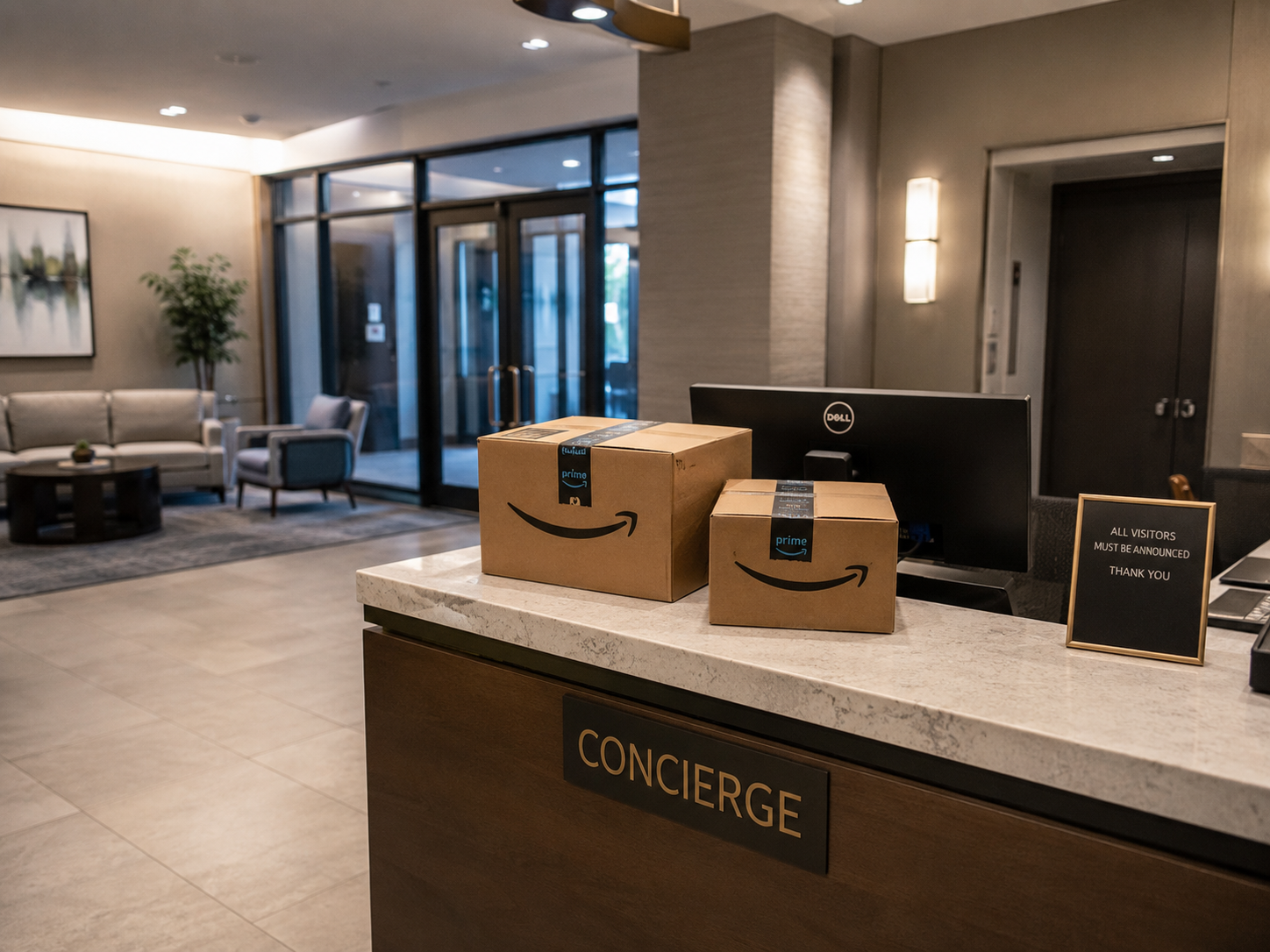
There was a time when accepting the occasional package was a fairly small part of a concierge's day. Then Amazon went from being a book store to an everything store.
Today, some buildings receive hundreds of deliveries every week, particularly during the holidays. The concierge isn't just signing for parcels anymore. They're organizing shelves, managing overflow, answering questions about missing deliveries, tracking oversized items, and trying to keep a room full of packages from turning into complete chaos.
It's a job that most residents only notice when their own package isn't immediately visible.
Again, perspective helps.
If you're looking for one box among several hundred, it's probably going to take a moment.
A little patience costs you nothing.
The same goes for the parcel room itself. These spaces see constant foot traffic, wet shoes, rolling carts, and stacks of cardboard boxes moving in and out all day long. Good flooring and proper entrance matting aren't there because they look nice. They're there because operational spaces work better when they're clean, dry, and safe for both staff and residents.
Like so many aspects of building operations, the best solutions are usually the ones people barely notice.
Respect Is Part of Building Culture
One of the things I enjoy most about well-managed buildings is that you can usually feel the culture within a few minutes of walking through the front door.
Residents greet the concierge by name. The concierge greets them back.
People hold the door for one another. Visitors are welcomed professionally.
None of those moments happen because they're written into a policy manual. They happen because people have collectively decided this is a building where courtesy matters.
The opposite is true as well.
When residents speak impatiently to staff, ignore simple rules, or treat the concierge as though they're beneath them, that attitude has a way of spreading. Before long, the building starts to feel less like a community and more like a collection of people sharing the same address.
That's never what anyone wants.
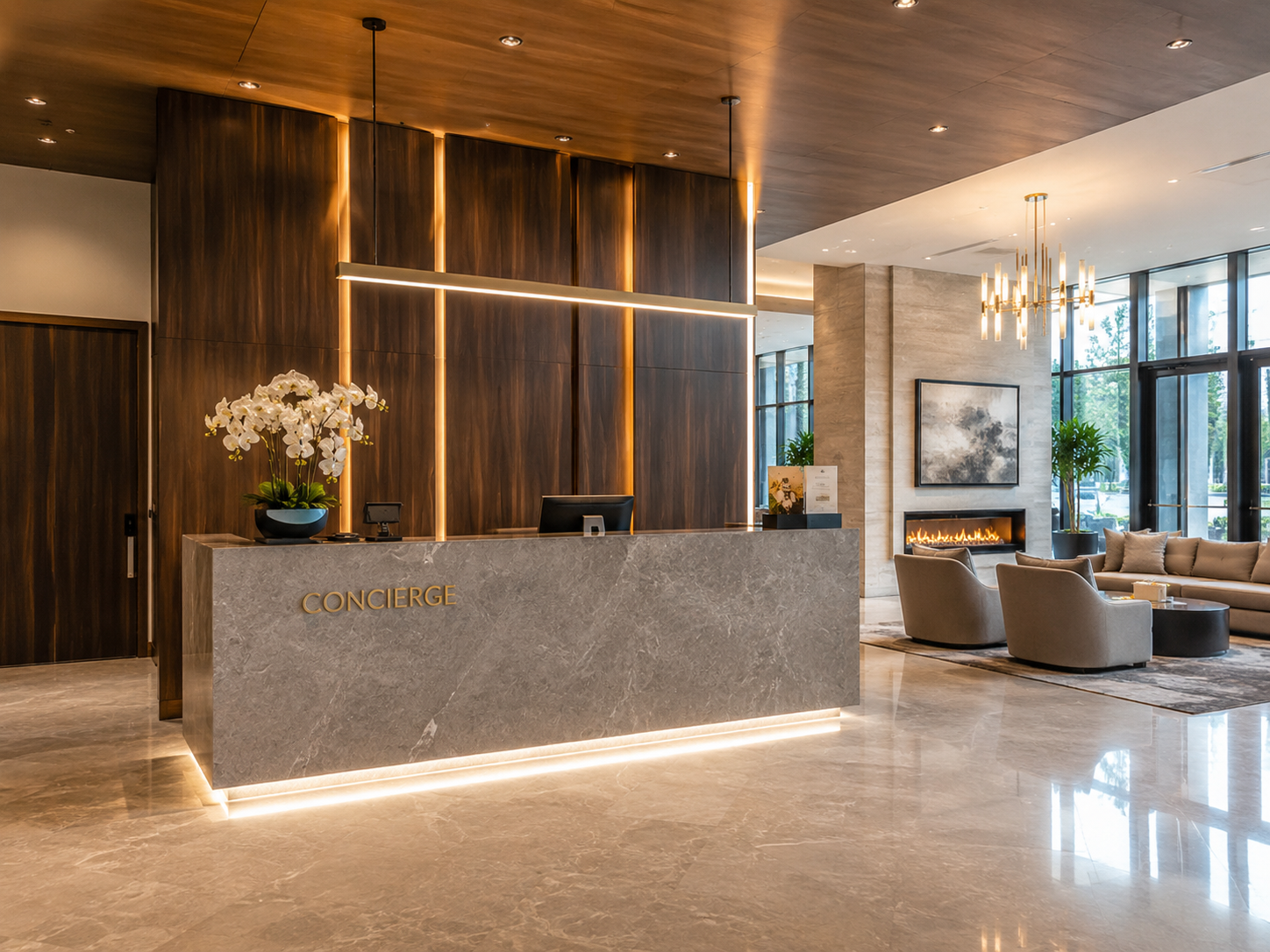
Buildings don't become great places to live because they have marble lobbies or expensive furniture.
They become great because the people inside them treat one another with respect.
Key Takeaways: Why You Should Respect Your Concierge
A concierge does far more than greet residents or accept deliveries. They're often the first line of security, the central communication hub, and the person quietly preventing small operational issues from becoming much bigger problems.
Treating them with courtesy isn't simply good manners. It helps create a stronger building culture and allows them to focus on what they do best: keeping the property safe, organized, and running smoothly.
Buildings also have a responsibility to support concierge staff by providing functional workspaces, comfortable flooring, and well-designed parcel rooms that recognize how demanding the role has become in today's delivery-driven world.
When residents and management both value the concierge, everyone benefits.
FAQ: Concierge Etiquette in Condo Buildings
What does a concierge actually do in a condo building?
A concierge helps manage day-to-day building operations by monitoring security, assisting residents, coordinating visitors and contractors, accepting deliveries, and identifying issues before they become larger problems.
Why should residents treat concierges with respect?
Concierges play a significant role in keeping a building safe and organized. Treating them with courtesy creates a more positive community and helps foster better relationships between residents and staff.
Are concierges responsible for missing or delayed packages?
Usually not. While they often receive and organize deliveries, they aren't responsible for courier mistakes or shipping delays.
Why are parcel rooms so important today?
With online shopping continuing to grow, parcel rooms have become one of the busiest operational areas in many condo buildings. Well-designed storage, proper flooring, and good organization help keep deliveries secure and accessible.
How can buildings better support concierge staff?
Providing ergonomic workstations, anti-fatigue flooring, well-designed parcel rooms, and clear operational procedures helps concierges perform their jobs more safely and effectively.
Don’t Take Them For Granted
At the end of the day, every building has amenities that residents appreciate. Some have beautiful courtyards. Others have gyms, lounges, or rooftop patios.
A great concierge belongs on that list too.
The difference is that unlike a fountain or a fitness room, the concierge shapes your experience of the building almost every single day. They welcome your guests, help solve your problems, keep an eye on your property, and quietly contribute to the sense of security that most residents take for granted.
The next time you walk through a lobby that feels welcoming, do your part. Take two seconds to say hello.
It's a remarkably small gesture for someone who's probably spent the day helping make your building a better place to live.
Making Vancouver buildings just a little bit better... xoxo J.