Lobbies I Like
Holiday Shopping Is Enough of an Obstacle Course. Your Floors Shouldn’t Add to It.
Make holiday shopping easier with well-planned entrance matting, clear routes, and thoughtful Canadian design details.
November 1, 2026
·
6 min

Make holiday shopping easier with well-planned entrance matting, clear routes, and thoughtful Canadian design details.
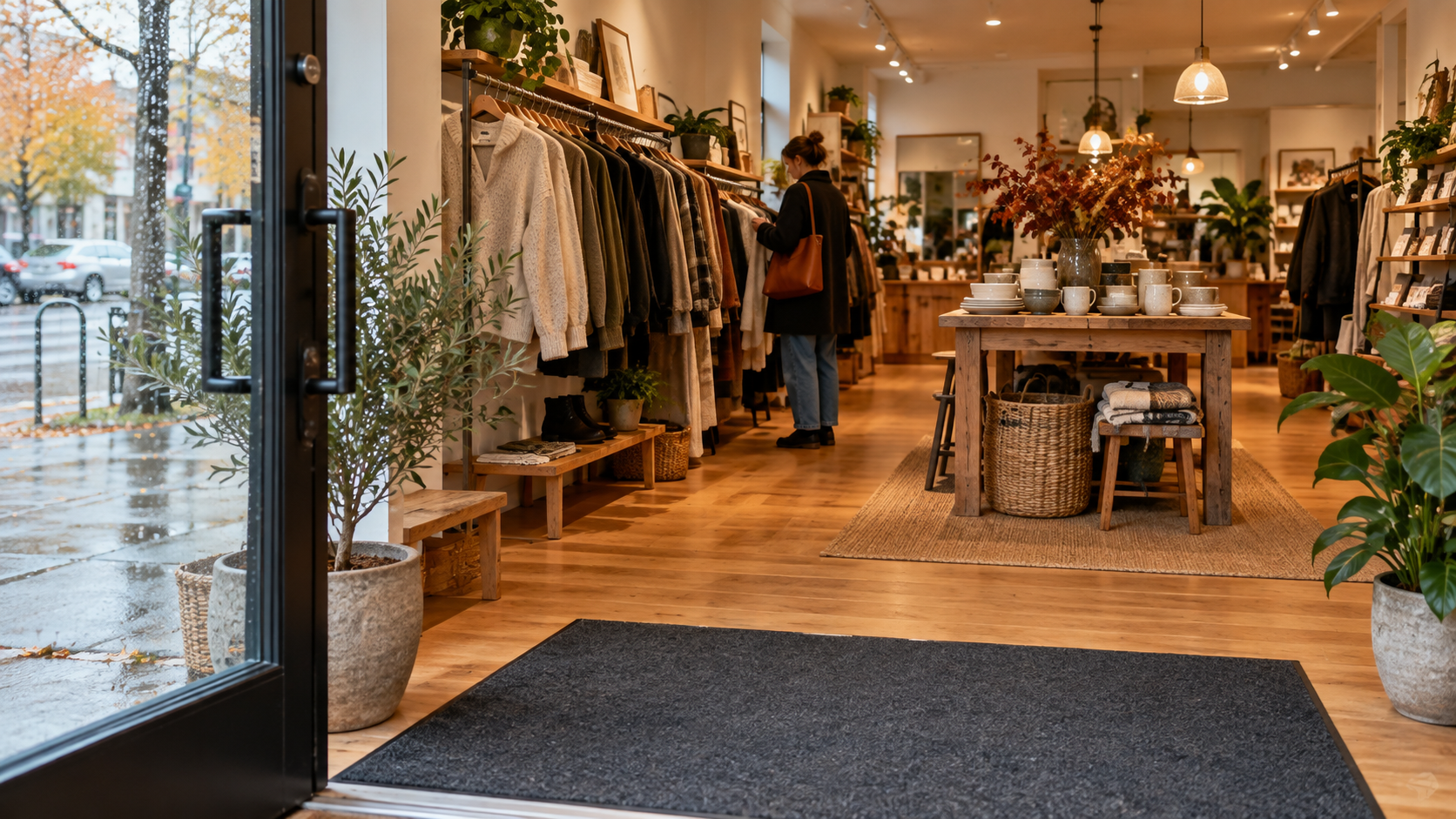
You’ve hung the lights, booked the seasonal entertainment, and found somewhere to put a tree roughly the size of a starter home. Then the first proper downpour arrives, and everyone enters your shopping centre looking at their feet.
Not quite the festive reveal you had in mind.
I like a little seasonal theatre. But if you’re inviting people to spend an afternoon shopping, the practical welcome deserves as much attention as the decorations. Somewhere dry to arrive. A clear route through the building. A place to stop without becoming part of a queue.
Good flooring belongs in that conversation. It helps the space cope with what shoppers actually bring through the doors, which in November includes wet shoes, wheels, bags, and a rapidly diminishing supply of patience.
Quite a bit, once you stop looking at it as a colour sample.
Property managers choose carpets and entrance matting to help manage dirt and moisture, protect finished surfaces, and make busy spaces easier to use. Merchants benefit when customers can reach their doors without negotiating puddles or an entrance mat that has developed ambitions to become a speed bump.
The useful question is: what does this part of the building need to do? An exterior entrance, an indoor shopfront, and a seating area have different jobs. Giving all three the same treatment because it matches is not much of a strategy.

A small mat floating in a large entrance is a gesture. Sometimes a rather damp one.
Look at the route people actually take from the doors into the centre. Does the matting cover that route, or do customers step around it? What happens when several people arrive together? Does the door catch an edge? Are there gaps or changes in level that need attention?
Suitable entrance matting can help capture moisture and grit, but it needs the right coverage, secure installation, and regular care. Ask a flooring specialist to assess the entrance conditions and transitions rather than ordering by appearance alone.
Then ask the cleaning team what happens on a wet Saturday. They will have considerably more useful information than a photograph taken before opening.
Plan inspections, cleaning, and replacement or drying arrangements for matting that becomes saturated or damaged. A floor treatment does not excuse leaving water where people walk.
Seasonal displays have a habit of expanding. First comes the tree. Then the photo station. Then a queue that quietly annexes the main concourse.
Review the layout with the seasonal furniture and queues in place. People should be able to find the shops, lifts, seating, and exits without squeezing between displays. Include shoppers using wheelchairs or walkers, families with strollers, and anyone carrying something large and badly wrapped.
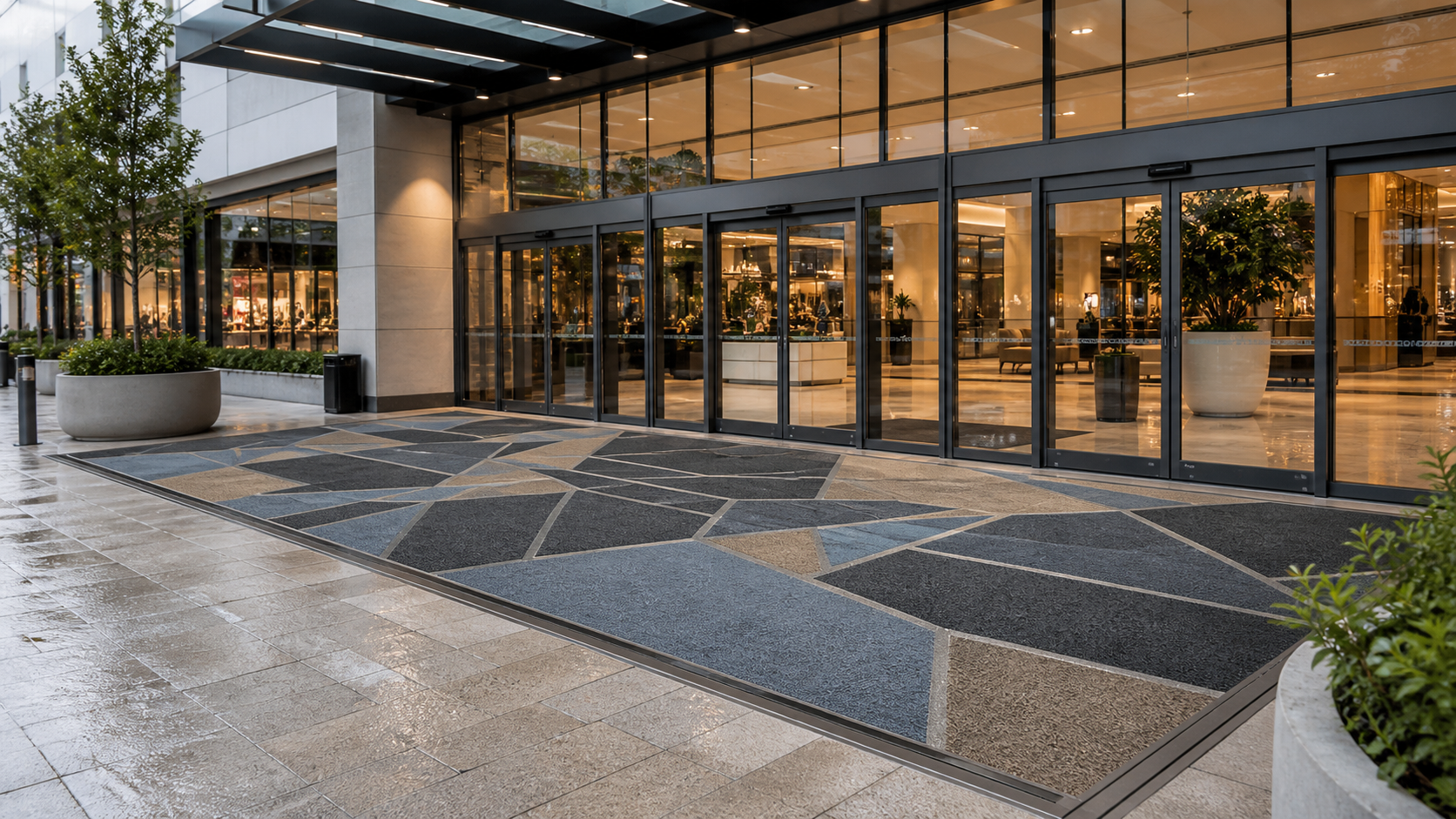
Colour or material changes in flooring can help define a seating area or suggest a route. They should reinforce an understandable layout, with suitable edges and transitions. A lovely carpet path leading directly into a promotional table is sending mixed messages.
This is where merchants and property managers need to compare notes. A shop may have a clear entrance until the centre’s queue arrives outside it. Shared space requires a shared plan.

Here’s an idea I rather like: a small maple leaf worked into the corner of a custom carpet. Quietly Canadian. No giant slogan required.
If “Build Canada Strong” is going to mean something at shopping-centre level, I’d like the conversation to include the people making, supplying, fitting, and maintaining the things we use. There is room for a little national pride below eye level.
Local businesses such as Aligned Floors and Donald Floors belong in that flooring conversation, alongside McCrann Custom Flooring, whose services include entrance matting, logo mats, and custom area rugs. A maple-leaf detail is a concept to discuss with a custom specialist, with the material, finish, fit, and cleaning requirements settled before anyone approves the artwork.
And a maple leaf is a design choice, not proof of a product’s origin. If Canadian sourcing matters to your project, ask where the materials come from and where the work is done.
The idea could feel at home in Surrey, Burnaby, or a centre elsewhere in Canada. It doesn’t require a downtown Vancouver postcode or a marble atrium.
Holiday shopping is not one celebration on one day. Diwali, Hanukkah, Christmas, and other occasions bring different traditions and shopping patterns into the same shared spaces.
Let the community help shape the seasonal programme rather than treating every celebration as an accessory to the Christmas display. That might mean different events, thoughtful displays, and planning across the season instead of concentrating every improvement on one December weekend.
The practical welcome should stay consistent: clear routes, cared-for floors, useful seating, and an entrance that does not become a minor expedition when it rains.
Walk the building with the people who manage it, clean it, and trade in it. Note the problem areas, then separate immediate fixes from work that needs measuring, ordering, or installation.
Moving a display may take an afternoon. Custom matting or a flooring change needs more coordination. Confirm lead times, access, and maintenance arrangements early enough that nobody is trying to finish the entrance while shoppers are arriving.
I’d start with the things customers have to work around every day. The decorative finishing touches can follow. Nobody has ever been comforted by an excellent wreath while wrestling a trolley over a curled mat.
Well-chosen, maintained flooring can support clearer routes and cleaner entrances. It is one part of the experience, alongside layout, lighting, seating, and service; it is not a promise of higher sales.
Start with the problems. Repairing a transition, improving entrance matting, or changing the layout may be more useful than a full replacement. Larger work needs an assessment and a realistic installation plan.
A custom motif is worth discussing with a specialist. Ask which materials and production methods suit the location, and confirm care requirements and artwork before ordering.
You’ve worked hard to persuade people to come shopping. Give them a building that makes staying pleasant.
The floor may never get the applause. I suspect it can live with that.
Making Vancouver buildings just a little bit better... xoxo J.