Wet Dogs, Dirty Floors: Designing for Real Life in Vancouver
A pet-friendly building should manage dirt and moisture in stages, starting before residents and their dogs reach the main lobby. That means effective entrance matting, durable and easy-to-clean flooring, good traction through common areas, and extra attention to the routes pet owners use most often.
September 1, 2026
·
8 min
If you live in Vancouver with a dog, there are certain parts of the year when “going for a walk” might as well mean “going to the waterpark” and bringing a decent portion of the outdoors back inside with you.
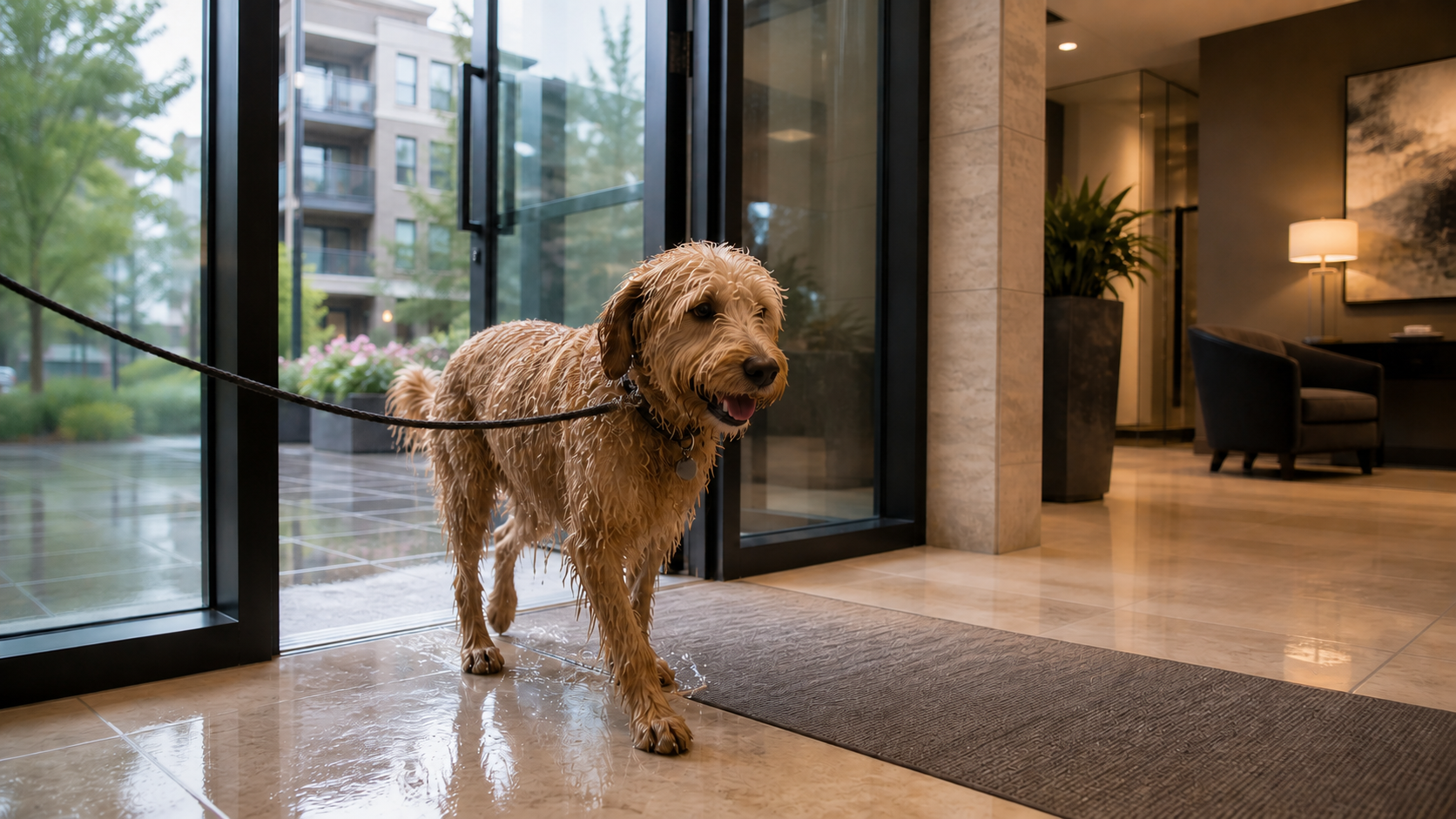
The dog comes through the front door with wet paws, a damp coat, and a surprising amount of dirt attached to a relatively small body. The owner isn’t much better. Add a leash, an umbrella, maybe a towel, and suddenly a beautiful condo lobby is being asked to function more like a mudroom.
Now multiply that by every dog in the building. Pretty ruff.
This is the reality pet-friendly condo design needs to account for. It isn’t enough to allow pets or add a dog wash station somewhere in the parkade. A building that genuinely works for pets needs to consider what happens during the ordinary routines residents repeat several times a day, including the wet and messy ones.
In Vancouver, that means designing for rain. Because there’s no such thing as bad weather, only bad design.
How Do You Design a Condo Building for Wet Dogs and Dirty Floors?
The short answer is to stop expecting your lobby flooring to handle everything on its own.
A pet-friendly building should manage dirt and moisture in stages, starting before residents and their dogs reach the main lobby. That means effective entrance matting, durable and easy-to-clean flooring, good traction through common areas, and extra attention to the routes pet owners use most often.
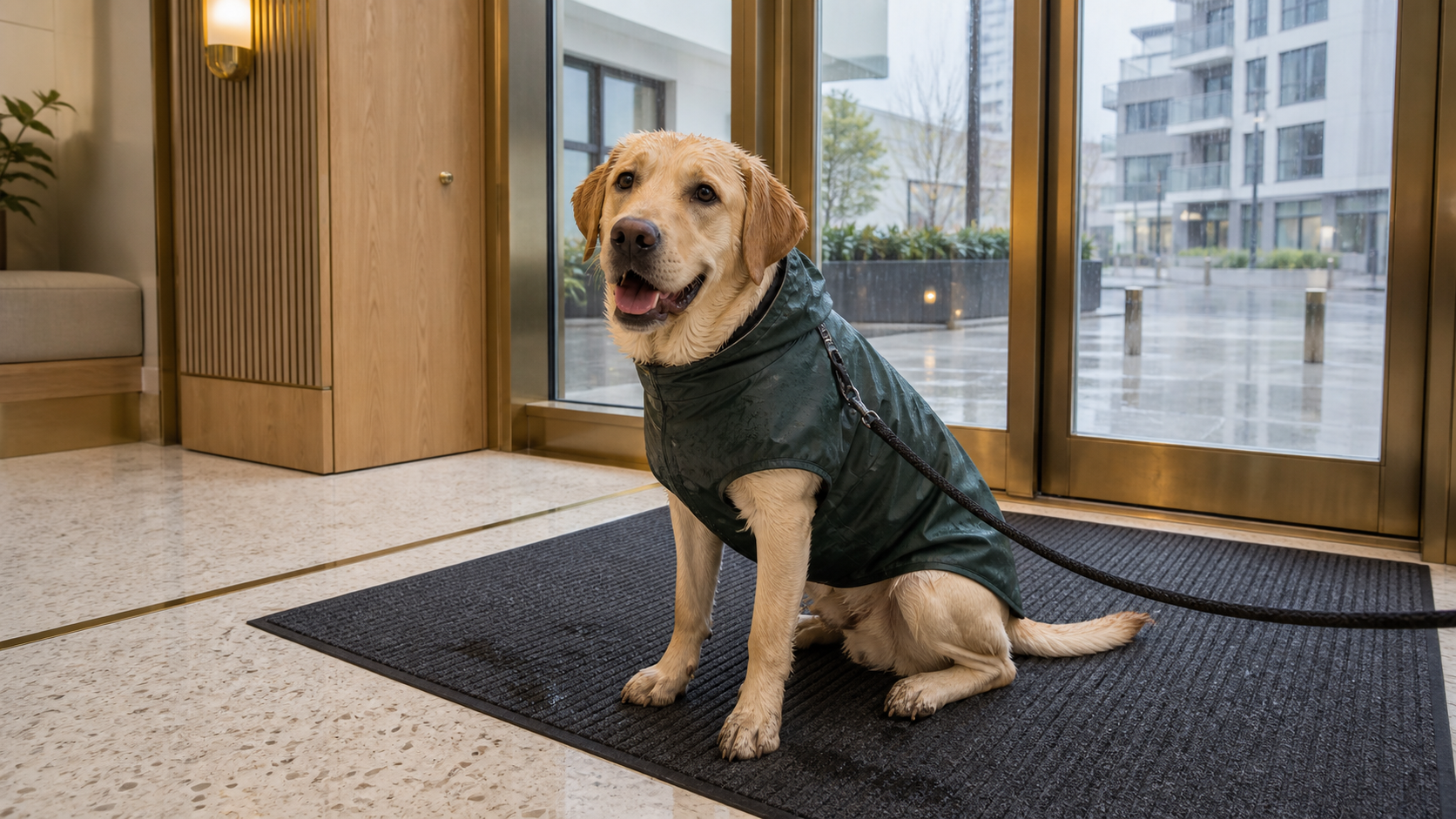
Some mess is inevitable. The goal isn’t to somehow prevent a wet Labrador from being a wet Labrador...this is a trick she can’t learn. It’s to design the building so that one rainy walk doesn’t leave a trail from the front door to the elevator.
Wet Dogs Move Dirt Further Than You Think
The biggest mistake is assuming the mess stops at the front door.
Trust me, it doesn’t.
A dog’s paws might be the obvious culprit, but water also sits in fur and gets shaken off as the dog moves. Leashes drip, owners track in moisture from their shoes, and on particularly wet days that water can travel surprisingly far into the building.
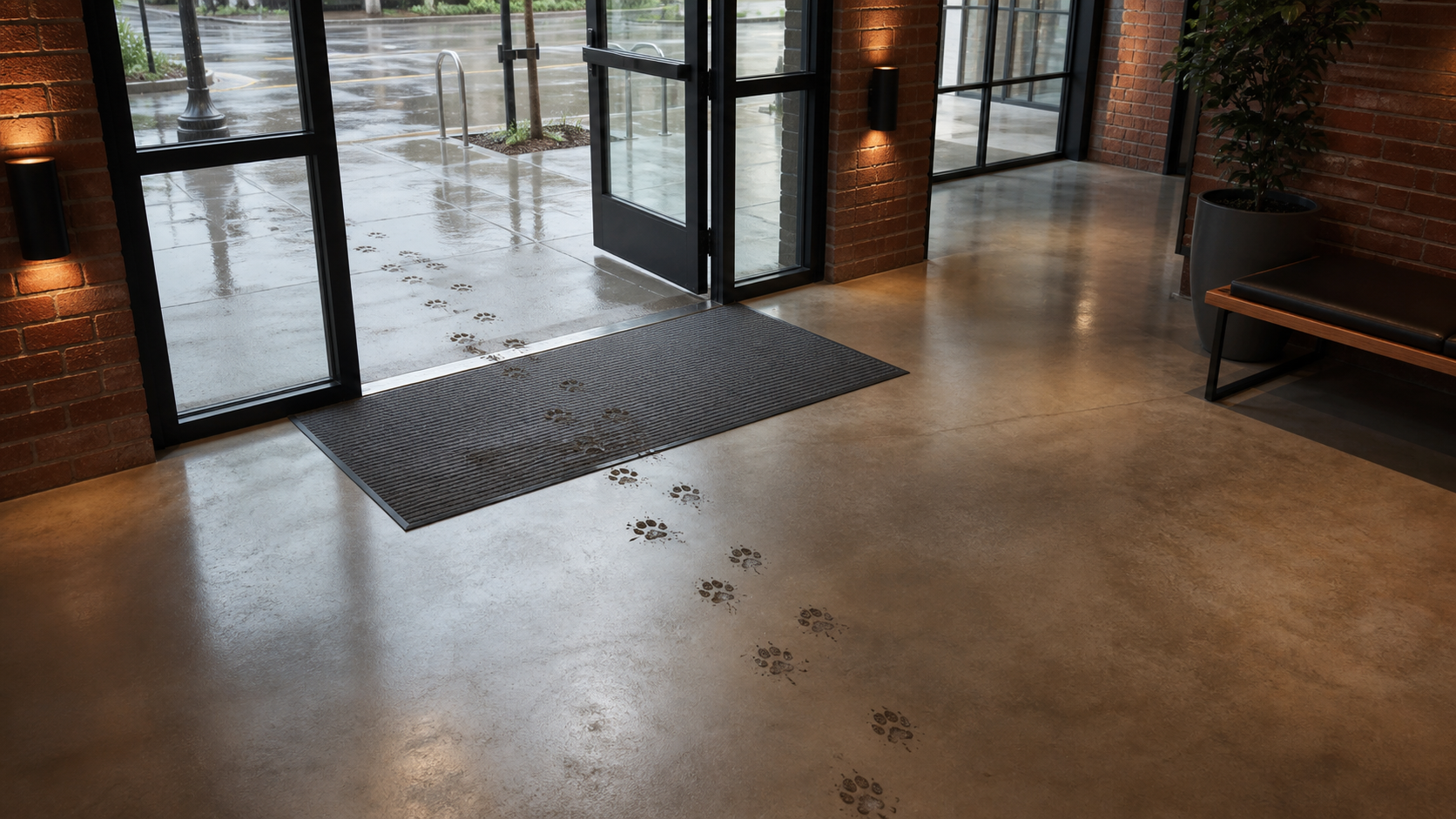
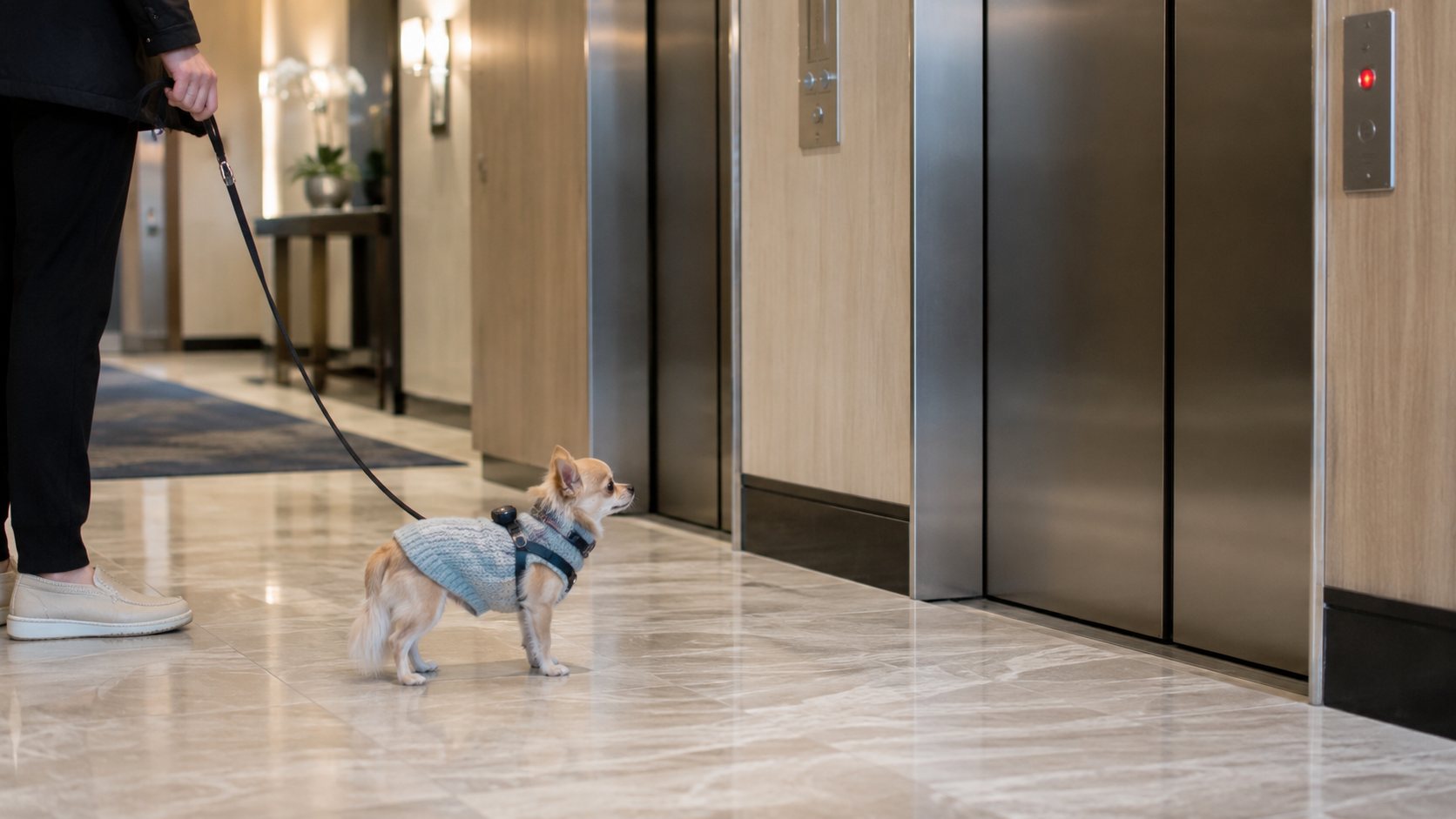
I’ve seen buildings where you can practically follow the path of a rainy dog walk from the entrance to the elevator. There are paw prints across the tile, a bit of grit near the doors, and then another collection of moisture where the dog and owner stood waiting for the elevator.
That tells you something important: you need to think about the entire route, not just the entrance. If dozens of residents travel from the same front door to the same elevator bank several times a day, that pathway is part of your moisture-management system whether you intended it to be or not.
Why Is Entrance Matting So Important in Pet-Friendly Buildings?
Entrance matting gives you the first and best opportunity to remove moisture and debris before it travels further into the building.
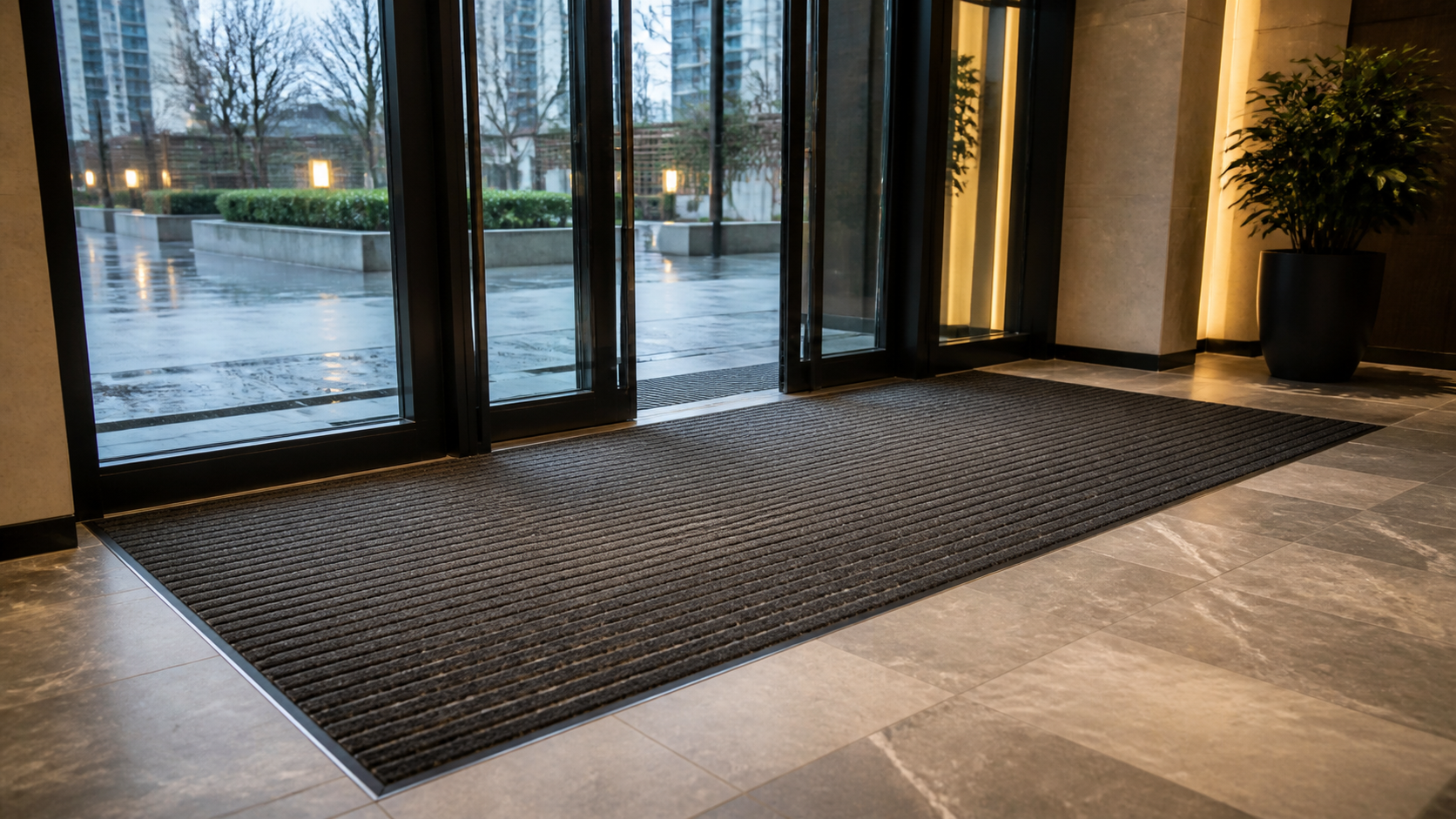
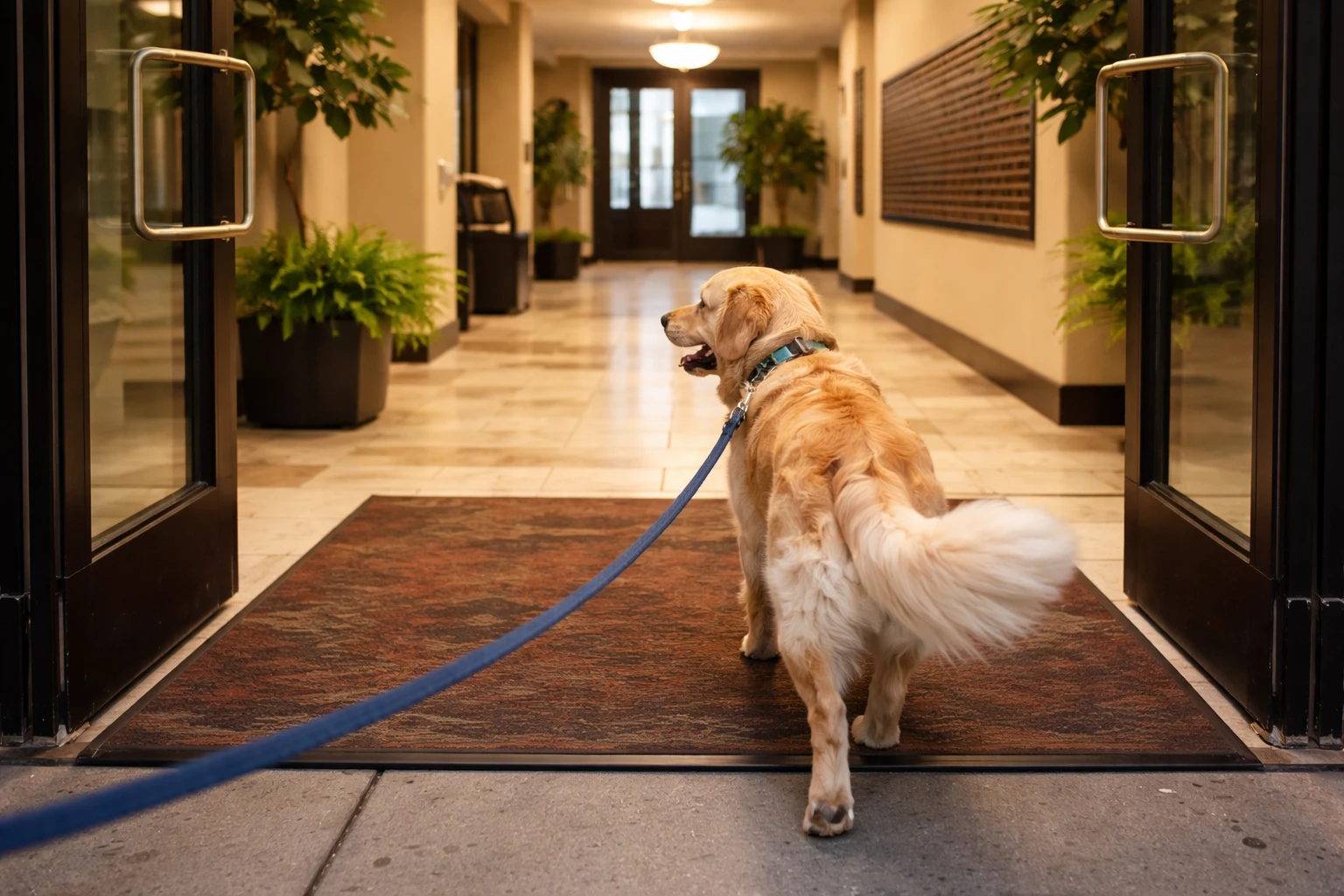
The important part is giving it enough space to work. A small mat immediately inside the door might catch the first wet step, but it doesn’t accomplish much when the next five steps are directly onto hard flooring. Dogs make the problem even more obvious because they have four wet paws moving across the surface at once.
This is where custom matting can make a meaningful difference. Rather than trying to fit a standard rectangle into an entrance that wasn’t designed around it, custom-fit matting can follow the actual width and shape of the space and cover the routes residents really use. For buildings with a lot of pets, that additional coverage can mean less water on hard surfaces, fewer paw prints travelling toward elevators, and less work for cleaning staff throughout the day.
The mat should fit the building. The building shouldn’t have to work around the mat.
What Flooring Works Best in Pet-Friendly Condo Common Areas?
There isn’t one perfect flooring material for every building, but there are a few qualities I’d prioritize.
First, it needs reliable traction. A polished surface might look fantastic when it’s dry, but Vancouver doesn’t give you dry conditions every day of the year. Dogs experience slippery surfaces differently than we do, and you’ll sometimes see them slow down, spread their stance, hesitate at transitions, or avoid certain areas altogether.
Durability matters too. Pet-friendly buildings need to tolerate grit, claws, water, and frequent cleaning without looking exhausted after a few years.
Finally, flooring has to be easy to maintain. You’re looking for the boring middle ground: durable, safe, cleanable, and good-looking enough that nobody needs to think about it.
That’s usually where the best building materials live.
How Can You Improve Traction for Dogs in a Condo Lobby?
If dogs regularly hesitate, slip, or change their gait in the same part of your lobby, pay attention. They may be telling you something about the flooring.
Improving traction doesn’t necessarily mean replacing the entire floor. Strategic runners or matting can create more secure walking routes through areas that become slippery when wet, particularly between entrances and elevators.
Transitions deserve attention as well. Moving suddenly from textured matting onto highly polished tile can be uncomfortable for some dogs, even when both surfaces are technically safe.
This becomes especially important around elevator banks, where dogs are turning, stopping, and waiting rather than simply walking through. If moisture is accumulating there, you have both a cleanliness issue and a traction issue.
Sometimes the best thing you can do is watch how dogs actually use the building. They don’t care what the architectural plans intended. They’ll show you where the friction points are.
Don’t Forget the Elevator
Elevators take a beating in pet-friendly buildings. They’re small, enclosed spaces where wet dogs and owners stop moving for long enough that water has time to collect.
That makes durable, easy-to-clean flooring important, but traction matters here too. Dogs are entering, turning around, and adjusting as other people come in. A slippery floor can make an already confined experience more uncomfortable.
Odour can also become an issue when materials hold moisture or aren’t cleaned properly. A building designed for real pet traffic should assume the elevator is going to get wet and dirty rather than hoping residents somehow prevent it.
A Dog Wash Station Helps, but Location Matters
Dog wash stations can be fantastic amenities when they’re positioned properly.
But if residents have to walk their muddy dog through the lobby, into an elevator, down a hallway, and halfway across the parkade to reach one, you’ve already lost the battle.
A useful dog wash should connect logically to the routes pet owners already use. Ideally, residents can deal with the worst of the mud and water before travelling through the building’s cleaner common areas.
It should also be easy enough that people actually use it. Good drainage, somewhere to secure a leash, a handheld sprayer, a surface with good traction, and enough room to manoeuvre a larger dog matter more than making the room look Instagram-ready.
If the amenity is inconvenient, people will skip it.
And then your lobby becomes the dog wash.
Cleaning Should Support the Design, Not Compensate for It
There’s a point where “we’ll just clean it more often” stops being a maintenance plan.
If staff are constantly mopping the same trail between the entrance and elevator, the problem may not be the cleaning schedule. The building may simply be allowing too much moisture to reach that area.
Cleaning should be the final layer of the system, not the entire system. Good entrance matting removes a meaningful amount of moisture and debris, durable flooring handles whatever remains, and cleaning staff maintain the result.
When those pieces work together, staff aren’t spending the entire rainy season chasing paw prints around the building.
Pet-Friendly Design Should Work for Everyone
Making a building more pet-friendly shouldn’t make it less comfortable for residents without pets. In fact, most good pet-friendly design improves the building generally.
Better traction helps everyone walking through a wet entrance. Better matting reduces the dirt tracked into elevators. Easy-to-clean surfaces improve common areas, and thoughtful circulation reduces congestion.
The best solutions don’t scream “dog building.” They simply acknowledge that pets are part of the population using the space and design accordingly.
You’re not creating separate infrastructure for dog owners. You’re making shared infrastructure perform better under the conditions it actually experiences.
Design Around the Rainy-Day Routine
One of the easiest ways to evaluate a pet-friendly building is to imagine a miserable November afternoon in Vancouver.
A resident arrives home with a soaked dog. They’re carrying an umbrella and trying to open the door while holding a leash. The dog wants to shake. Both of them are wet, and they need to get from the entrance to their unit without turning every common area along the way into part of their walk.
Now follow that route.
Is there enough matting at the entrance? Does the flooring become slippery? Is there somewhere practical to deal with a particularly muddy dog? What happens at the elevator? Are there areas where water consistently accumulates?
That little exercise will tell you more about whether your building is genuinely pet-friendly than a list of amenities ever will.
Key Takeaways: How Do You Design a Condo Building for Wet Dogs and Dirty Floors?
Designing for pets in Vancouver means accepting that water, mud, grit, and paw prints are going to enter the building. The goal is to control how far they travel and make the building easier to maintain when they do.
Capture moisture at the entrance. Use properly sized matting that gives residents and dogs several steps to shed water and debris before reaching hard flooring.
Consider custom matting in high-traffic areas. Cover the routes people actually use rather than relying on a standard mat that leaves much of the entrance exposed.
Prioritize traction. Pay particular attention to entrances, flooring transitions, elevator banks, and anywhere dogs regularly stop or change direction.
Choose durable, cleanable flooring. Materials should tolerate claws, grit, water, and frequent cleaning without deteriorating quickly.
Put pet amenities where they’re useful. Dog wash stations work best when residents can use them before muddy pets travel through cleaner areas.
Plan for the entire route. The entrance, lobby, elevator, and connecting pathways all need to work together.
Let cleaning support the system. Good design should reduce the amount of moisture and dirt staff need to chase throughout the building.
The best pet-friendly buildings don’t eliminate the mess. They contain it, manage it, and make it considerably easier to deal with.
FAQ: Designing Condo Buildings for Pets
What is the best flooring for a pet-friendly condo lobby?
The best flooring is durable, easy to clean, and provides reliable traction, including when wet. The specific material depends on the building, but highly polished surfaces that become slippery when damp can be difficult for pets.
How can condo buildings reduce muddy paw prints?
Start by capturing moisture and debris at the entrance with properly sized matting. Extending matting into high-traffic areas and locating pet wash facilities conveniently can also reduce how far dirt travels.
Is custom matting worth it for a condo building with lots of dogs?
It can be particularly useful when standard mat sizes don’t cover the full entrance or actual walking routes. Custom matting provides more continuous coverage and can capture moisture before it reaches lobby and elevator flooring.
Why do some dogs struggle on condo lobby floors?
Smooth or wet surfaces can provide less traction, causing some dogs to hesitate or adjust how they walk. Older dogs and dogs with mobility limitations may find these surfaces particularly difficult.
Where should a condo dog wash station be located?
Ideally, it should sit along a natural route between the outdoors and residential areas so owners can clean muddy pets before travelling through lobbies, elevators, and hallways.
Living with dogs means accepting a certain amount of mess, especially in Vancouver. A well-designed building doesn’t fight that reality; it plans for it, making the daily trip home easier for pets and their owners while keeping shared spaces cleaner, safer, and easier to manage.
Making Vancouver buildings just a little bit better... xoxo J.