Curb Your Pet: How to Keep Your Snack Dogs Safe in Common Areas
Condo lobbies aren't dog parks. Here's why keeping your dog close in shared spaces makes life safer and easier for everyone, from Great Danes to the tiniest snack dogs.
July 1, 2026
·
6 min
I love dogs. Big dogs, little dogs, rescue dogs, senior dogs, and yes, the tiny little "snack dogs" that somehow manage to have the confidence of a nightclub bouncer despite weighing less than a bag of flour. This isn't an argument against dogs living in condo buildings. It's simply a reminder that common areas aren't the dog park, and good intentions don't replace good etiquette.
One of the biggest mistakes I see in condo buildings is people assuming that because their dog is friendly, everyone else automatically wants to meet them.
Not the case. Trust me, I’ve read the complaints.
Condo buildings are shared spaces where people are trying to get home, catch the elevator, collect a package, or head to work. Some residents adore dogs, while others are allergic, nervous around them, or simply don't want an unexpected canine interaction. All of those reactions are perfectly reasonable.
Being pet-friendly doesn't mean every resident has signed up to be part of your dog's social calendar. It simply means dogs are welcome, provided their owners understand that shared spaces come with shared responsibilities.
The Short Answer: How Do You Keep Your Dog Safe in Condo Common Areas?
The safest approach is also the simplest. Keep your dog close, under control, and out of other people's personal space.
That means:
Using a short leash in common areas
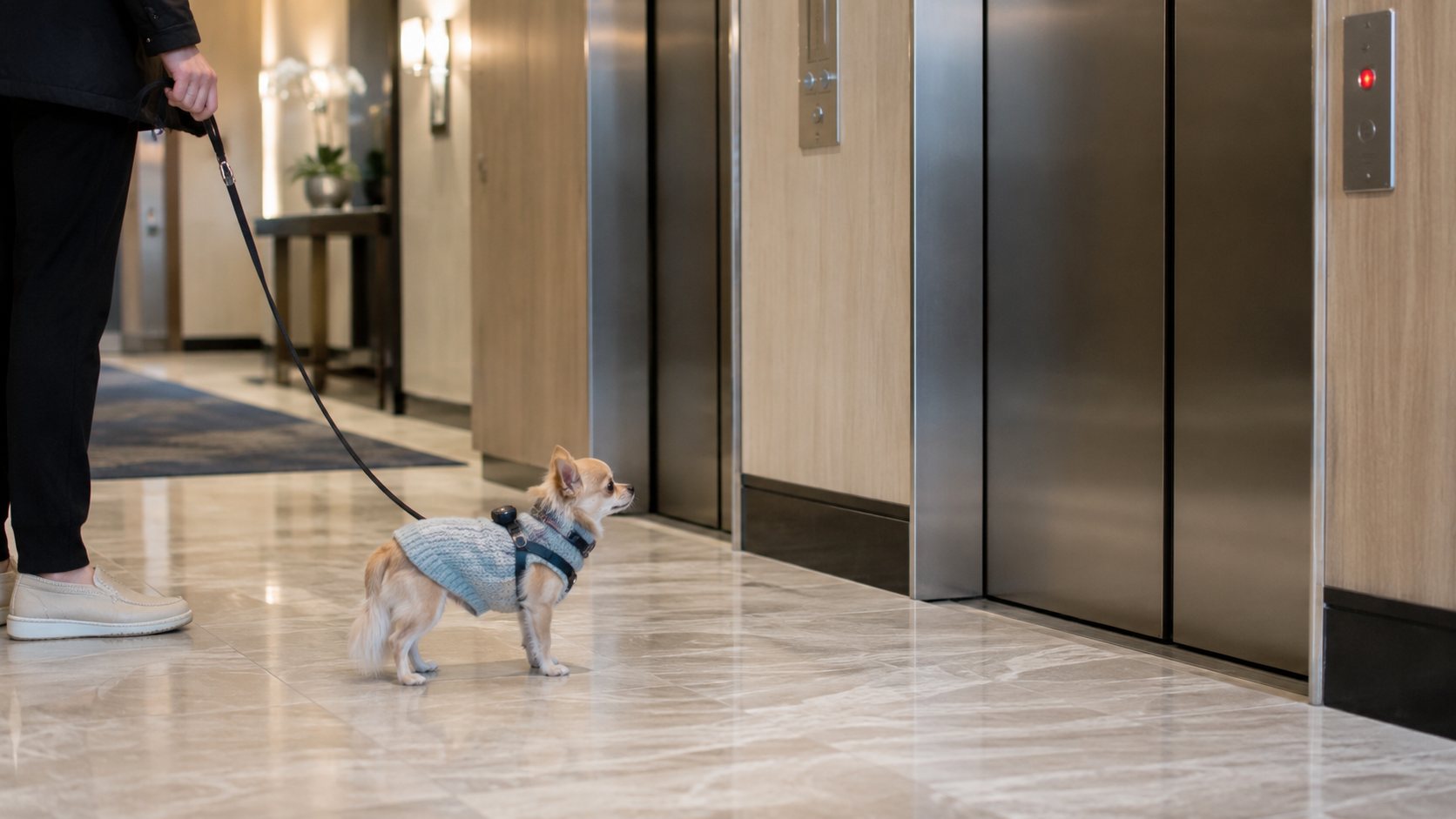
Waiting calmly before entering lifts
Preventing your dog from approaching people or other pets unless invited
Remembering that small dogs need just as much supervision as large dogs
Paying attention to your surroundings instead of assuming everyone is happy to stop and say hello
Condo Buildings Aren't Dog Parks
Condo common areas aren't extensions of the dog park. They're shared spaces where people are trying to move through the building, not stop for an unexpected meet-and-greet. Your dog doesn't know the difference, but you do.
Good etiquette means recognizing that just because your dog wants to say hello doesn't mean this is the right place or the right time.
The easiest way to avoid awkward interactions is to stop assuming every interaction needs to happen in the first place.
Your Snack Dog Doesn't Get Special Treatment
Now let's have a gentle conversation with the owners of snack dogs.
I love them. I really do.
But somewhere along the way, many people decided that if a dog weighs six pounds, the normal rules somehow become optional.
We've all seen the tiny dog sprint across the lobby toward another dog while the owner laughs and says, "Don't worry, he's friendly."
Cute? Maybe.
Safe? Not really.
Small dogs deserve exactly the same level of supervision as large dogs because they're often the most vulnerable animals in the building. Keeping them close isn't about limiting their freedom. It's about protecting them.
Before the owners of larger dogs start feeling too smug, though, this isn't just a snack dog problem. A Labrador pulling its owner through the lobby is every bit as inconsiderate as a Chihuahua weaving between people's ankles. Different dogs create different challenges, but the expectation is exactly the same: keep them close, stay aware of your surroundings, and remember that not everyone in the building wants an unexpected canine interaction.
Elevators, Lobbies, and Waiting Areas Are Where Most Problems Begin
Good dog etiquette is most obvious while you're waiting for or riding the lift. These are confined spaces where predictable behaviour matters far more than friendly behaviour.
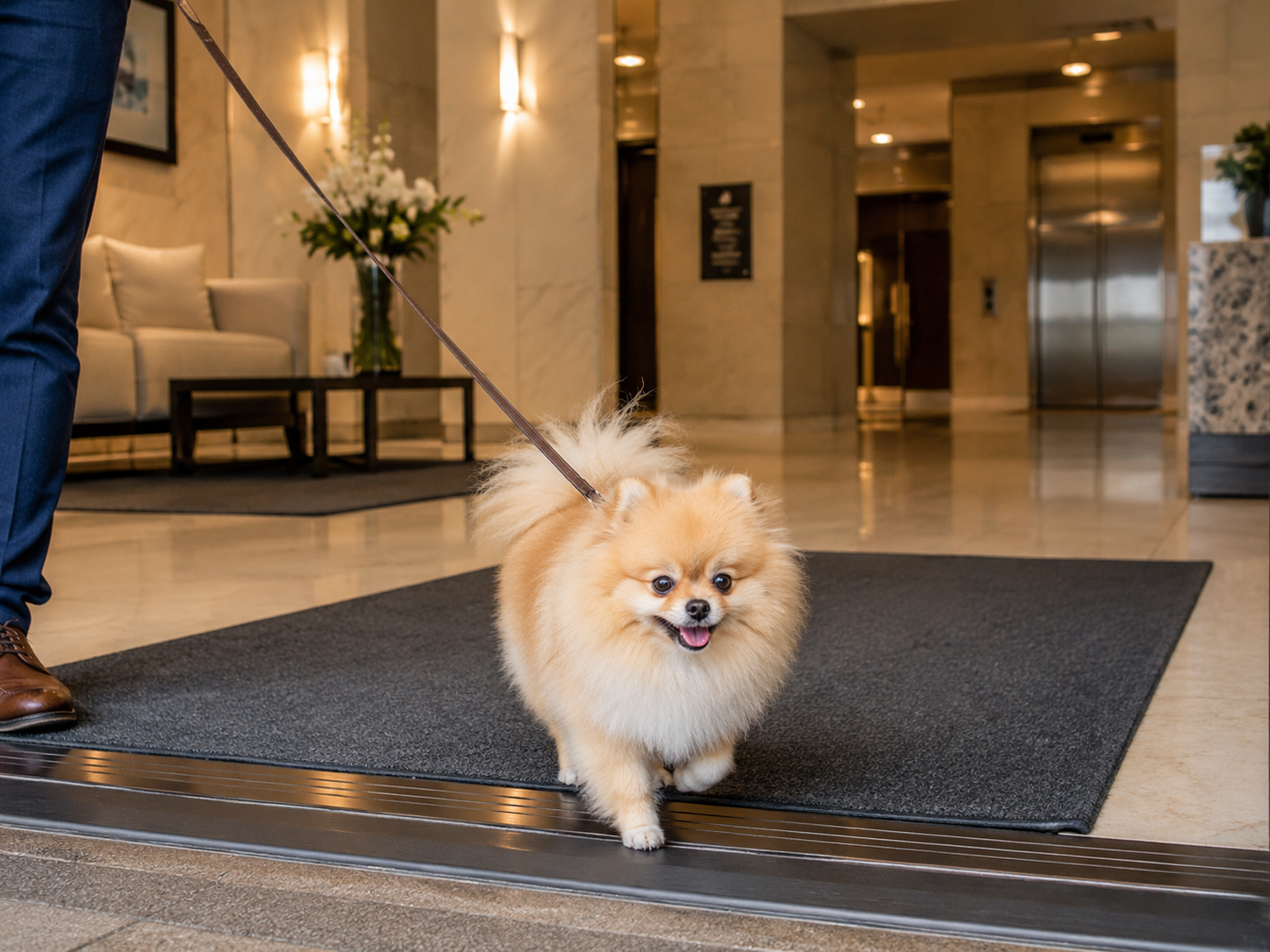
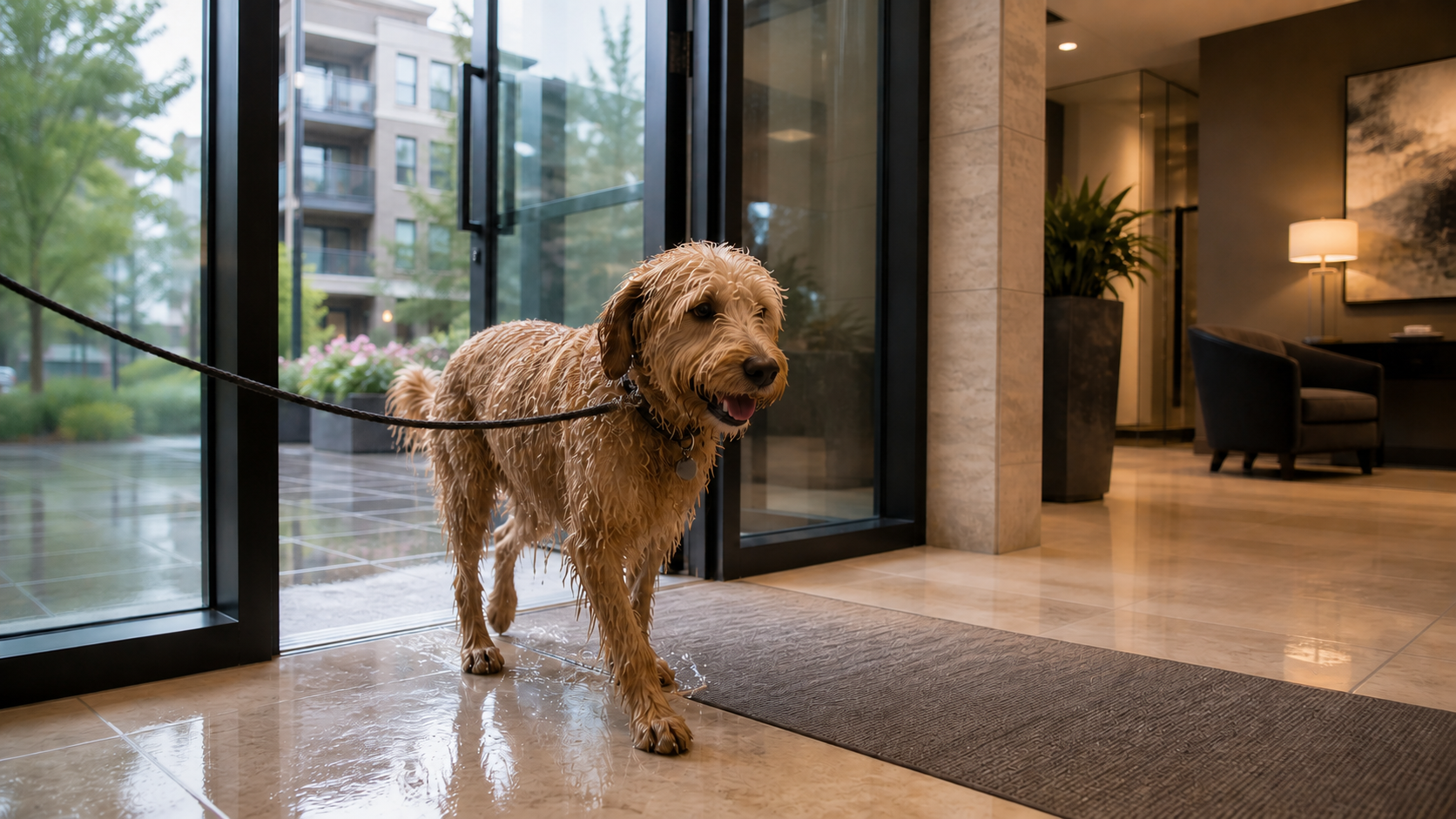
Dogs don't know the difference between polished tile with no traction and a surface designed to give them some grip, but anyone who's watched an excited puppy scramble across a slippery lobby certainly does. Flooring and custom matting can make a big difference, so be aware of your surroundings.
One of the easiest habits to develop is waiting for people to exit before entering. It sounds simple, but it's remarkable how often dogs are allowed to charge into the lift before anyone has even seen who's coming out.
The same principle applies while you're waiting. If another dog is already standing near the lift, give them some room instead of assuming they're looking for a playmate. If another owner shortens their leash or keeps moving, take the hint and do the same. Giving people a little extra space costs nothing, and it prevents most awkward interactions before they happen.
The best dog owners rarely need to apologize because they've already built habits that keep common areas comfortable for everyone else.
What Great Dog Owners Do Differently
One thing I've noticed over the years is that the best dog owners in a condo building are often the ones you barely notice.
That isn't because their dogs are perfectly trained. It's because they've developed habits that make life easier for everyone around them.
They don't let their dog wander to the end of the leash every time a lobby door opens. They don't assume every neighbour wants to stop for a chat. They notice when someone is carrying groceries, pushing a stroller, or trying to manoeuvre a moving cart, and they instinctively give them a little extra room.
They also understand that every dog is different.
Some dogs love meeting new friends. Others find busy lobbies stressful. Some are older and slower. Others are still learning how to behave around distractions. Good owners recognize their own dog's personality instead of expecting every situation to work itself out.
Ironically, those are usually the dogs that get the most positive attention. When your dog waits calmly beside you, people are far more likely to ask if they can say hello than if it's already halfway across the lobby trying to make the introduction itself.
Good etiquette doesn't eliminate interactions. It simply lets everyone choose when they happen.
Courtesy Keeps Dogs Safe
It's easy to think of courtesy as something you do for other residents, but it's just as much about protecting your own dog.
Every time you keep your dog close in a condo lobby, you're reducing the chance of an unexpected interaction with another animal. Every time you wait for people to leave the lift before stepping inside, you're avoiding a situation where someone or something could startle your dog. Every time you give another owner a little extra space, you're lowering the odds that either dog feels trapped or overwhelmed.
Those small decisions add up surprisingly quickly.
They create calmer buildings, calmer owners, and, perhaps most importantly, calmer dogs.
That's something I think gets overlooked.
Dogs don't need to greet every person or every animal they see to have a happy, fulfilled life. In fact, many dogs are perfectly content walking through a building without a single interaction
because they trust their owner to guide them safely from one place to another.
Sometimes the kindest thing you can do for your dog is simply remove the pressure to socialize with everyone.
Key Takeaways: Keeping Dogs Safe in Condo Common Areas
Keeping your dog safe in a condo building starts with remembering that common areas aren't the dog park. Whether you own a Great Dane or a tiny snack dog, the same principles apply: keep your dog close, use a short leash, respect other residents' space, and avoid assuming every person or pet wants to interact.
The best condo dog owners focus on awareness rather than reaction. They recognize when to give people space, when to keep moving, and when a friendly greeting simply isn't appropriate. Those habits don't just make life easier for neighbours. They also reduce stress for dogs and create a safer environment for everyone sharing the building.
A little courtesy goes a remarkably long way.
FAQ: Keeping Dogs Safe in Condo Common Areas
Should small dogs stay on a short leash in common areas?
Yes. Small dogs are often the most vulnerable in busy condo buildings, which makes keeping them close one of the easiest ways to prevent accidents or unwanted interactions.
Is it okay to let my dog greet another dog in the lobby?
Only if both owners are comfortable with it. Common areas are designed for people to move through the building, not for dogs to socialize.
Why should I keep my dog beside me while waiting for the lift?
Lifts and waiting areas are confined spaces where dogs have fewer options to move away if they become uncomfortable. Keeping your dog close helps everyone feel more at ease.
Do large dogs need different handling than small dogs?
The goal is the same regardless of size. Large dogs naturally take up more space, while small dogs are easier to overlook, but both should remain close to their owner in common areas.
What's the biggest etiquette mistake dog owners make?
Assuming that because their dog is friendly, every person and every dog wants to interact. Giving others the opportunity to choose is almost always the better approach.
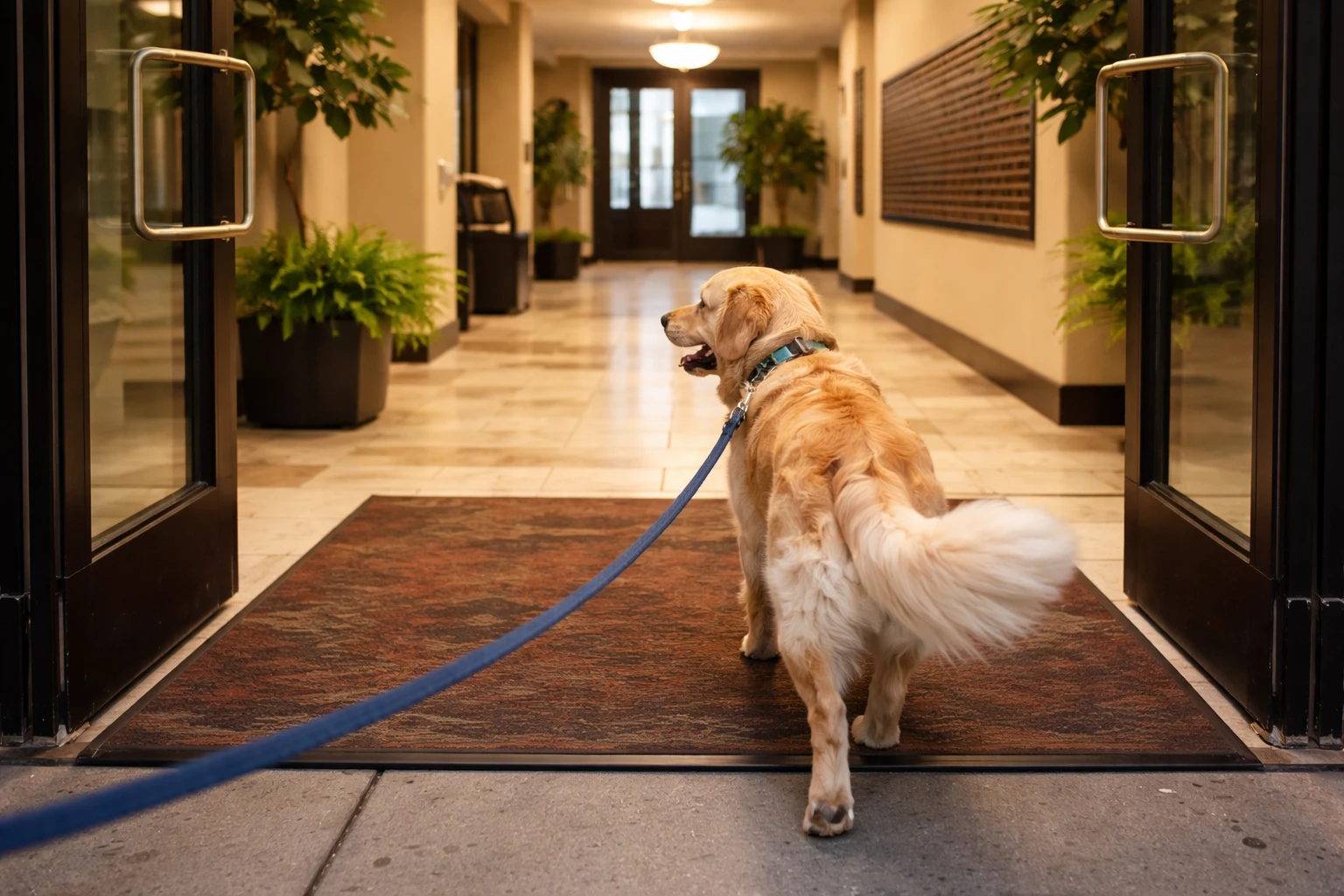
The nice thing about good dog etiquette is that it isn't complicated, and it certainly isn't about making dogs less welcome. Quite the opposite. It's about creating common areas where everyone feels comfortable, whether they're walking a Golden Retriever, carrying a sleeping toddler, or simply trying to make it home after a long day.
Because the goal isn't to have the friendliest dog in the building. It's to have the dog that makes everyone else think, "I wish more owners were like that."
And honestly, your snack dog will still think it owns the building anyway.
Making Vancouver buildings just a little bit better... xoxo J.