How Do You Make a Condo Building More Pet-Friendly?
How do you design a condo building that works for pets and their owners? Let's look at pet friendly flooring, noise control, traction, and durability across lobbies, elevators, and shared spaces.
February 2, 2026
·
10 min
People with pets tend to notice different things when they walk through a building.
They’re not just looking at finishes or layout. They’re paying attention to how their dog might move through the space. Whether the entrance feels safe underfoot. Whether there’s enough room in the elevator. Whether the route in and out feels simple or stressful.
Anyone with a reactive dog will tell you, this happens automatically.
They’re seeing the building through their pet’s experience as much as their own.
And in those small moments, a lot becomes clear. A surface that feels fine to a person might feel uncertain to a dog. A tight corridor might not seem like an issue until there’s a leash involved. An entrance that looks clean might still feel slippery or unpredictable.
It’s rarely one obvious problem. It’s a series of small friction points that show up right away and shape how the building feels to live in.
The Short Answer: How Do You Make a Condo Building More Pet-Friendly?
You make a building more pet-friendly by designing for how pets and people actually move through it.
That usually comes down to a few key things:
Safe, predictable surfaces
Clear circulation through shared spaces
Thoughtful transitions at entrances and exits
Defined areas for pet-related activity
Consistent maintenance
Most issues show up when one of these is overlooked.
Fixing it doesn’t require a major redesign.
It requires paying attention to where friction happens, and then removing it.
What Makes a Building Feel Pet-Friendly?
It’s less about amenities and more about ease of use.
A building feels pet-friendly when daily routines are simple. Getting in and out of the building is smooth. Movement through common areas doesn’t feel cramped or stressful. Surfaces feel safe underfoot, even in wet conditions.
There’s also a sense that pets have been considered in how the space operates, not added as an afterthought.
When that’s missing, people notice quickly. Even if they don’t say it directly. They might just show it by taking the stairs.
How Do You Reduce Friction for Pet-Owners at Entrances and Exits?
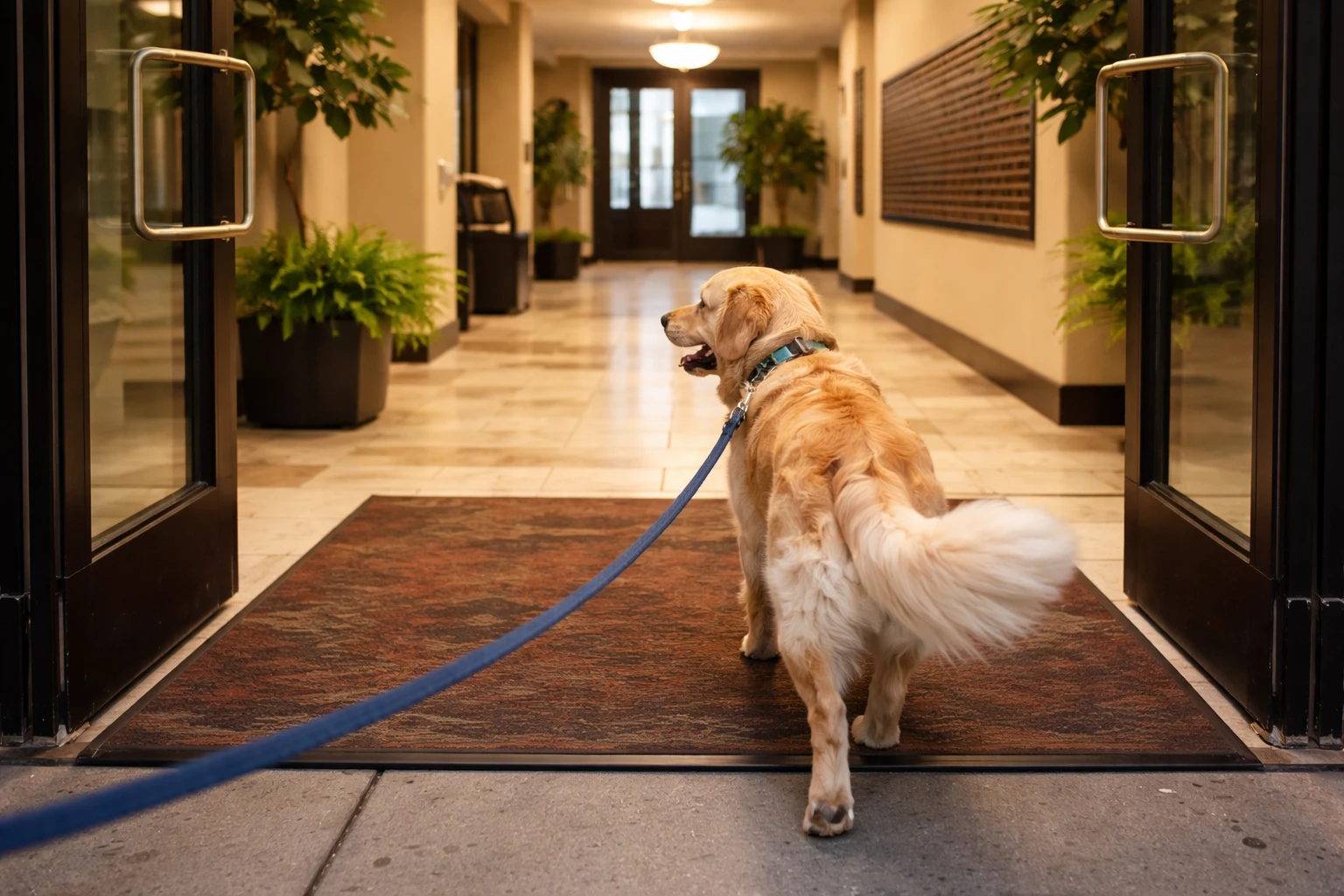
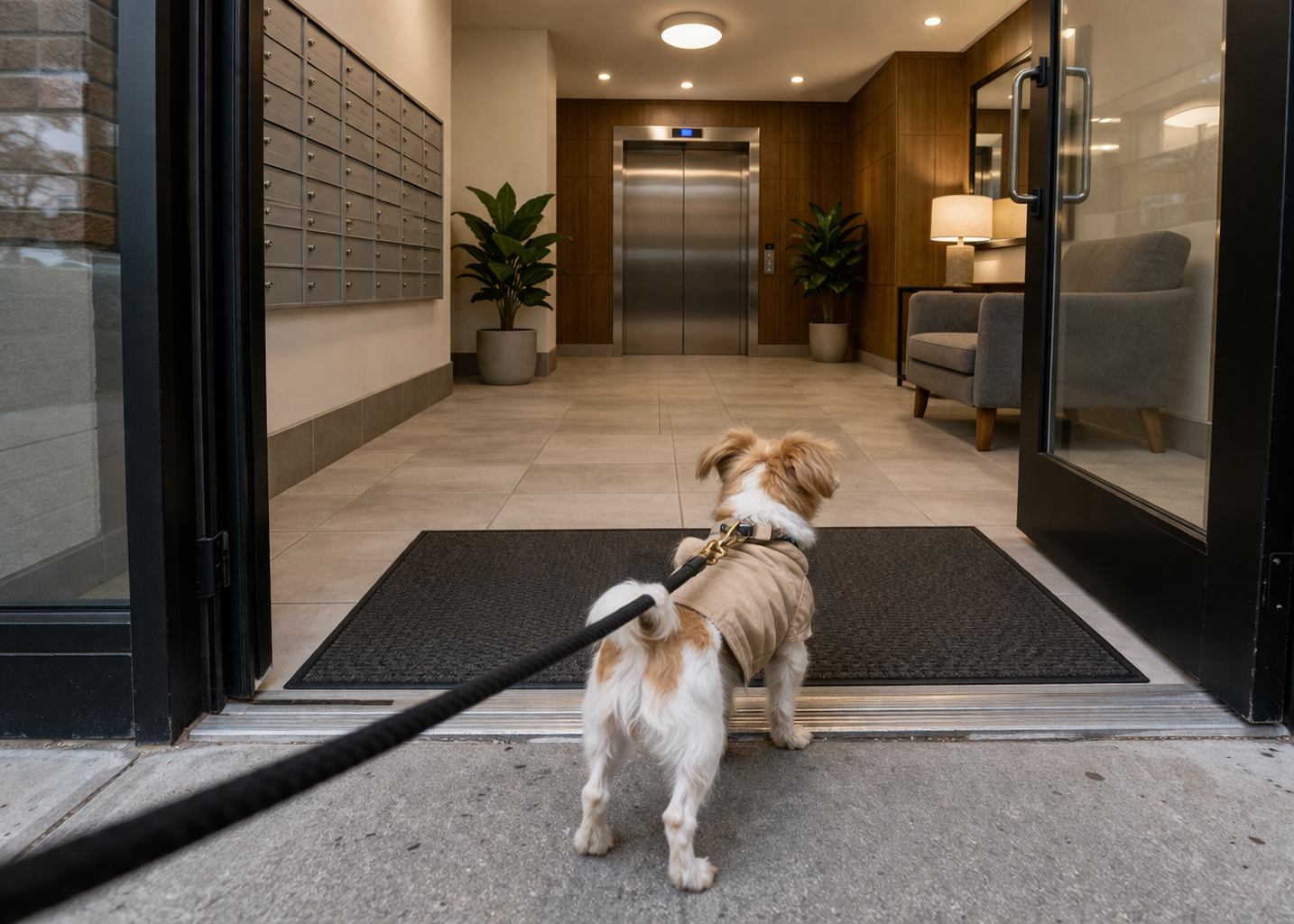
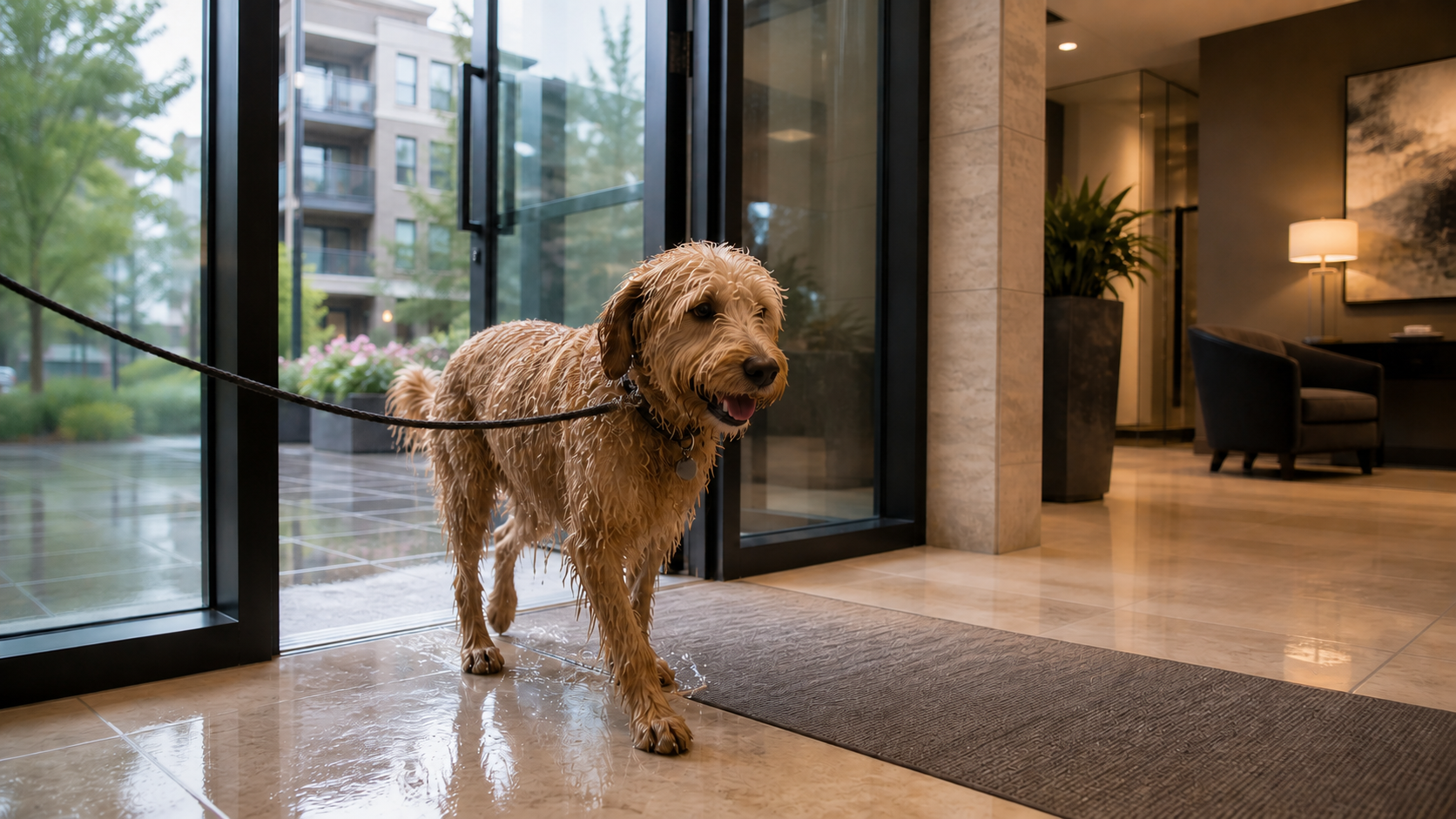
Entrances are where most problems start.
Pets don’t enter a building the way people do. They’re lower to the ground, more sensitive to surface changes, and less predictable when something feels off.
If the entrance is slippery, noisy, or crowded, you’ll see hesitation. Heck, you’ll probably hear it. Dogs pulling back. Owners adjusting their pace. Small disruptions that repeat every day are no fun.
Improving this usually comes down to traction and transition.
Surfaces need to provide grip, especially in wet conditions. Entry sequences need to feel clear and calm, not abrupt or congested. Even small adjustments like adding properly designed custom matting or creating a more gradual transition into the building can make a noticeable difference.
When the entrance works, everything that follows feels easier. So start here.
Movement Through the Building Matters More Than You Think
Once inside, the focus shifts to circulation.
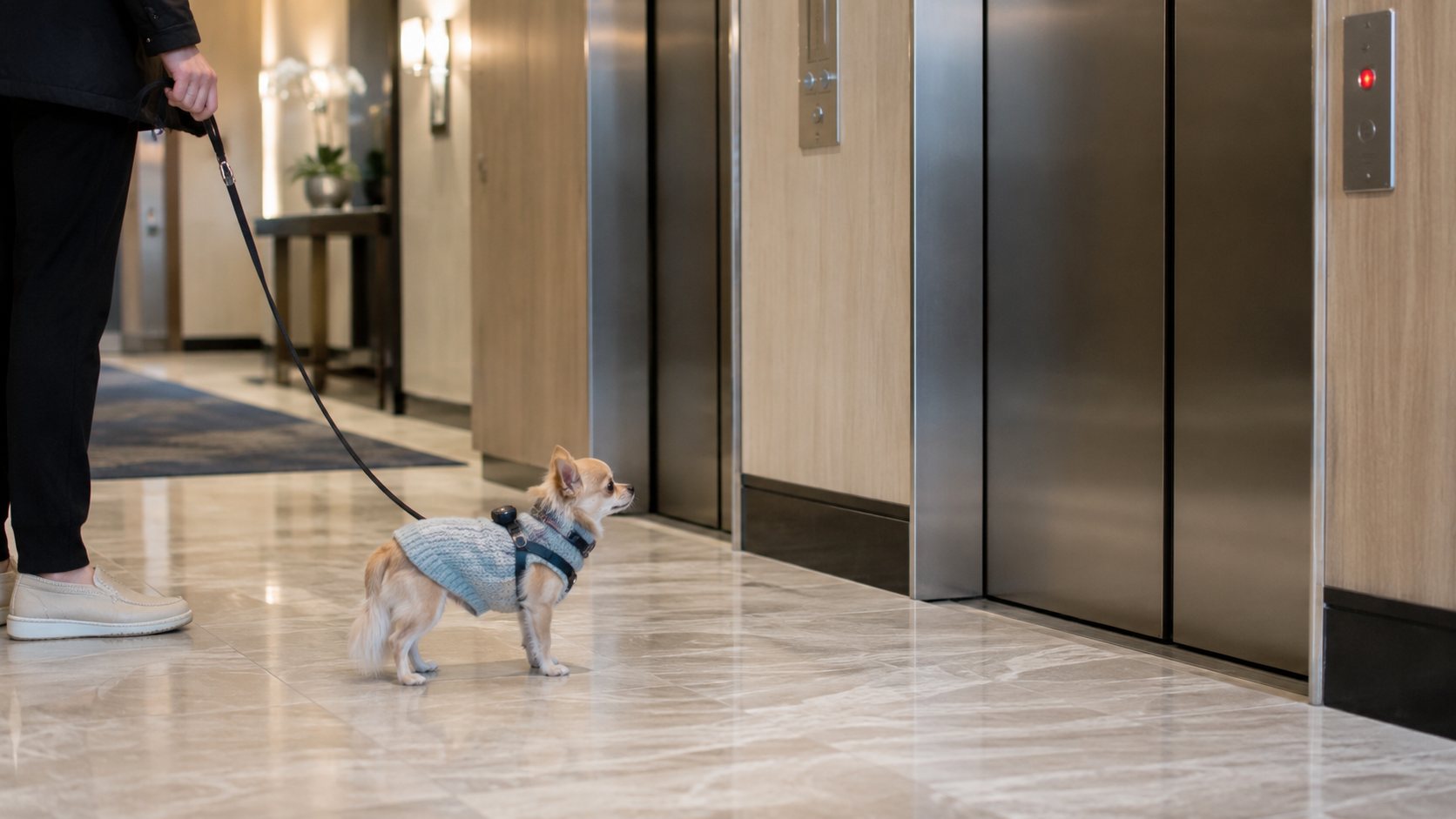
Pets and people share the same paths, but they don’t move the same way. Dogs stop, turn, react. Owners adjust. Other residents navigate around them.
In tight corridors or poorly defined spaces, that creates friction.
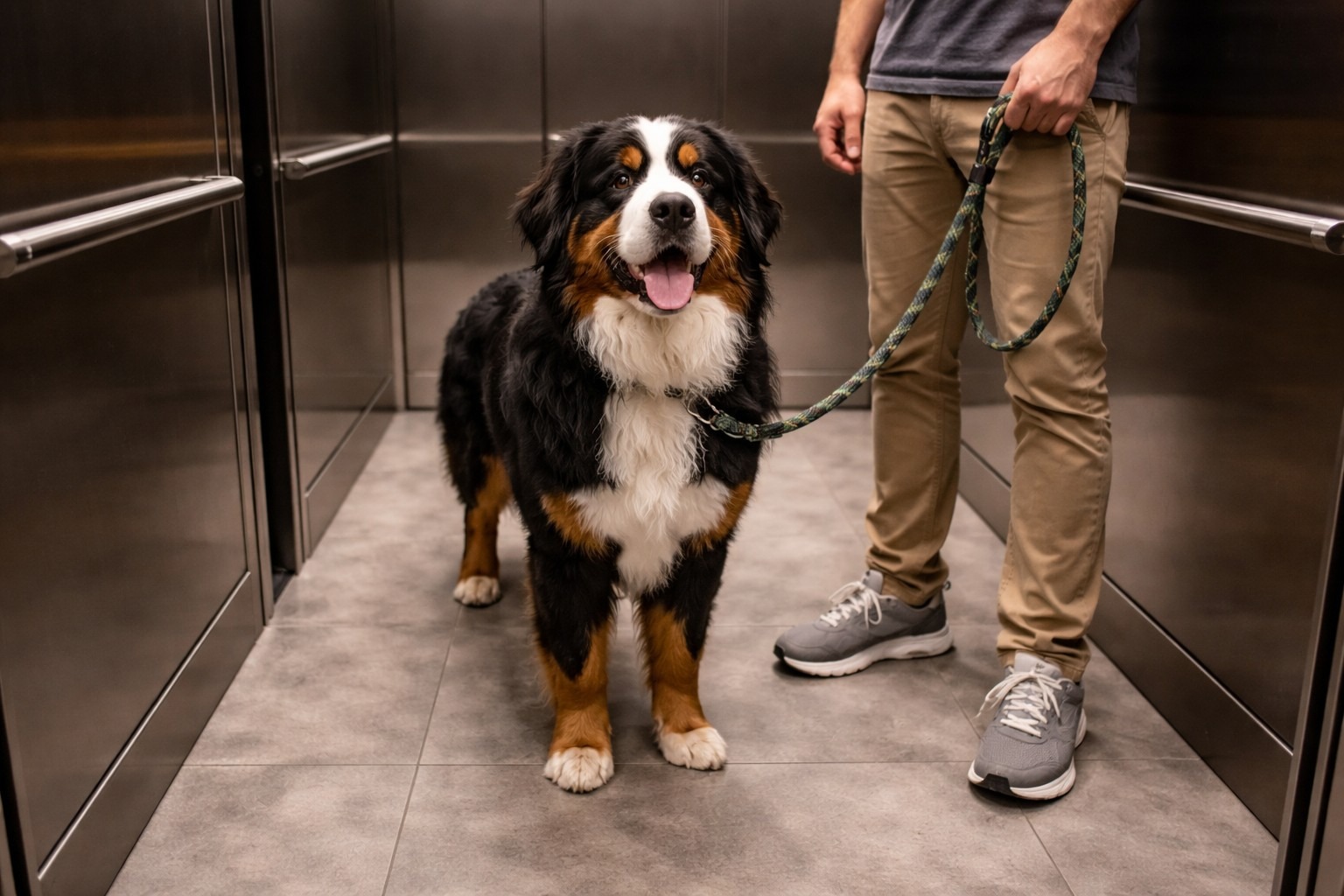
You’ll often see it near elevators, in lobbies, and along main pathways where traffic overlaps.
What helps is clarity. Wide, predictable routes. Enough space for people to pass comfortably. Layouts that reduce bottlenecks instead of creating them.
It doesn’t need to be overdesigned. It just needs to feel easy to move through.
Where Do Pet-Specific Needs Show Up?
Not in obvious ways at first, but over time it becomes clear.
You don’t necessarily need a dog spa or a dedicated pet room for a building to feel pet-friendly. And honestly, that’s not what pet owners are after.
Most of the impact comes from smaller, everyday considerations.
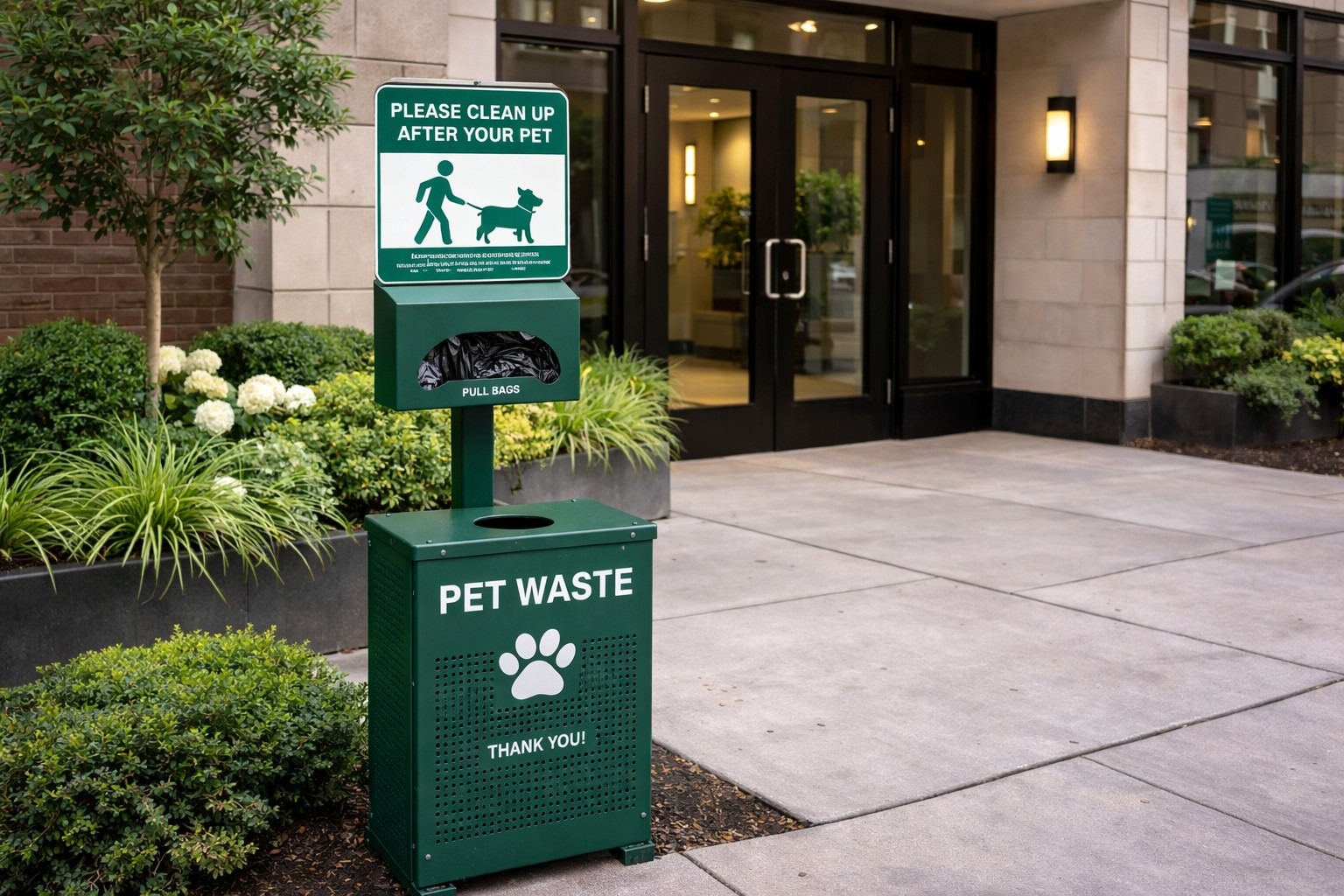
A place to pause just outside the building. A logical route to outdoor areas. Surfaces that are easy to clean when accidents happen. Waste stations that are visible and maintained.
These aren’t headline features. But they’re what people interact with every day, and they make a big difference for pet owners.
How Do You Keep a Pet-Friendly Building Clean?
Cleanliness and pet-friendliness are closely tied.
If a building allows pets but struggles to stay clean, the experience breaks down quickly. That usually comes back to two things: materials and maintenance.
Surfaces need to handle moisture, dirt, and occasional accidents without holding onto them. That means finishes that are durable and easy to clean, especially in high-traffic areas.
From there, consistency matters. Cleaning needs to stay ahead of use, not catch up to it. When the building feels consistently maintained, small issues don’t escalate into larger ones. And just as importantly, expectations stay clear for everyone using the space.
What Happens When Boundaries Aren’t Clear?
This is where things can drift. If pet-related behaviour isn’t clearly supported or contained, it starts to spread into areas where it creates tension.
You’ll see it in shared spaces—pets lingering where they shouldn’t, waste stations being skipped, or certain areas becoming unofficial pet zones.
Most of this isn’t intentional. It’s a lack of clarity. When spaces are well-defined and easy to use, people follow them without thinking. When they’re not, behaviour becomes inconsistent.
That’s when friction starts to build between residents.
The Real Issue
Pet-friendly buildings aren’t defined by what they allow.
They’re defined by how well they handle daily use.
They need to support movement, manage mess, and create a sense of predictability for everyone sharing the space.
When those systems are working, pets feel like a natural part of the building.
When they’re not, every small issue becomes more noticeable.
Key Takeaways: How Do You Make a Condo Building More Pet-Friendly?
If you want your building to feel truly pet-friendly, focus on how it performs day to day.
Improve traction at entrances and high-traffic areas: Make sure surfaces stay safe and predictable, especially in wet conditions.
Create clear, comfortable movement paths: Reduce bottlenecks and give people enough space to navigate with pets.
Support everyday pet routines: Provide logical routes, outdoor access, and well-placed waste stations.
Use materials that are easy to clean and maintain: Choose finishes that handle moisture, dirt, and wear without breaking down.
Maintain the space consistently: Stay ahead of cleaning so the building always feels ready to use.
Keep boundaries clear and easy to follow: Define where pets should and shouldn’t be, and make those expectations visible.
When these are in place, the building works for everyone.
When they’re not, small issues start to stack up quickly.
FAQ: Pet-Friendly Condo Buildings
What makes a condo building pet-friendly?
A building that supports how pets and owners move through it, with safe surfaces, clear paths, and consistent maintenance.
Do you need special amenities for pets?
Not necessarily. Most improvements come from making everyday spaces easier to use.
How do you reduce mess in a pet-friendly building?
By using durable materials, placing waste stations strategically, and maintaining consistent cleaning.
Are pet-friendly buildings harder to maintain?
They require more attention to detail, but with the right setup, they’re manageable.
What is the biggest issue in pet-friendly buildings?
Lack of clarity in how spaces are used, which leads to inconsistent behaviour and friction between residents.
At the end of the day, a pet-friendly building isn’t about adding more features.
It’s about removing pain points from everyday routines so that living with a pet feels simple, not complicated.
When that’s done well, the building feels like home for everyone. Fido included.
Making Vancouver buildings just a little bit better... xoxo J.