How to Properly Store Your E-Bike in a Condo Building
Learn how to properly store an e-bike in a condo building, including battery safety, charging best practices, theft prevention, and the common bike room mistakes frustrating Vancouver residents.
June 15, 2026
·
7 min
At this point, almost every condo building in Vancouver has e-bikes in it.
Some buildings adapted to that reality quickly. Others are still acting like an e-bike is basically the same thing as a lightweight commuter bike from fifteen (or fifty) years ago, which is how you end up with overcrowded bike rooms, blocked pathways, and charging setups that look like they were assembled during a power outage.
You can usually tell within about thirty seconds whether a building actually planned for e-bikes or whether they’re just trying to survive them.
The signs are obvious.
Bike racks are overloaded. Heavy bikes are awkwardly hanging from systems that were never designed for that kind of weight. Residents are dragging oversized frames through lobbies and elevators because the bike room no longer works properly. And somewhere in the corner, there’s almost always an abandoned bike covered in enough dust that could qualify as historical infrastructure.
The reality is that e-bikes changed what condo buildings need from bike storage.
They’re heavier. More expensive. More difficult to manoeuvre. And unlike regular bikes, they come with charging and battery considerations that buildings can’t afford to ignore anymore.
Which means the old “just throw some racks in a room and call it a day” approach doesn’t really cut it now.
The Short Answer: How Should You Store an E-Bike in a Condo Building?
An e-bike should be stored in a secure, designated area where the bike and battery are protected, charging is handled safely, and the setup doesn’t create unnecessary fire or safety risks.
That means:
Using proper locks and anchored storage whenever possible
Charging with manufacturer-approved equipment
Avoiding damaged batteries or sketchy aftermarket chargers
Keeping batteries away from heat, moisture, and overcrowded areas
And making sure the bike isn’t blocking exits, pathways, or access points
A lot of residents still treat e-bikes like regular bikes with a motor attached. They’re not.
You’re storing a heavy, high-value piece of equipment with a lithium-ion battery system inside a shared residential building. That requires at least a little more thought than tossing it into the bike room and hoping for the best.
E-Bikes Changed the Rules, Whether Buildings Like It or Not
This is the part some buildings still haven’t fully accepted.
E-bikes are not a niche trend anymore. They’re now part of everyday urban life, especially downtown where people are trying to avoid traffic, parking costs, and transit delays.
The problem is that many condo buildings were designed before anyone anticipated this shift. So now you have bike rooms originally intended for lightweight road bikes, occasional recreational riders, and minimal daily use suddenly being asked to support oversized cargo bikes, heavy e-bikes, frequent charging, and significantly more traffic overall. And the strain shows up quickly.
People start improvising because the infrastructure no longer matches reality. Bikes end up parked in awkward places. Charging starts happening wherever there’s an outlet. Pathways tighten. Access gets frustrating.
Then everyone quietly starts blaming each other instead of acknowledging the room itself no longer functions properly.
The Biggest Mistake Residents Make
They treat e-bikes like regular bikes. That’s really the core issue.
An e-bike takes up more space, weighs significantly more, and usually costs enough money that theft becomes a very real concern. It changes how people use bike storage, and it changes what buildings need to support safely.
But some residents still approach storage with a sort of “close enough” attitude that creates problems for everyone else.
This is how you end up with:
Handlebars sticking into walkways
Bikes jammed into undersized racks
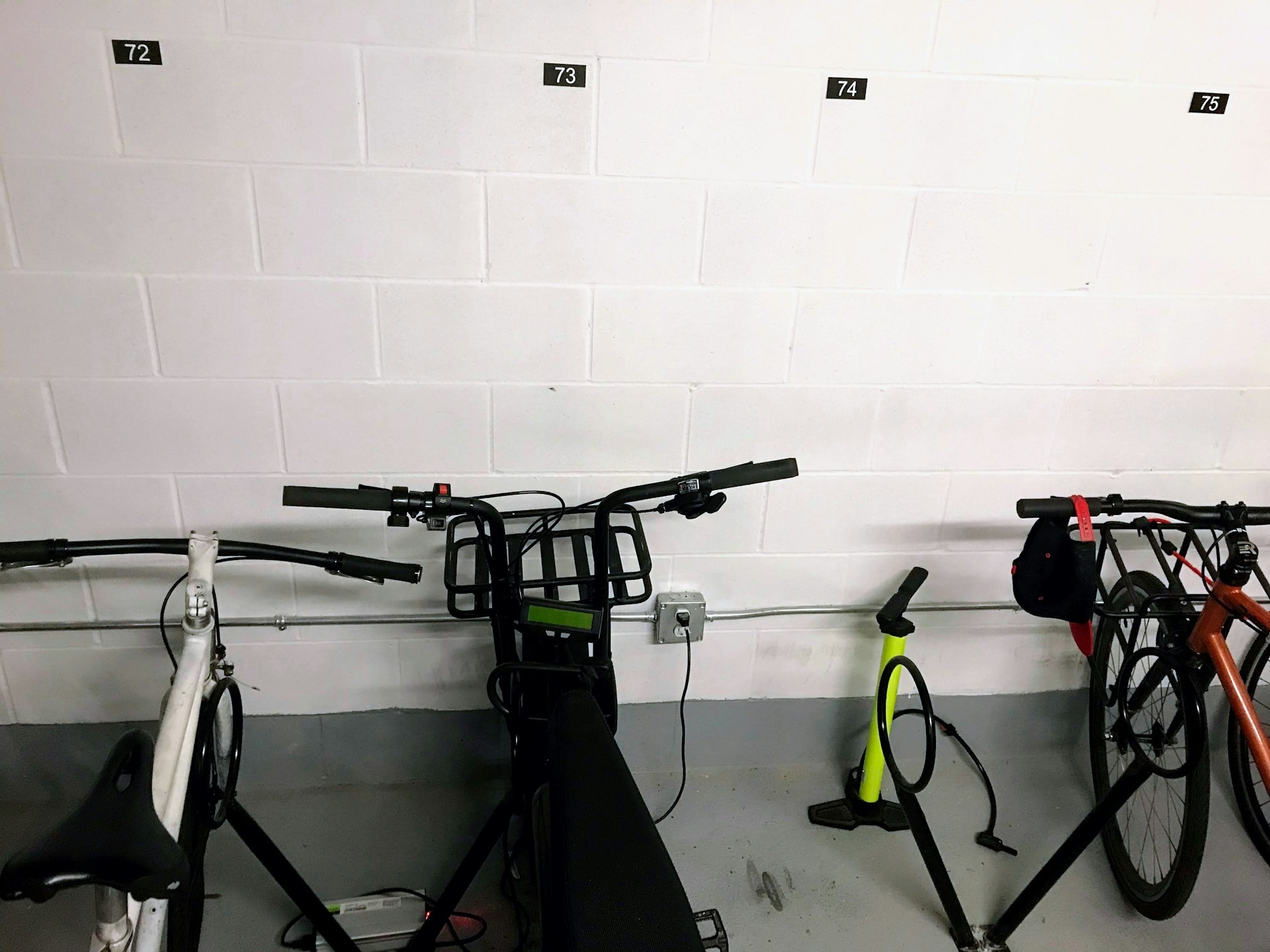
Charging cables stretched across the floor
And circulation space slowly disappearing one bad decision at a time
The frustrating part is that most of this is completely avoidable.
It just requires people to acknowledge that shared spaces only function when everyone uses them thoughtfully, which, admittedly, is asking a lot in some condo buildings.
Why Bike Rooms Deteriorate So Fast
Bike rooms rarely fail all at once.
They unravel gradually.
One abandoned bike sits untouched for months. Someone starts storing extra gear beside their stall. Another resident decides the rules about charging probably apply to other people, not them.
And because nobody addresses it early, the behaviour spreads.
This is something condo buildings consistently underestimate: disorder becomes normalized very quickly in shared spaces.
Once residents see pathways partially blocked or bikes stored improperly without consequences, the standard shifts downward almost immediately.
Suddenly nobody parks properly, access gets tighter, and using the room becomes mildly irritating every single day. The buildings that avoid this are usually not the buildings with the fanciest systems. They’re the buildings that stay proactive before the room starts sliding into chaos.
Because once a bike room becomes overcrowded and dysfunctional, fixing it becomes much harder.
Charging E-Bikes Is Where Things Get Complicated
And honestly, buildings have valid reasons to be cautious here.
Lithium-ion battery concerns are real. Most batteries are perfectly safe when they’re properly maintained, charged correctly, and certified by reputable manufacturers, but condo buildings don’t get to control what residents buy online at 1:00 a.m. after watching one YouTube review.
That’s where the anxiety comes from.
Management sees:
Aftermarket batteries
Damaged charging equipment
Overloaded outlets
Improvised extension cord setups
They’re now responsible for managing a risk that didn’t really exist a decade ago.
Some residents also have a remarkable ability to look at a clearly bad charging setup and think, “Yeah, this seems fine.”
It is, in fact, not fine.
How Should You Charge an E-Bike in a Condo Building?
This part really comes down to basic common sense.
Use the charger that came with the bike. Avoid charging damaged batteries. Don’t leave batteries plugged in indefinitely, especially in enclosed shared rooms where nobody is monitoring them.
And perhaps most importantly, stop treating extension cords like permanent building infrastructure.
If your charging setup looks temporary, improvised, or slightly concerning, that’s usually your answer right there.
Many newer buildings are now creating designated charging areas with proper ventilation and electrical planning, which honestly feels inevitable moving forward. E-bike use is only increasing, and pretending residents won’t need charging access anymore is about as realistic as pretending parcel rooms aren’t overflowing every December.
Theft Has Become a Huge Issue
E-bikes are expensive, and thieves know it.
Which means bike rooms have quietly become some of the most vulnerable areas in many condo buildings.
And unfortunately, a surprising number of buildings are still relying on outdated access systems and weak security measures that were barely sufficient before people started storing bikes worth several thousand dollars downstairs.
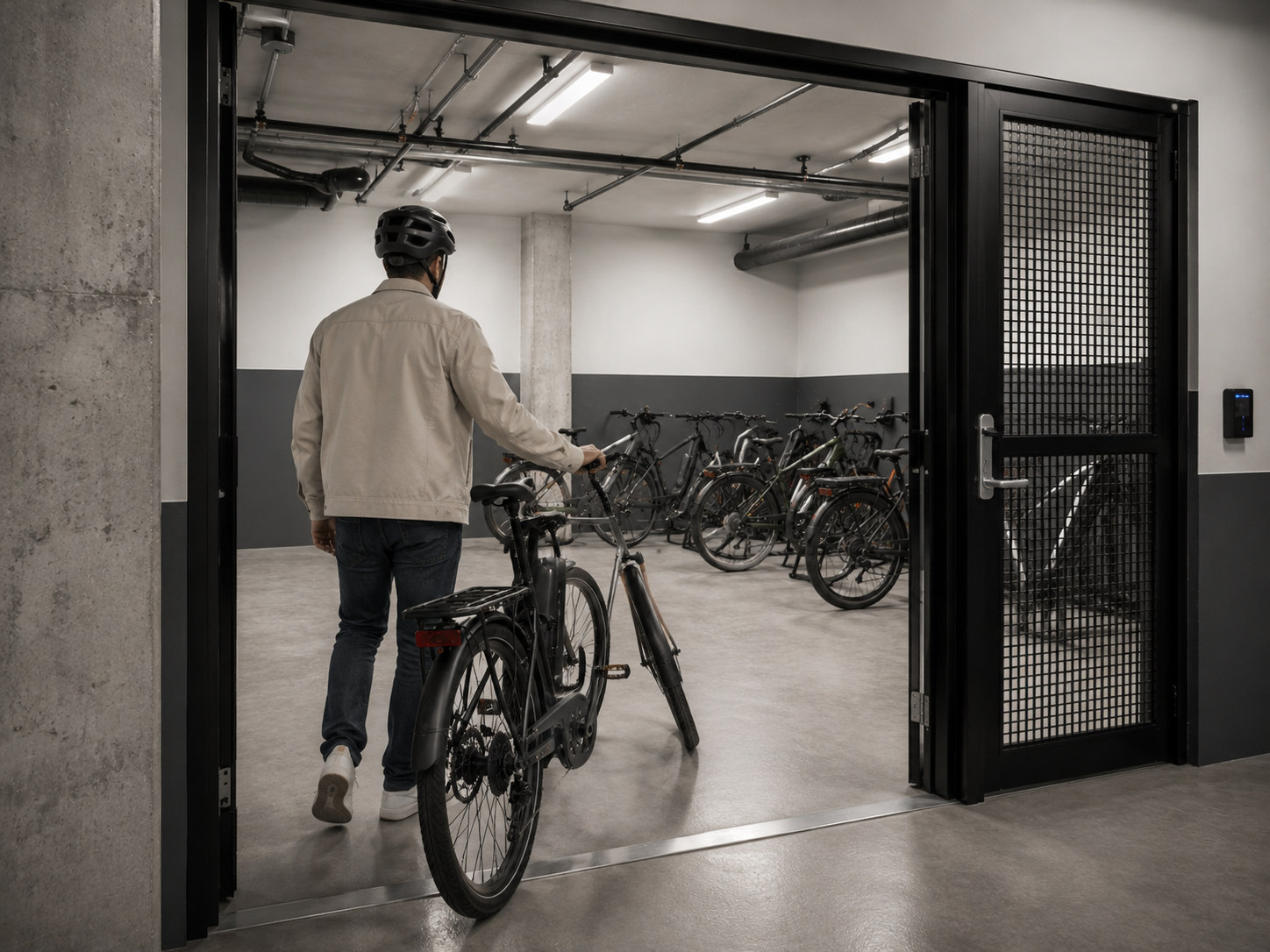
The stronger setups now include improved camera coverage, secure access controls, better lighting, and anchored locking systems that actually reflect the value of what residents are storing there.
Because at a certain point, “just buy a better lock” stops being a complete strategy.
Especially when organized theft crews specifically target condo bike rooms now.
That’s the part some buildings are still slow to recognize.
What Residents Need to Stop Doing
Some of these should honestly go without saying, but here we are.
Leaving abandoned bikes in shared storage for years
Blocking pathways because your bike “almost fits”
Running charging cables across circulation areas
Treating bike rooms like overflow storage lockers
Ignoring rack weight limits for heavy e-bikes
Assuming everyone else should work around your setup
Shared bike storage only works when people understand they are not the main character in the room.
And yet, some residents continue behaving like everyone else should simply adapt to whatever chaotic arrangement they’ve created for themselves.
What Good E-Bike Storage Actually Looks Like
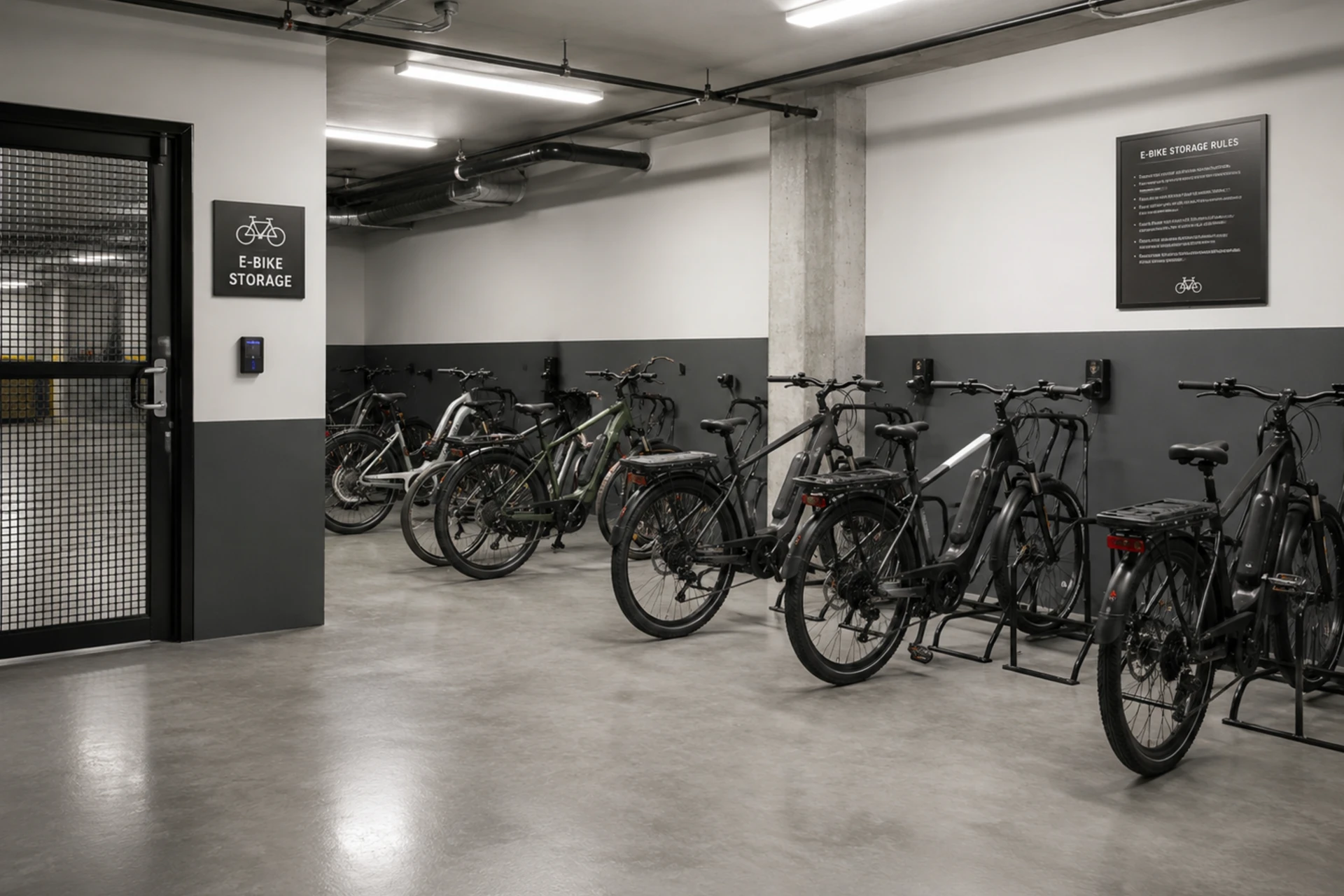
Ironically, the best bike rooms are usually the least noticeable.
They work quietly.
People can move through the space without awkwardly rotating handlebars around each other like some kind of parking-themed escape room. Bikes fit properly. Pathways stay open. Security feels reliable. Charging, where permitted, feels intentional rather than improvised.
Nothing feels overloaded.
Nothing feels tense.
And residents aren’t silently annoyed before they’ve even unlocked their bike.
That’s usually the clearest sign a building got it right.
Why This Is Really a Building Operations Issue
At this point, e-bike storage is no longer just a bike amenity discussion.
It’s operations.
Buildings now need to think about electrical capacity, fire safety, circulation planning, security, resident behaviour, and long-term storage management in a way they simply didn’t have to a decade ago.
The buildings that recognize this early tend to stay functional and adaptable. The ones that don’t slowly end up layering temporary fixes onto outdated systems until the whole thing feels frustrating to use.
And honestly, residents notice.
People may not articulate it perfectly, but they can absolutely feel the difference between a building that planned thoughtfully and one that’s constantly reacting.
Key Takeaways: Proper E-Bike Storage in Condo Buildings
Proper e-bike storage comes down to parkade safety, organization, and shared-space awareness.
E-bikes should be stored in designated areas, secured properly, charged responsibly, and kept from interfering with pathways or circulation space. Buildings also need to recognize that older bike room designs often no longer match the realities of modern e-bike use.
The buildings handling this best are the ones adapting early through better layouts, stronger security, clearer policies, and infrastructure that reflects how people actually live now.
Because once a bike room becomes overcrowded, disorganized, or unsafe, it deteriorates quickly—and everyone in the building ends up dealing with the consequences.
FAQ: E-Bike Storage in Condo Buildings
Can you store an e-bike in a condo bike room?
Usually yes, provided the building allows it and the bike fits within the designated storage system.
Why are condo buildings concerned about e-bike charging?
Because lithium-ion battery fires are difficult to contain, especially in enclosed shared spaces like bike rooms.
Should e-bike batteries be charged in bike rooms?
That depends on the building’s policies and infrastructure. Some buildings permit it, while others restrict charging to reduce fire risk.
Why are condo bike rooms becoming overcrowded?
Most were designed before heavier and larger e-bikes became common, and many buildings haven’t updated their layouts or storage systems accordingly.
What’s the biggest mistake residents make?
Treating shared bike rooms like private storage spaces and ignoring how their setup affects everyone else using the room.
How can condo buildings improve e-bike storage?
Better layouts, upgraded security, designated charging areas, abandoned bike enforcement, and clearer operational policies all make a significant difference.
At the end of the day, most of this really comes down to whether a building is willing to adapt to how people actually live now.
E-bikes aren’t going away. If anything, they’re becoming more common every year. Which means buildings can either evolve their storage systems intentionally, or continue letting bike rooms slowly drift into overcrowded, frustrating messes that nobody enjoys using.
And once you’ve seen both versions, the difference becomes painfully obvious.
Making Vancouver buildings just a little bit better... xoxo J.