How Can We Improve Safety and Cleanliness in a Condo Parkade?
How can condo parkades be kept clean, safe, and easy to use? Let's explore the causes and common issues like drainage, dirt tracking, and poor visibility, along with practical ways to improve maintenance and safety.
February 16, 2026
·
10 min
Parkades are where buildings quietly fall apart.
Not structurally. Operationally.
They’re the first and last space most residents interact with every day, and somehow they get the least attention. Lighting is “fine.” Cleaning is “periodic.” Security is “good enough.” And then one day, it isn’t.
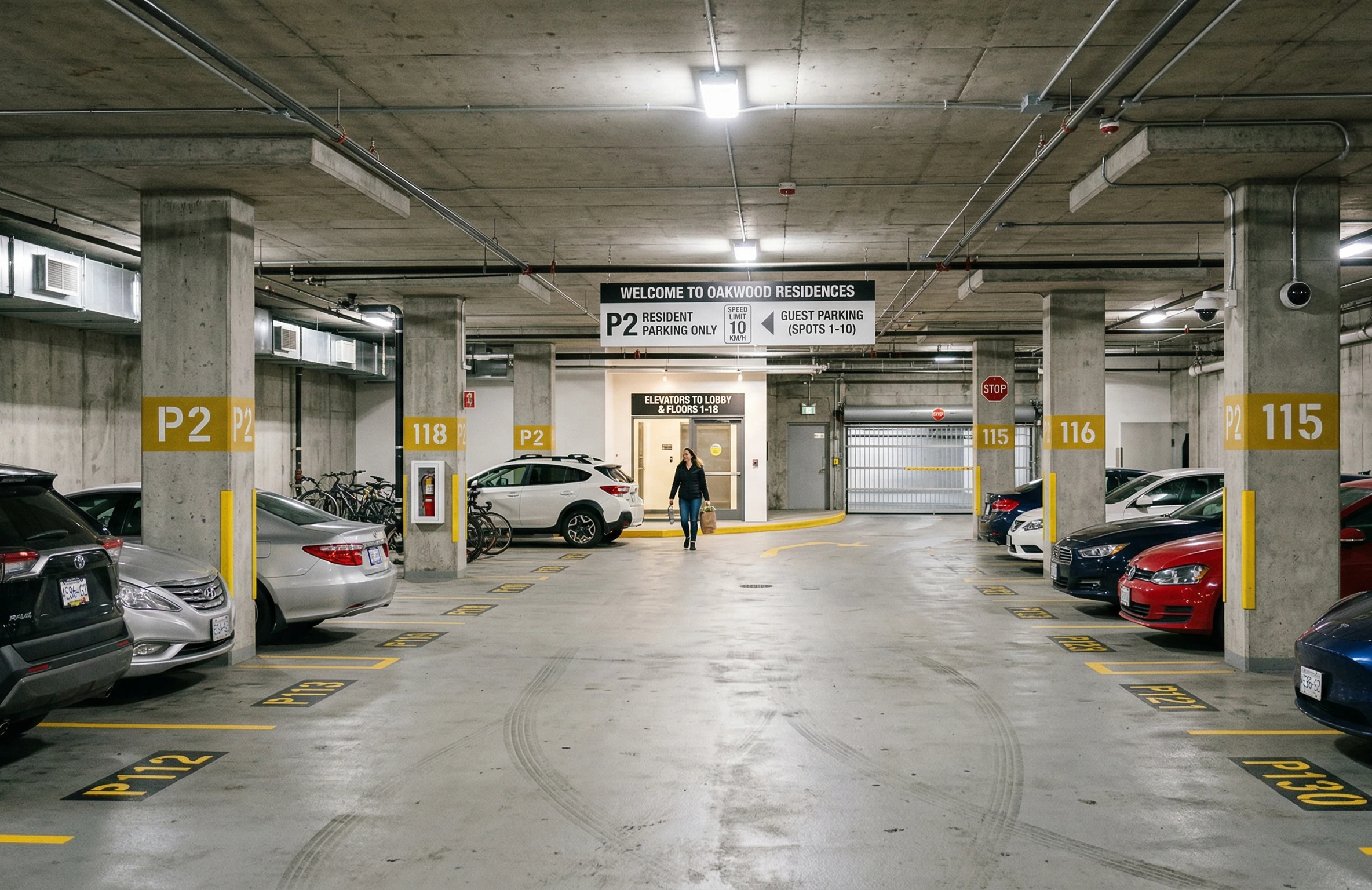
If you manage a condo in Vancouver, your parkade is dealing with more than just cars. It’s handling moisture, dirt, oil, bikes, storage overflow, deliveries, and increasingly, people who shouldn’t be there at all.
Safety and cleanliness aren’t separate issues down here in the bellows of the building. They’re the same system—and when one slips, the other follows.
The Short Answer: How Do You Improve Safety and Cleanliness in a Condo Parkade?
You improve a parkade by tightening four fundamentals:
Moisture control
Visibility
Circulation
Maintenance
Most problems trace back to one of these breaking down.
Here’s what that actually looks like in practice:
Control moisture where it enters and spreads Focus on ramps, entrances, and pedestrian routes. If water is allowed to move freely, everything else becomes harder to manage.
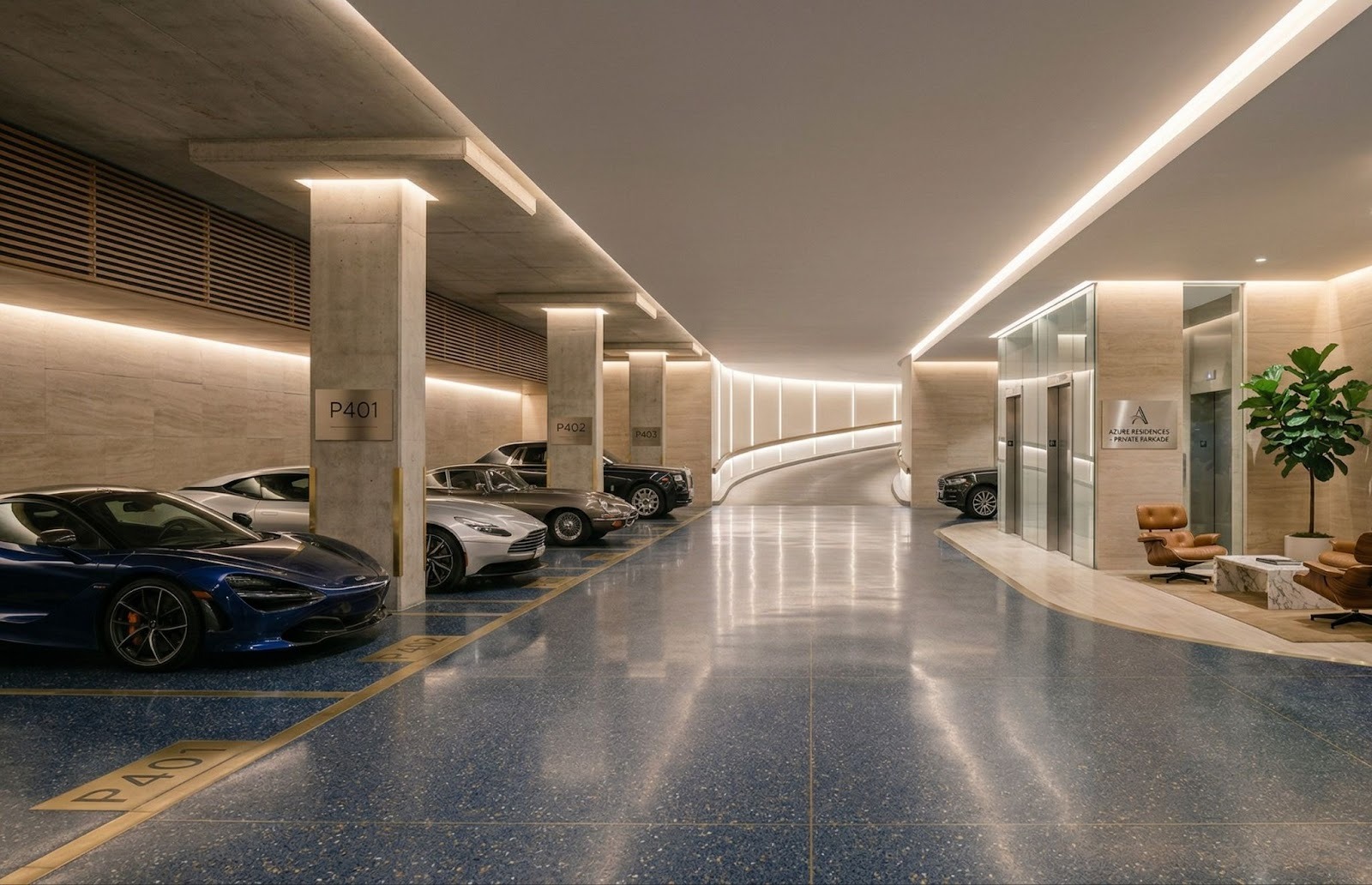
Keep lighting bright and consistent Not just overall brightness. Eliminate dark zones, improve sightlines, and make corners and transitions easy to read.
Define clear movement paths Separate where possible, and guide behaviour where separation isn’t realistic, especially near elevators and high-traffic areas.
Maintain the space before it drifts Clean consistently, enforce storage boundaries, and address small issues early so they don’t compound.
You don’t need a full overhaul.
You need the space to perform the way residents already expect it to.
Why Parkades Degrade So Quickly
Parkades don’t fail all at once. They drift. And honestly, in my experience, it’s often because they get forgotten about altogether.
A little more moisture than expected. A bit of dirt that doesn’t fully come up. Lighting that slowly becomes less effective. Storage that expands just slightly beyond its boundaries.
Individually, none of these issues are urgent. Together, they change the environment into more of a dungeon-vibe than a parkade.
What starts as “fine” becomes “a bit off,” and then one day it’s a complaint about safety, a near miss, or a question from council about why the space always looks dirty.
Moisture Is an Overlooked Problem
If a parkade feels dirty, it’s almost always because it’s holding onto moisture.
Water comes in on tires. It drips from undercarriages. It gets tracked in by foot traffic.
It doesn’t need a storm to create issues.
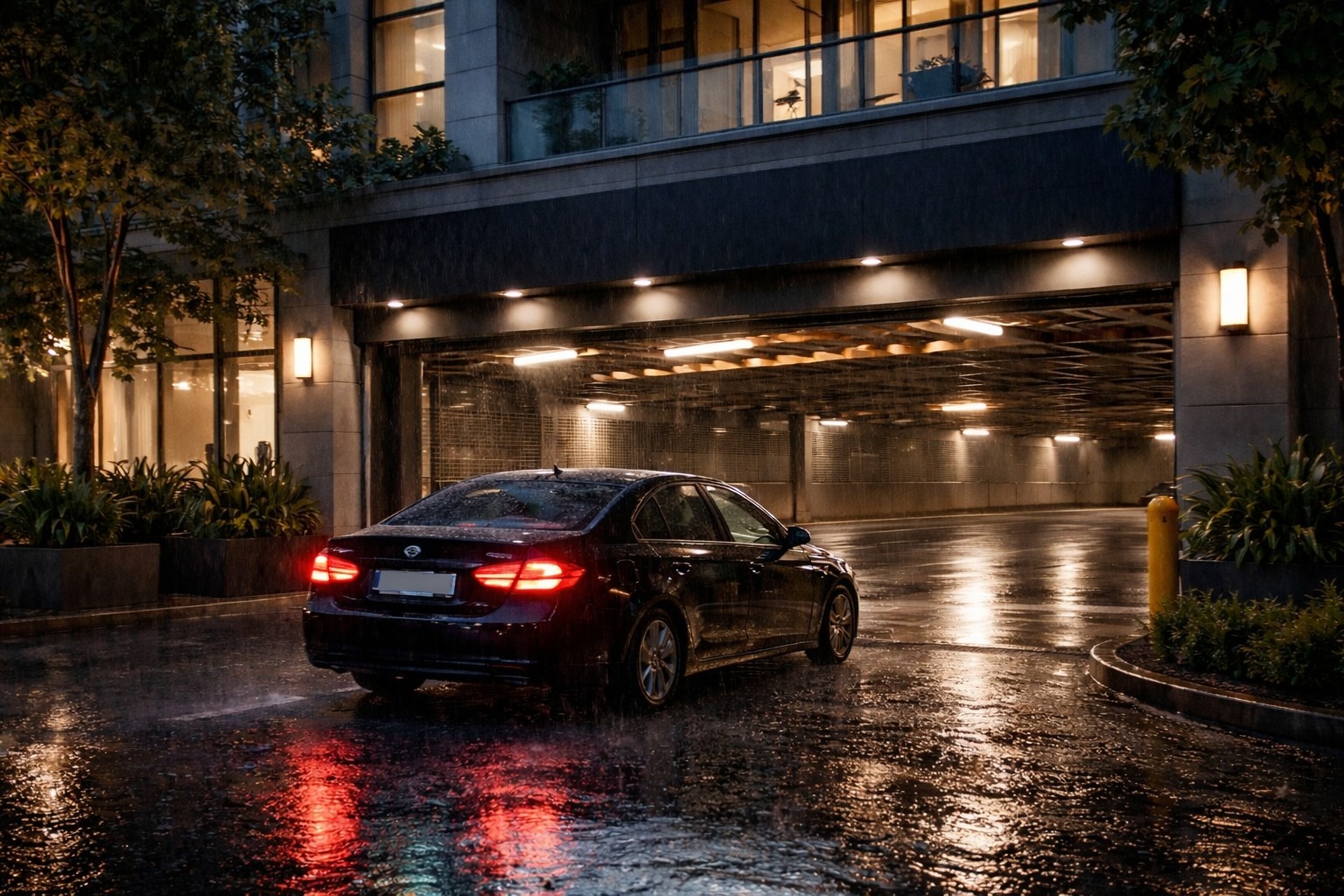
Steady rain is enough, and we’ve got plenty of that here in Vancouver (or Raincouver, as we all call it).
Once that moisture is inside, it mixes with everything else—dust, oil, residue—and forms a thin film across the surface.
That film:
Reduces traction
Dulls the appearance
Returns quickly after cleaning
This is why a parkade can look clean and still feel off. And it leads to an important question.
How Do You Reduce Slipping in a Parkade?
You reduce slipping by controlling moisture where it enters and where it settles.
In most parkades, water isn’t the problem on its own. It’s the way it moves. Tires bring it in, it drips from vehicles, and then it gets spread thin across the floor by traffic. Once that layer forms, grip drops—even if the surface looks clean.
The first step is to slow that movement down. Focus on entry points, ramps, and any transition from outdoors to indoors. These are the areas where water is introduced in volume. If you can interrupt it here, you reduce everything that happens downstream.
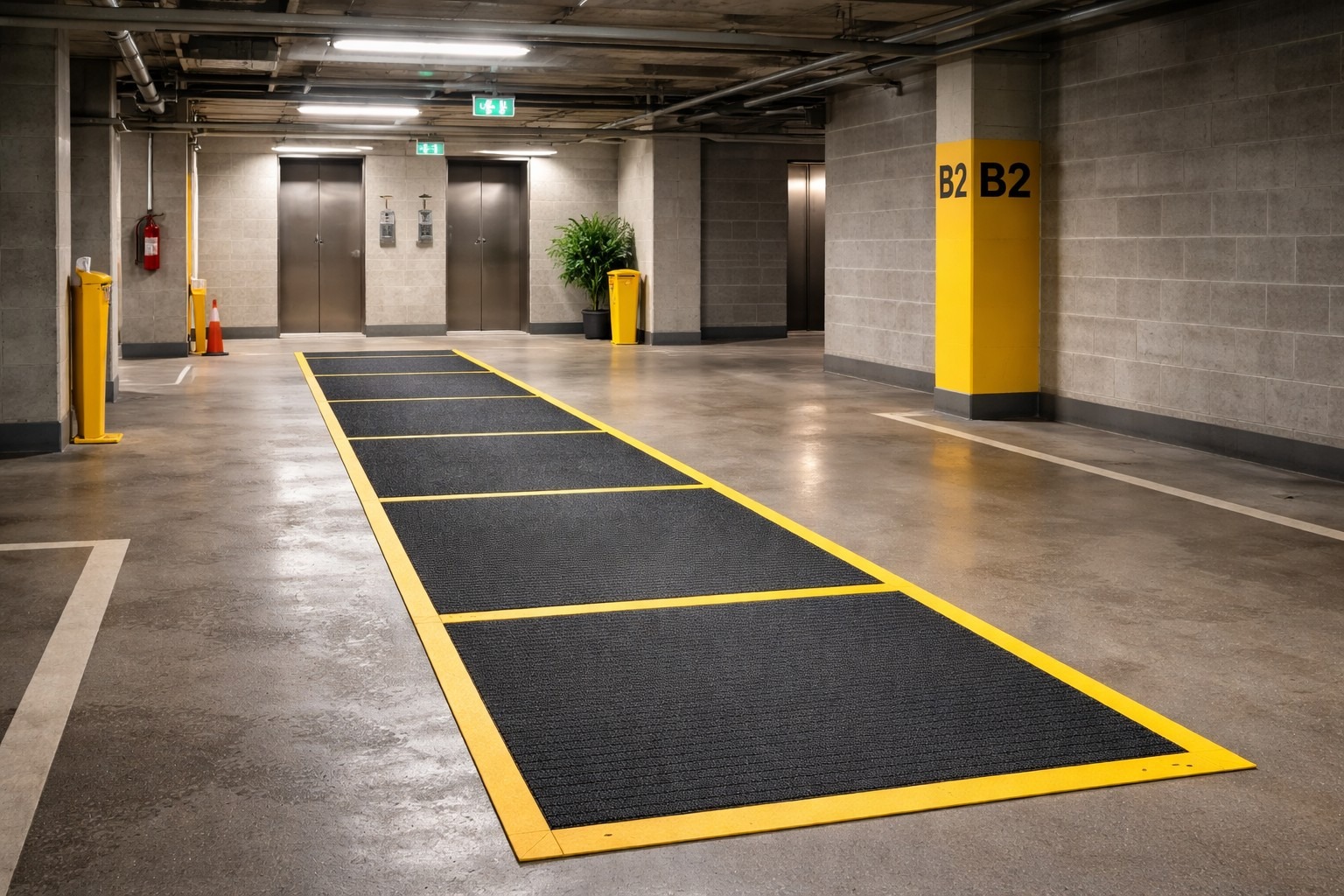
From there, look at how people actually move through the space. The path from parking stalls to elevators tends to carry the most foot traffic, which means it also carries the most moisture. Adding durable runners or matting along these routes helps absorb water before it spreads further into the parkade.
Drainage also plays a role, especially in areas where water tends to collect. Even a slight slope or low point can create a consistent patch of damp flooring that never fully dries. Identifying and correcting those areas, whether through drainage improvements or targeted drying, can make a noticeable difference.
The goal isn’t to eliminate water entirely. It’s to keep it contained, predictable, and out of the main walking paths. Once water is allowed to spread freely, slipping becomes much harder to control.
Cleaning Alone Doesn’t Solve It
The default reaction is more cleaning. Which does help, but it doesn’t fix the issue or get to the core of the problem.
If moisture isn’t being controlled, cleaning simply becomes a reset. And believe it or not, in some cases, it makes things worse. I’ve seen it first-hand.
A damp mop can spread moisture more evenly across the surface. The floor looks clean, but grip drops.
Cleaning matters. But it only works when water is being managed at the same time.
Visibility Shapes Behaviour
Lighting does more than help people see. It changes how they move.
When lighting is bright and consistent:
Drivers slow down naturally
Pedestrians take direct paths
Problems are easier to spot early
When it isn’t:
Corners feel uncertain
Columns create blind spots
Movement becomes less predictable
This is one of the fastest upgrades you can make. Not because it changes the structure of the parkade, but because it immediately changes how people experience it. Sightlines improve. Movement becomes more predictable. Problem areas become visible instead of hidden.
And once people can see what’s happening around them, they naturally adjust—slowing down, choosing clearer paths, and avoiding the small moments that tend to lead to bigger issues.
What Is the Biggest Safety Risk in a Parkade?
The biggest risk is limited visibility combined with mixed traffic.
When pedestrians, vehicles, bikes, and deliveries all share the same space without clear sightlines, small mistakes turn into real problems.
Improving lighting and defining movement paths reduces that risk immediately.
Circulation Is Rarely What Was Intended
Parkades are designed one way. But ask any Property Manager who’s been around the block a time or two and they’ll tell you, they’re used a completely different way than intended.
People cut across lanes. Delivery drivers stop wherever it’s easiest (ugh). Bikes move differently than cars. Over time, those patterns become the real system.
Problems show up where paths overlap:
Near elevators
At ramps
Around tight corners
That’s where attention needs to go.
Storage Changes the Space More Than You Think
Storage creep is subtle until it isn’t.
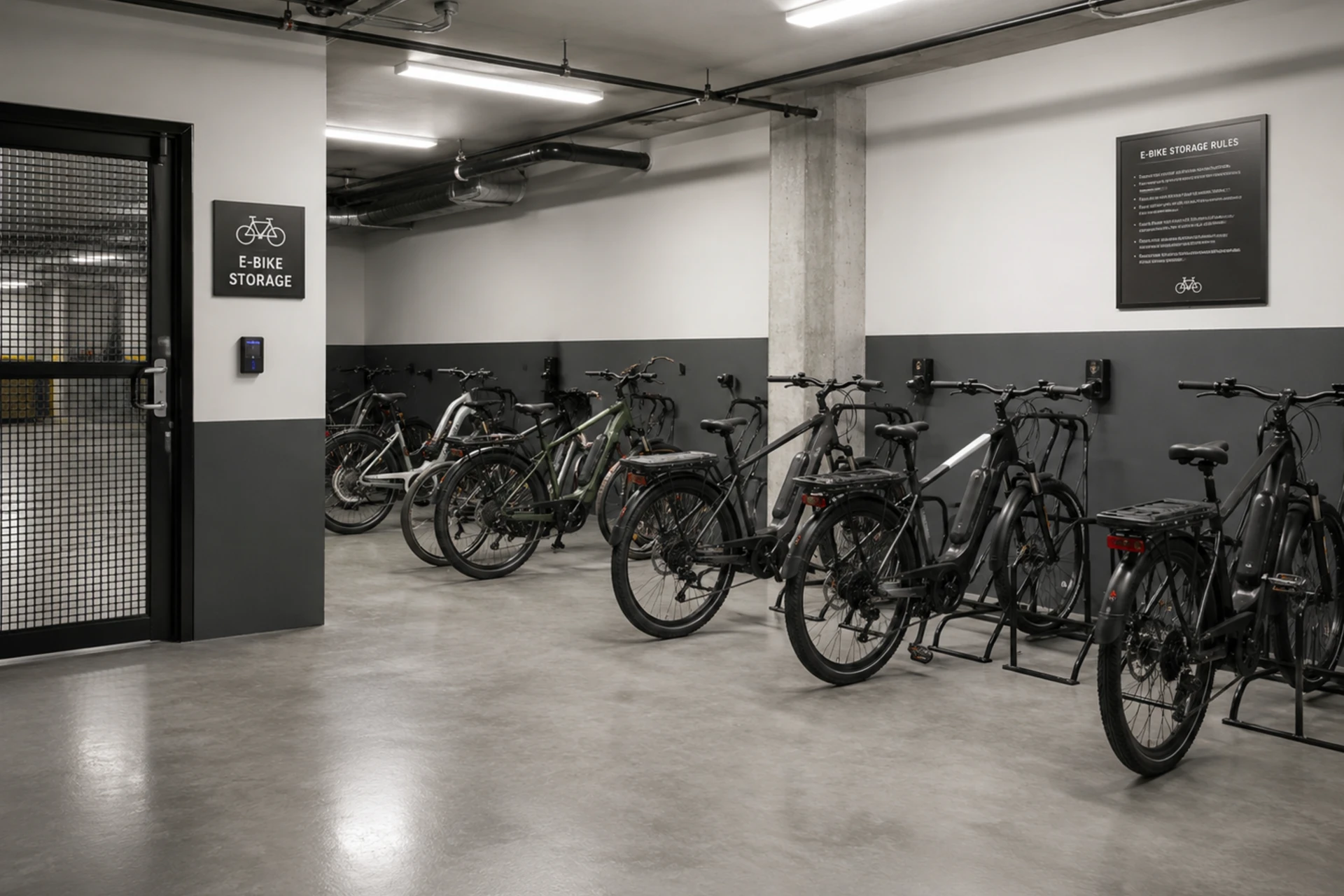
A box becomes a pile. A bike becomes a row. Cleaning becomes harder. Sightlines shrink.
And more importantly, it sends a signal: Boundaries aren’t being enforced.
That changes behaviour, both for residents and for people who don’t belong there.
Improving this doesn’t require a major reset. It starts with making boundaries visible and consistent. Keep storage contained within designated areas, and make sure those areas are clearly defined and actually usable. If lockers are difficult to access or undersized, people will work around them.
From there, it’s about consistent enforcement. When shared spaces stay clear, sightlines open up. Movement becomes more predictable. Cleaning becomes easier to maintain. And just as importantly, the space feels managed.
That alone goes a long way toward improving safety.
The Role of Small, Targeted Fixes
You don’t need a full redesign. Most improvements come from fixing a few key friction points.
One of the most common is the path from parking stalls to elevators. This is where moisture, dirt, and foot traffic tend to concentrate, and where small issues compound quickly.
Adding well-placed tailored runners or matting in these areas can significantly reduce how much gets tracked through the space. But placement matters. If it doesn’t align with how people actually move, it gets ignored.
That’s where custom approaches come in—especially when standard solutions don’t quite match how the parkade is being used day to day.
Cleanliness and Security Are the Same Conversation
A clean, well-lit, organized parkade is a safer parkade.
Not because it’s locked down. Because it removes opportunity.
Clutter creates hiding places
Poor lighting creates uncertainty
Inconsistent maintenance signals neglect
When those are addressed, behaviour changes.
That’s where safety really improves.
Key Takeaways: How Do You Improve Safety and Cleanliness in a Condo Parkade?
If you want to improve your parkade, focus on the fundamentals—and execute them properly.
Control moisture at the source: Target ramps, entrances, and pedestrian routes with drainage and matting to stop water from spreading.
Keep pedestrian paths dry and predictable: Add runners or defined walkways where people naturally move, especially toward elevators.
Upgrade lighting for consistency, not just brightness: Eliminate dark zones and improve sightlines around corners, columns, and high-traffic areas.
Define circulation clearly: Make it obvious where people should walk and where vehicles should move, especially in shared zones.
Enforce storage boundaries: Keep shared areas clear so sightlines stay open and cleaning remains effective.
Maintain the space consistently: Clean to prevent buildup, not just to respond to it—and avoid spreading moisture during peak conditions.
If one of these breaks down, the rest follow.
And in a Vancouver parkade, that shows up quickly.
FAQ: Condo Parkade Safety and Cleanliness
Why do parkades feel dirty even after cleaning?
Because moisture and residue are constantly reintroduced. Without controlling that, the surface quickly returns to the same condition.
What is the biggest safety concern in a parkade?
Limited visibility combined with mixed traffic.
How do you reduce slipping in a parkade?
By controlling moisture and keeping walking paths dry and consistent.
Does lighting really make a difference?
Yes. It directly affects both visibility and behaviour.
How often should a parkade be cleaned?
Often enough to maintain stable conditions, not just reset them.
The parkade will always tell you how the building is performing. You just need to pay attention to what it’s showing you.
Making Vancouver buildings just a little bit better... xoxo J.